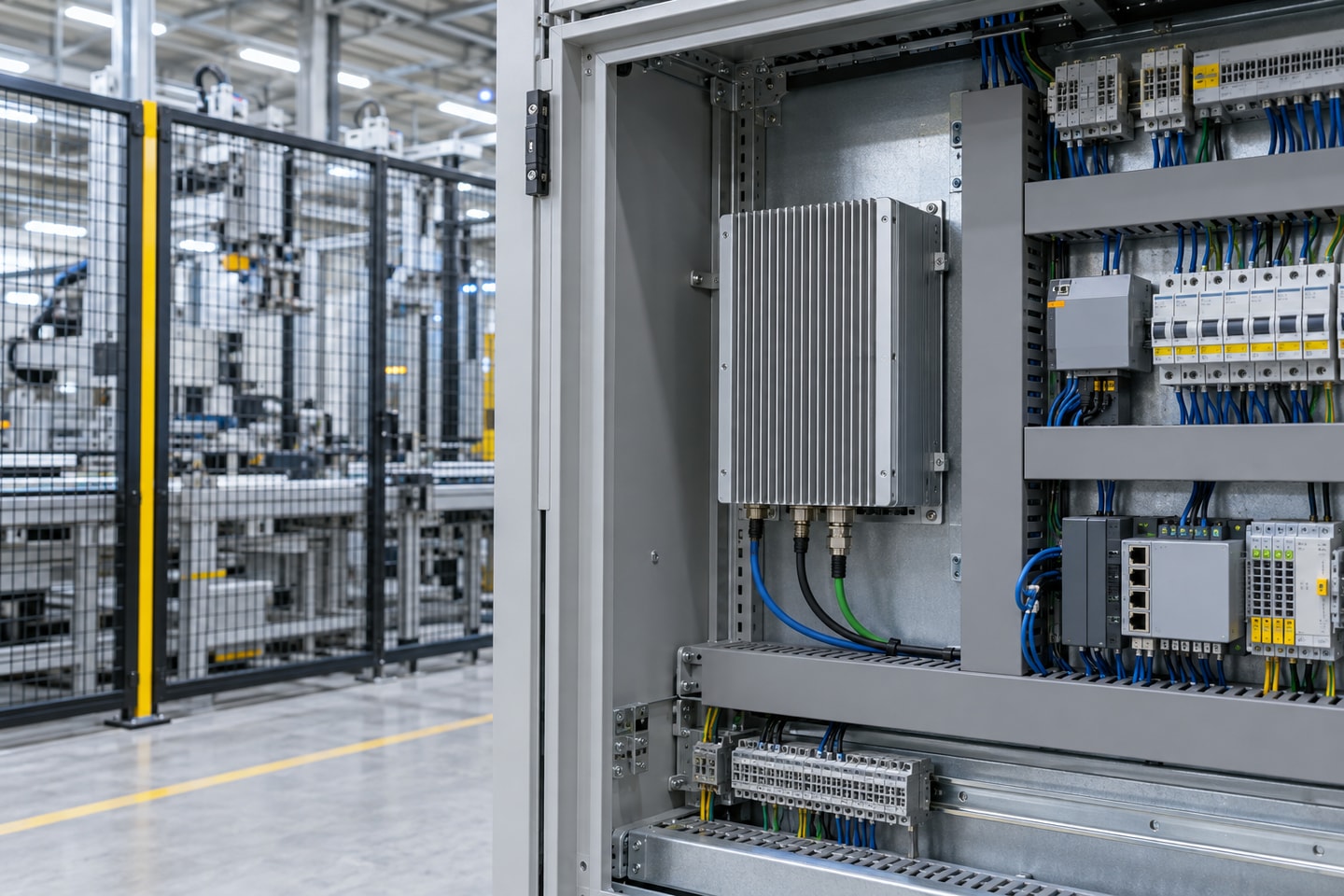
Factory-floor edge computing
Compact PCs collect and process data close to production equipment. Coordinate a fanless housing or ducted fin assembly with cabinet spacing and the actual local air temperature.

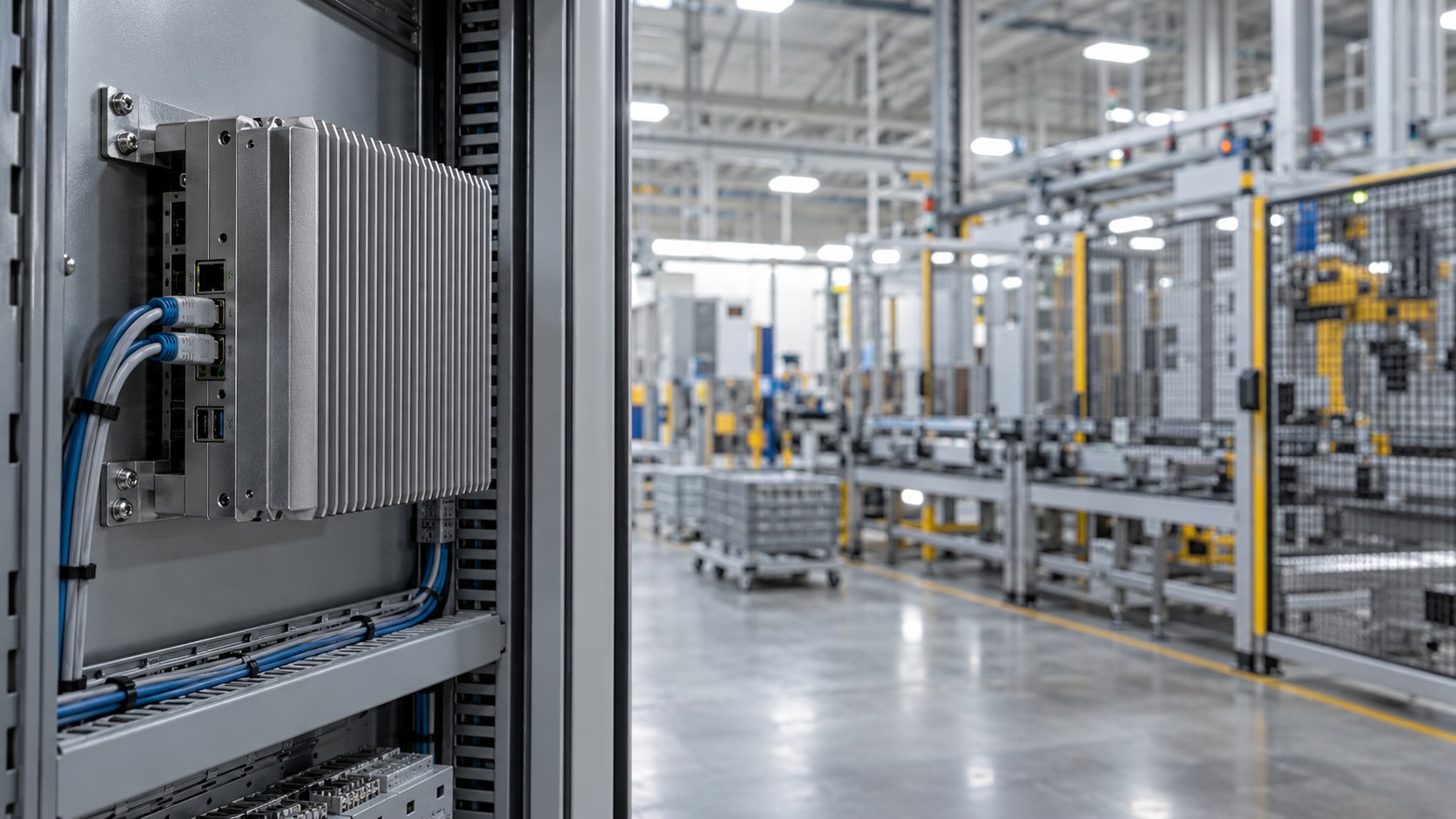
Keep industrial computing platforms thermally stable with custom heat sinks, heat pipe assemblies, liquid cold plates, and fanless enclosures engineered around your real operating conditions.
Turn your enclosure, heat load, and temperature limits into a practical cooling plan.
Discuss My Cooling RequirementsAn open-bench temperature result tells only part of the story. Real deployments add restricted airflow, sustained workloads, and mechanical constraints.
CPU, accelerator, and power-conversion losses share a small enclosure. A rising local temperature can trigger throttling and reduce available compute performance.
Sealed housings and closely packed cabinets limit heat rejection. A fanless design still needs a continuous conduction path and adequate external convection.
Connectors, memory, and storage compete with the cooling envelope. Spreading heat and routing it to useful surface area must respect every keep-out zone.
Mounting loads, thermal cycling, and repeated maintenance can change the interface. Stable contact pressure and controlled assembly help preserve the intended heat path.
Share the operating constraint that is shaping your next platform.
Review My Deployment ConditionsTreat the device, interface, heat transport, and final heat rejection as one connected design.
Define continuous and peak power, source footprints, allowable device temperatures, and simultaneous loads.
Match contact flatness, TIM thickness, compression, and mounting force to the component and tolerance stack.
Choose enclosure fins, a remote fin stack, or a liquid loop using the installed airflow or coolant conditions.
CPU / accelerator / power stage
TIM + contact block + heat transport
Enclosure fins / airflow / coolant
Bring the thermal path into your mechanical design review early.
Plan My Thermal ArchitectureChoose a thermal structure that fits the available space, heat distribution, and maintenance strategy of your industrial computing platform.
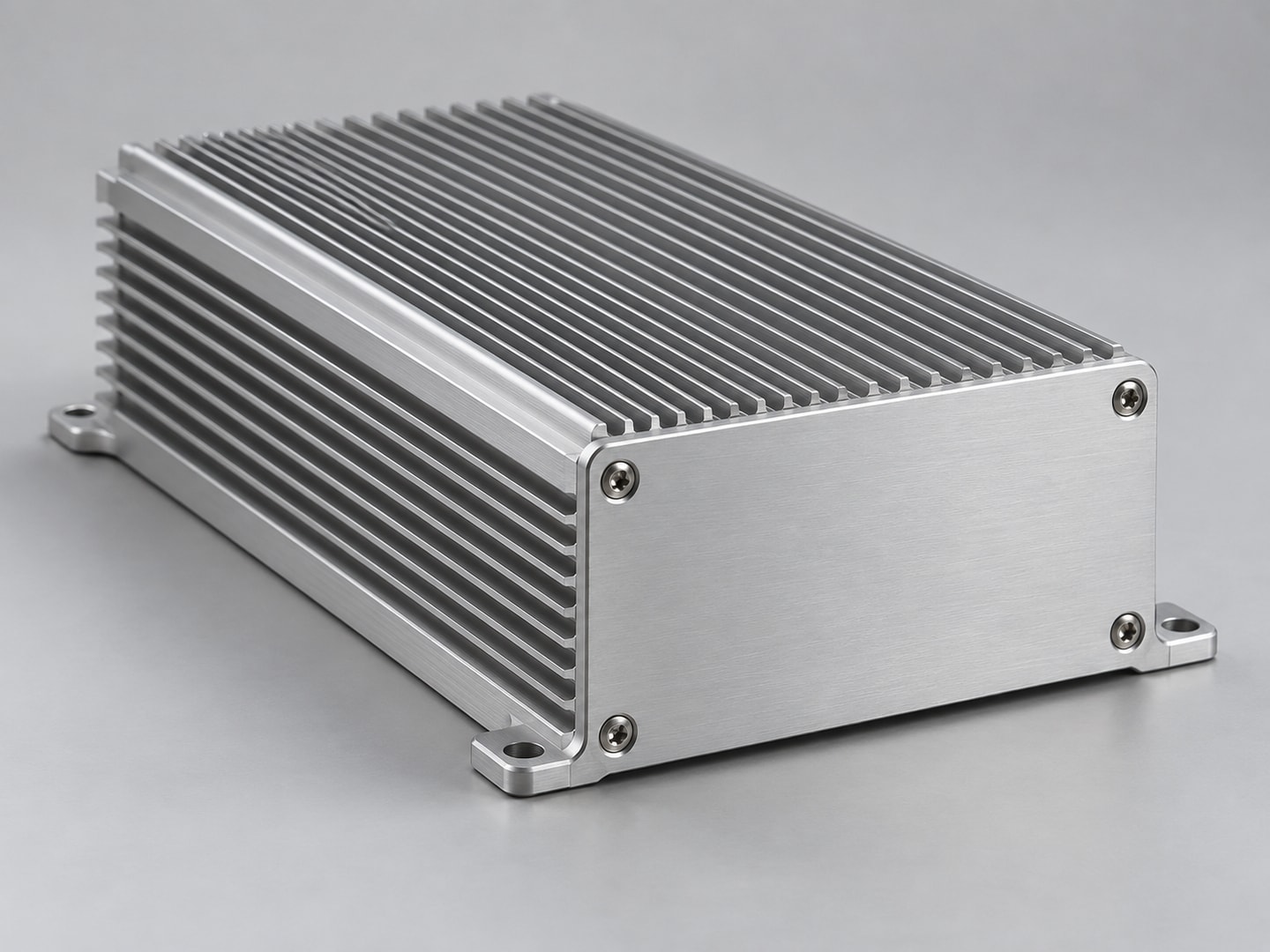
For fanless box PCs and industrial gateways. Conduct heat into a finned aluminum housing while coordinating mounting, grounding, sealing grooves, and service access.
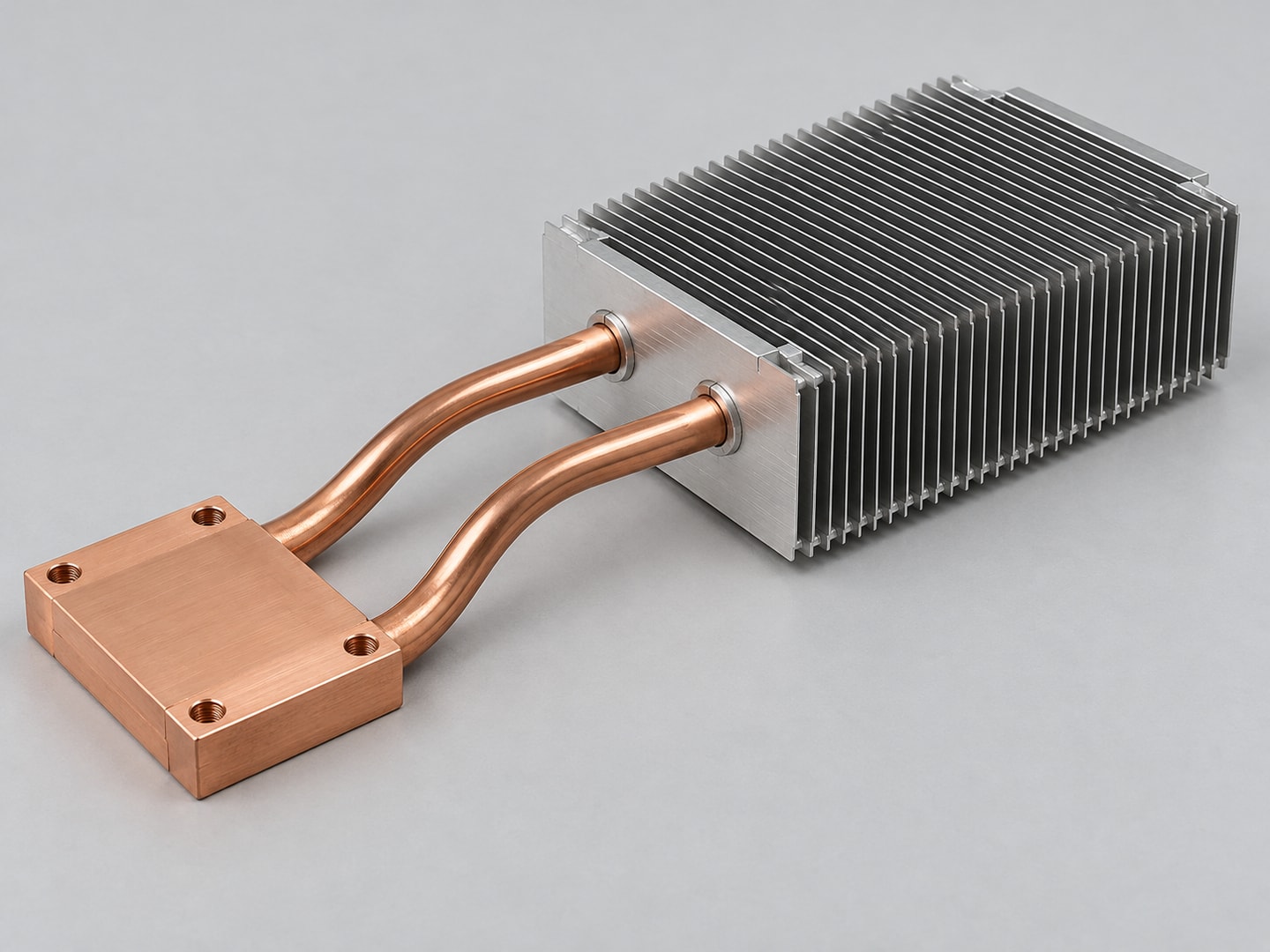
For offset processors and compact accelerator modules. Move heat to a useful fin area or spread a concentrated source across a larger base.
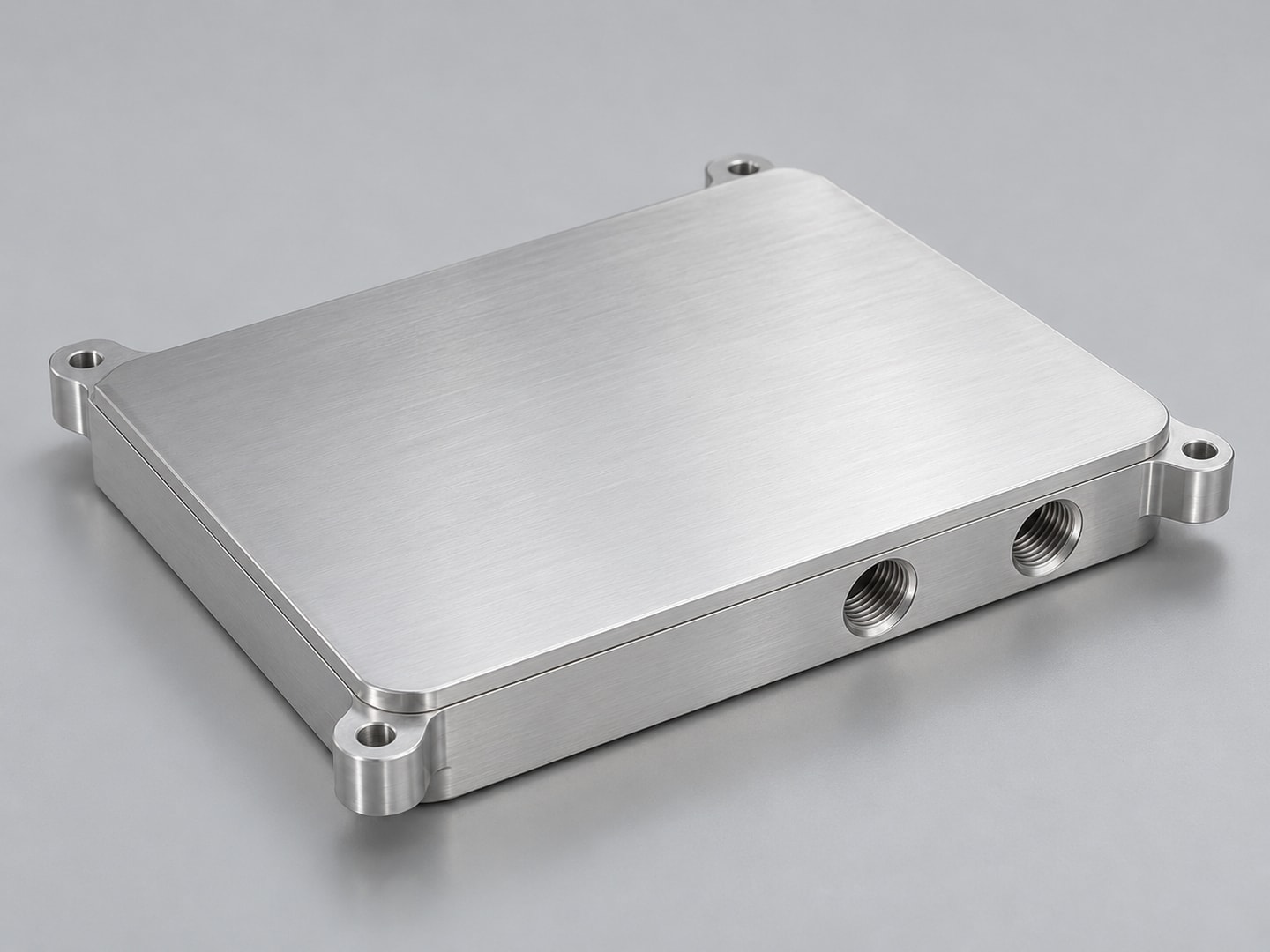
For dense computing modules with a defined liquid loop. Integrate a compact heat exchanger with controlled contact geometry and specified coolant interfaces.
Compare the cooling routes against your enclosure and thermal budget.
Find My Cooling SolutionApplication conditions guide the cooling concept—from a factory cabinet to a mobile platform or a protected outdoor installation.
Compact PCs collect and process data close to production equipment. Coordinate a fanless housing or ducted fin assembly with cabinet spacing and the actual local air temperature.
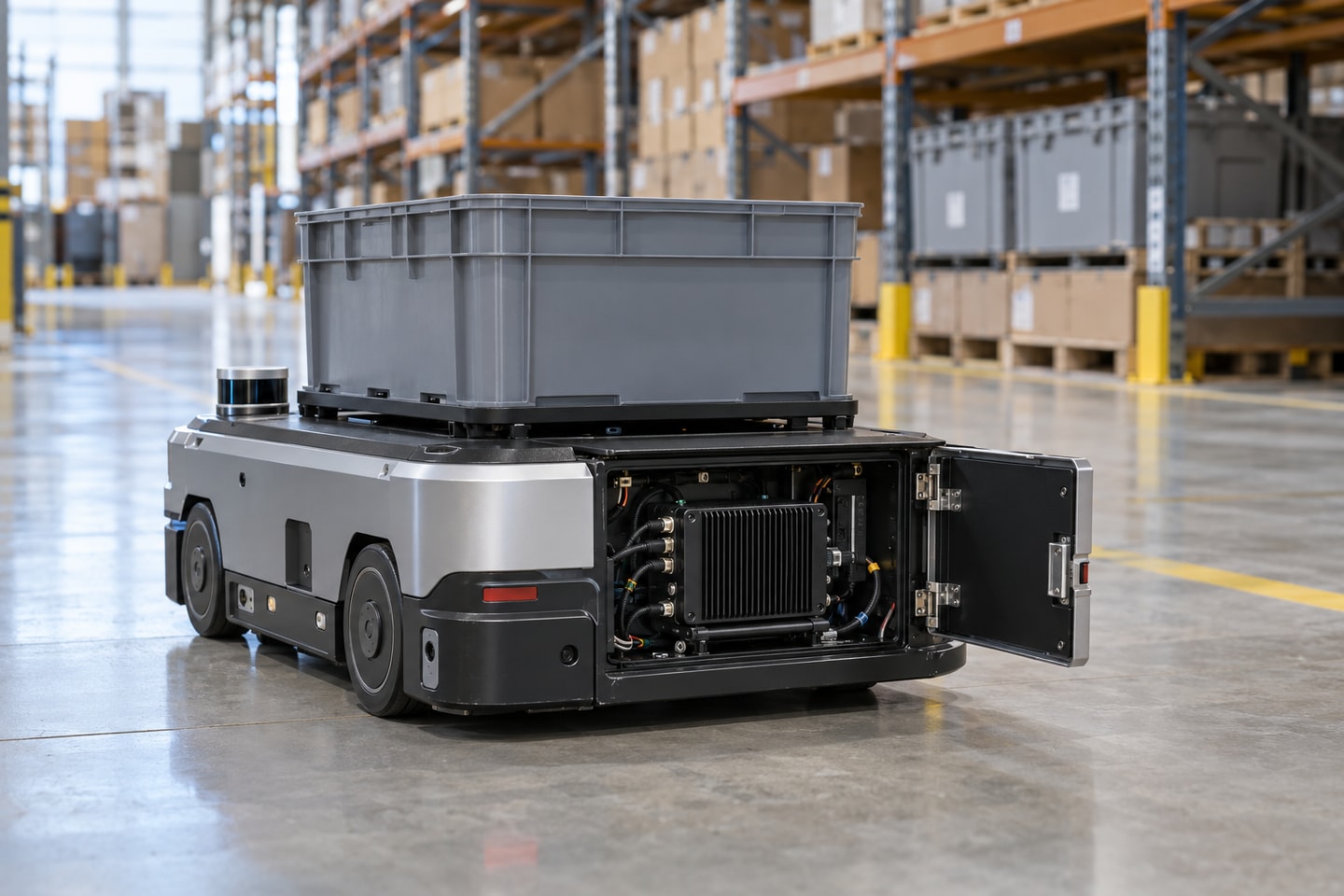
Warehouse and material-handling systems combine limited space with vibration. Keep contact loads controlled and route heat away from sensitive connectors and storage.
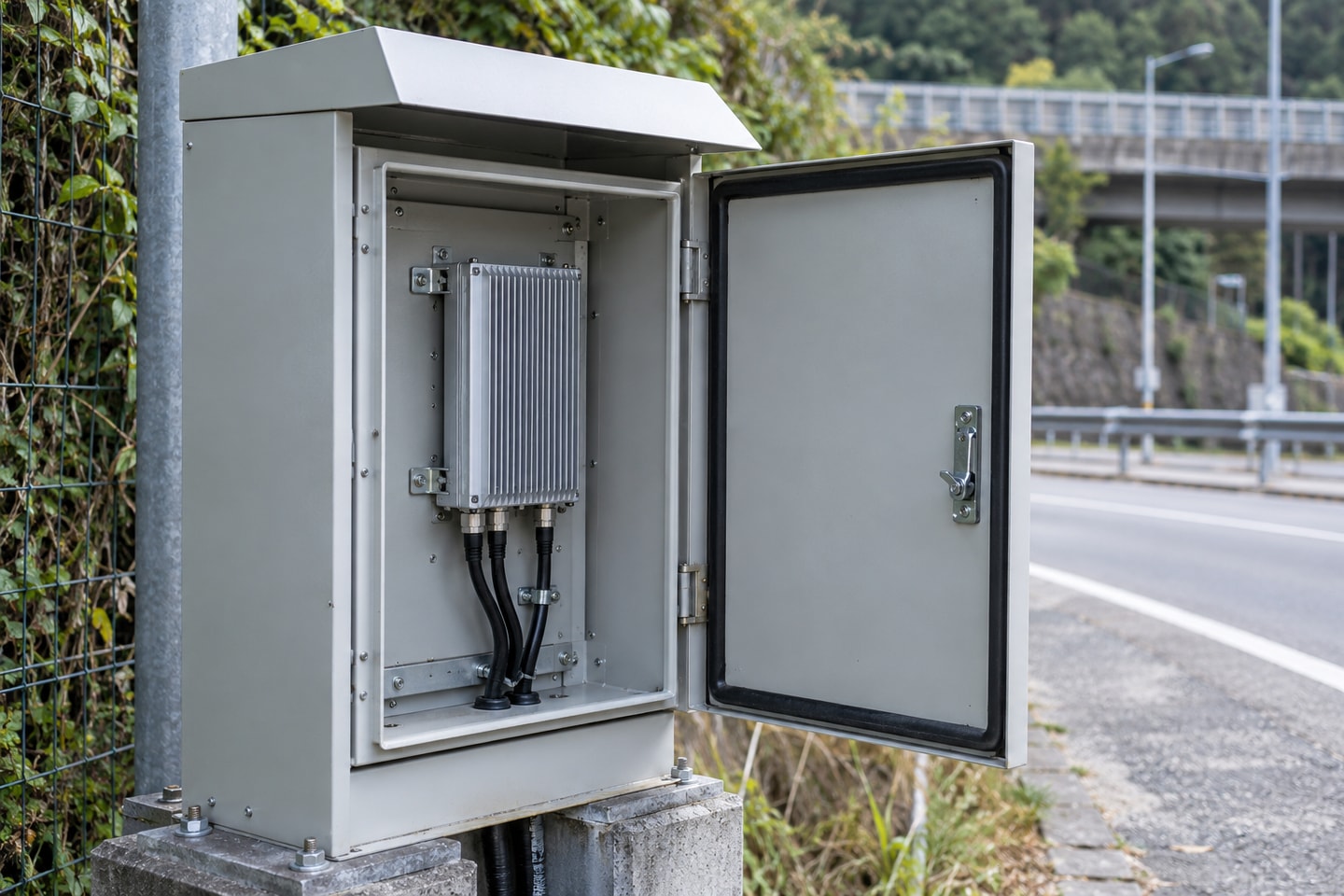
Remote gateways face high ambient temperatures and restricted maintenance. Review external convection, mounting orientation, sealing details, and solar exposure at system level.
Tell us where your device runs and how it is installed.
Review My Application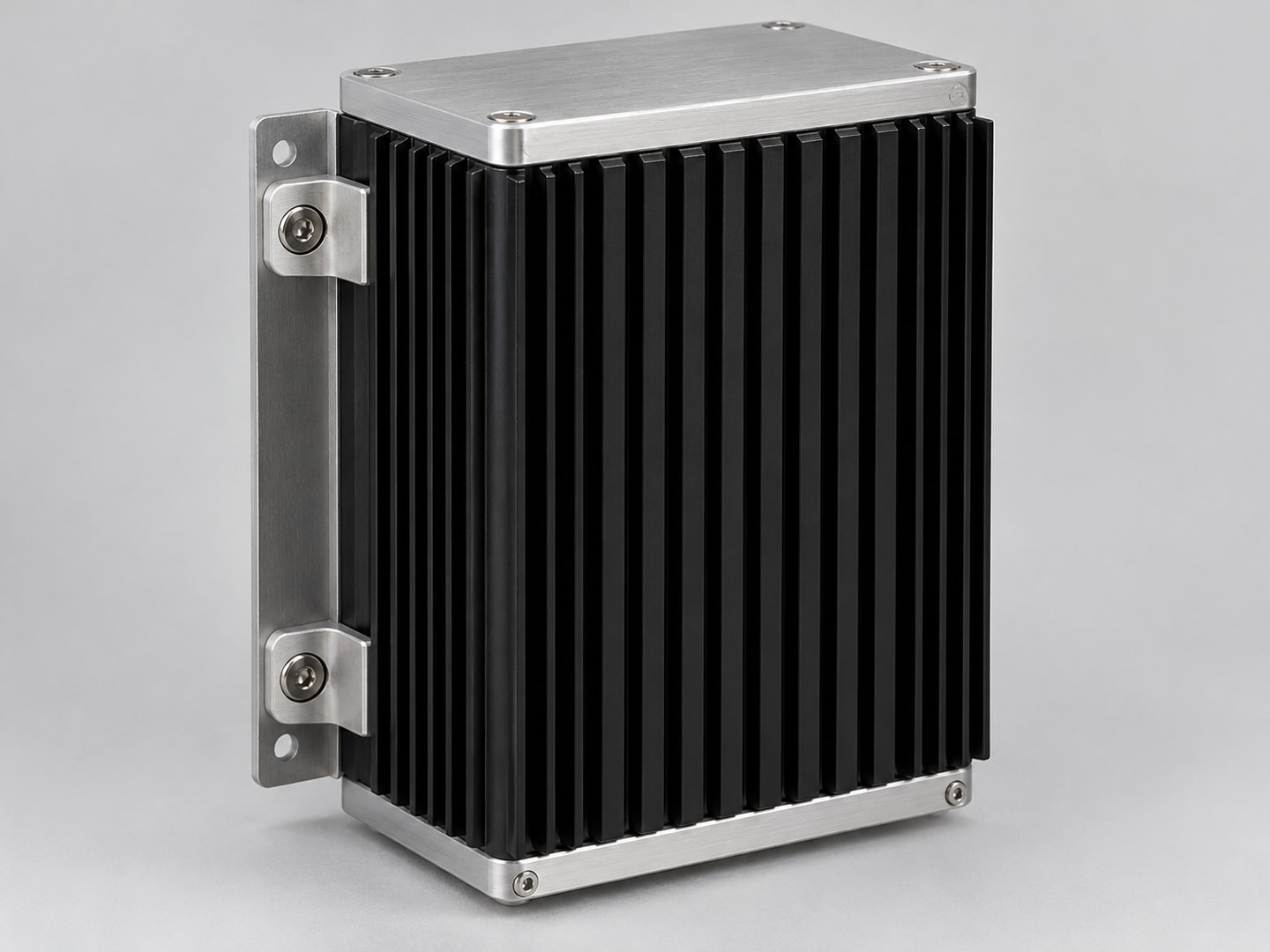
A finned enclosure project shows how contact geometry, mounting orientation, and test conditions work together.
For an Australian industrial gateway, morton developed a 180 × 140 × 70 mm enclosure using a 6063 finned body, 6061 endplates, and thermal pads to connect the device to the sidewall fins.
In a still-air bench test at 45 °C ambient, with the specified vertical mounting and no direct solar exposure, the heat-source contact block reached approximately 73 °C.
Sealing grooves, grounding contacts, and mounting points were reviewed together. After 15 initial samples, the project moved to a 600-set enclosure delivery.
Define the test conditions that your own fanless enclosure must meet.
Discuss My Enclosure ProjectMake the sample test useful for engineering approval and repeat orders by recording the boundaries that determine the result.
Set acceptance criteria before the first engineering sample is built.
Define My Validation PlanKeep engineering, purchasing, and quality working from the same approved drawings, sample evidence, and release criteria.
Share heat loads, source positions, target temperatures, enclosure space, and expected demand.
Compare cooling routes and review materials, interfaces, joining methods, and manufacturability.
Build engineering samples and check temperature, fit, contact pressure, and the agreed reliability items.
Freeze drawings and the control plan, complete first-article checks, and align packaging and delivery schedules.
Start with the drawings and operating conditions you already have.
Start My Engineering ReviewResolve the practical questions that connect thermal design, mechanical integration, and sourcing.
Get an engineering answer tied to your own platform requirements.
Ask a Thermal Design Question
Share your thermal challenge with morton. We will connect the heat load, enclosure, interfaces, and production requirements in one practical review.
Fanless, air-cooled, and liquid-cooled routes reviewed against your conditions.
Contact geometry, TIM, and mounting hardware considered together.
DFM, engineering samples, and first-article documentation.
Approved drawings, batch traceability, and managed changes.
A few details are enough to start the conversation.