
Order custom tubular heat sinks by defining the finished geometry, operating conditions, acceptance evidence and repeat quantities before comparing prices. A low quote can hide a different bore, unfinished contact face or unpriced treatment. An enquiry described as wholesale tubular heat sink customized needs a controlled drawing and supply scope behind those words. Ask suppliers to identify assumptions and exclusions, then approve a production-intent sample before releasing the batch.
1. What does wholesale tubular heat sink customized cover?
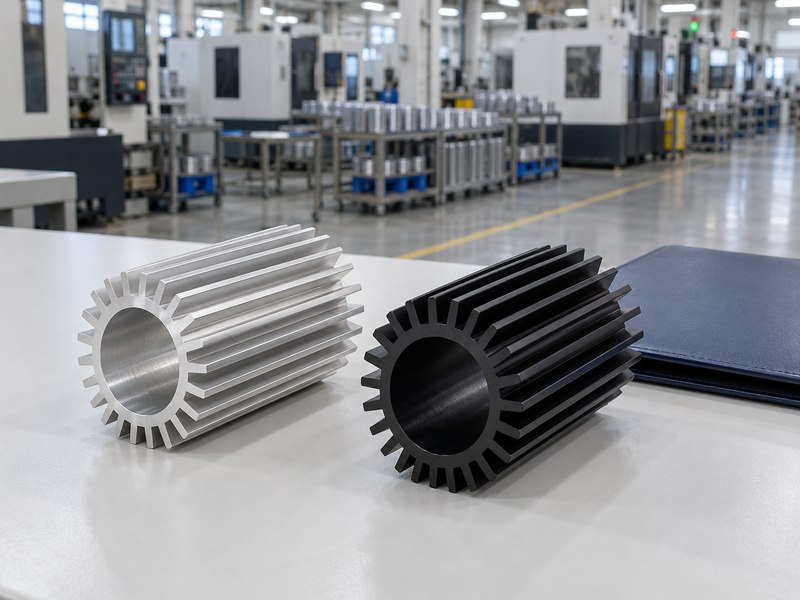
The phrase “wholesale tubular heat sink customized” describes a purchasing request rather than a controlled technical specification. It leaves the cross-section, contact interface, material, finish and production quantity open. A supplier may interpret it as a stock finned tube cut to length, a machined hollow profile or a more complex assembly. Establish the actual part before treating competing offers as equivalent.
What should the enquiry define?
Provide a drawing and model with matching revisions, plus the installation envelope and heat-source connection. Explain whether the bore provides clearance, supports a cylindrical contact or belongs to a separately specified fluid path. Define sample quantity and expected repeat demand so the supplier can compare feasible routes. If the design is still developing, list the open points explicitly; a quotation based on provisional geometry should not quietly become the final production specification.
- Define the finished component rather than its catalogue label.
- Identify thermal, structural and cosmetic surfaces.
- Separate provisional assumptions from approved requirements.
| Enquiry item | Define |
|---|---|
| Geometry | Bore, annular wall, fins and local features |
| Operation | Heat input, temperature target and rejection conditions |
| Supply | Sample quantity, repeat demand and documentation |
Key takeaway: convert the search phrase into a product definition suppliers can quote consistently.
2. What belongs in a custom tubular heat sink quote?
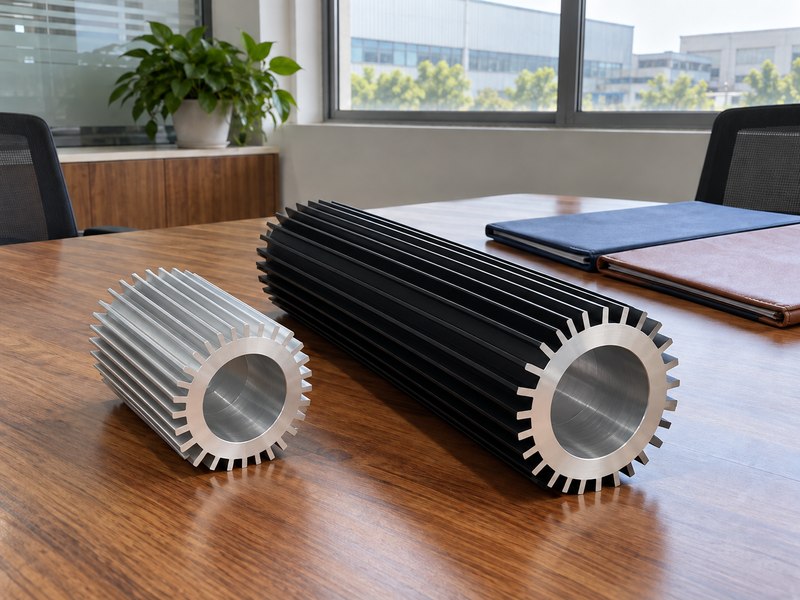
A quotation should list the material, manufacturing operations, finishing, inspection and delivery condition included in the price. Separate one-time charges from repeat unit costs. State the drawing revision and any supplier exceptions. A price per piece is incomplete when one offer covers raw extrusion and another covers a machined, treated and individually protected component.
How do you align competing offers?
Compare the same finished-part scope and quantity before judging the unit price. For CNC machined heat sink features, ask which bores, faces, threads and mounting details are included, together with the required final inspection. Identify coating, masking and packaging charges rather than assuming they are standard. Keep delivery assumptions visible as well, including the agreed location, transport responsibility and the events from which the supplier measures lead time.
- Compare identical drawing and finish revisions.
- List tooling, setup and recurring charges separately.
- Record exclusions and proposed deviations before ordering.
| Quote line | Clarification needed |
|---|---|
| Starting material | Alloy, temper and profile route |
| Finished operations | Machining, treatment and inspection scope |
| Supply condition | Quantity, protection and delivery assumptions |
Key takeaway: align the scope before comparing the price.
3. How do you qualify a tubular heat sink supplier?
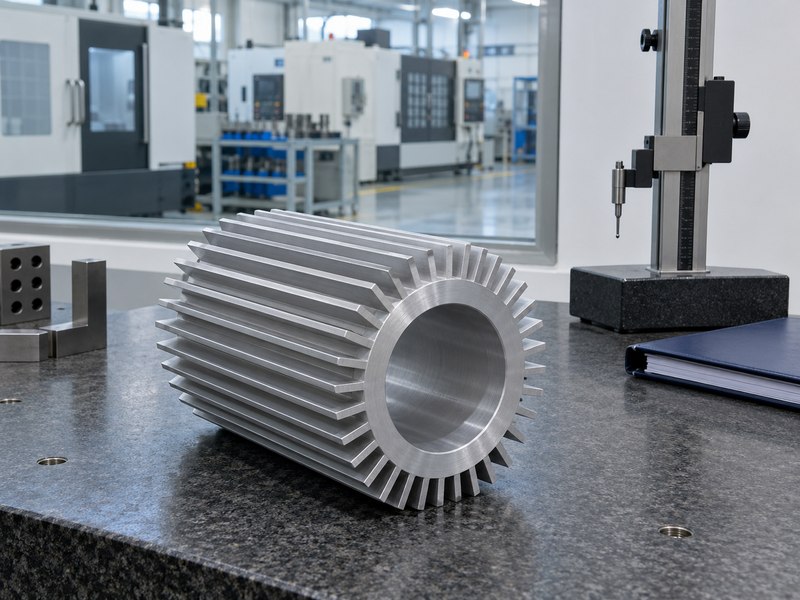
Choose a supplier that can control the complete route needed for the defined part, including any outside operations. Ask a proposed tubular heat sink factory which operations it performs and which it buys outside. A company can manage subcontract finishing successfully, but it should explain who controls requirements, inspections and changes. The buyer needs an accountable release process rather than a long list of machines with no connection to the proposed part.
How should you compare supplier claims?
Compare China tubular heat sink brands and China tubular heat sink manufacturers through evidence relevant to your geometry. Request representative hollow profiles, an explanation of workholding and inspection, and records the supplier is prepared to provide for your order. If certification is part of the purchase requirement, check its scope, validity and relevance rather than treating a logo as product qualification. Avoid ranking suppliers from catalogue appearance alone; a polished photograph cannot demonstrate bore control, batch traceability or repeat thermal performance.
- Identify process owners and final release responsibility.
- Review examples with comparable bores, walls and fins.
- Connect capability claims to the actual order requirements.
| Supplier evidence | What to examine |
|---|---|
| Comparable parts | Similar geometry and production route |
| Inspection plan | Defined characteristics and methods |
| Process responsibility | Control of outside operations and changes |
Key takeaway: qualify the route and its controls, not a supplier description alone.
4. Which tooling should the purchase agreement cover?
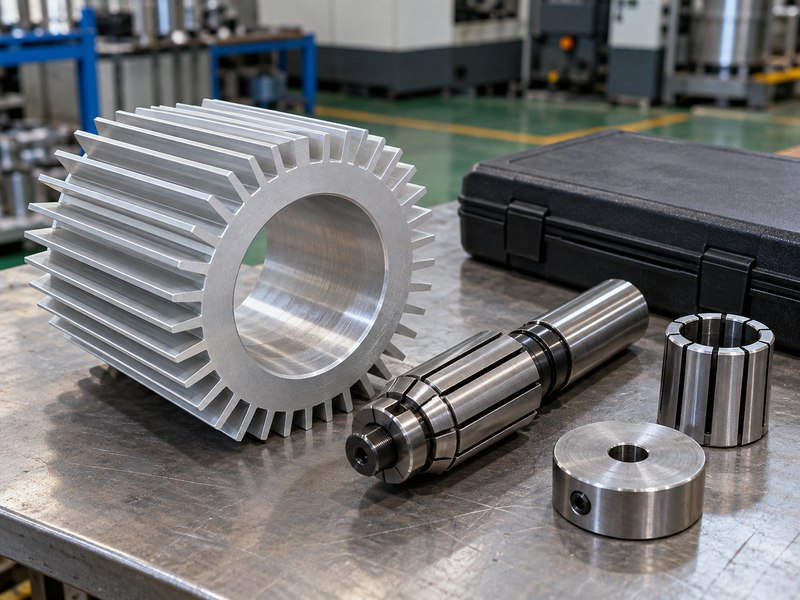
Tooling depends on whether the design can use an existing profile and which later operations are required. A new hollow section may need extrusion tooling, while machining can require dedicated supports, fixtures or gauges. Identify those items in the quotation and sample plan. Tooling approval should connect to the proposed finished part rather than authorise an undefined future geometry.
When can existing tooling be useful?
An existing profile can be a useful starting point if its wall, bore, fin arrangement and machining allowance fit the design. The custom design levels described by an established heat sink manufacturer distinguish modifying standard parts from creating new tooling. Apply that distinction to the complete tubular component, including the operations needed to reach its final interfaces. Agree ownership, maintenance expectations and the treatment of revisions before committing to a tool that the repeat-order plan depends on.
- Identify extrusion tools, fixtures and dedicated gauges.
- Compare stock modifications with a new-profile route.
- Record the approved geometry and tooling revision.
| Tooling item | Purchasing question |
|---|---|
| Extrusion die | New section or suitable existing profile? |
| Machining fixture | How does it support the hollow component? |
| Inspection gauge | Which defined requirement does it check? |
Key takeaway: approve tooling for the manufacturing route that produces the required finished part.
5. What changes custom tubular heat sink prices?
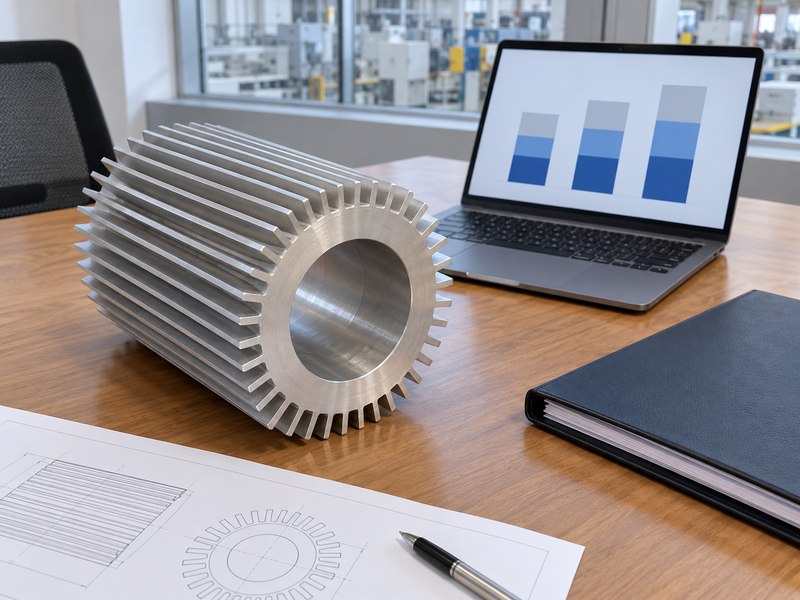
Pricing varies with the geometry, route, quantity, inspection scope and commercial terms. Larger quantities may spread some setup charges, but they do not remove the cost of difficult machining, treatment or handling. Compare quotations at realistic order quantities. A forecast for future demand and a firm release quantity should be identified separately so neither party prices the wrong production commitment.
Which design changes affect the supplied cost?
Ask whether a proposed change removes a process step or merely changes the amount of starting material. A standard profile with an unsuitable bore may require more rework than a better starting section, while a tight cosmetic requirement may add inspection and handling work. Review the consequences for thermal contact, airflow and mounting before accepting a lower-cost alternative. Do not present an untested material or profile substitution as equivalent solely because the outer diameter and cut length remain unchanged.
- Request prices at defined quantity breaks.
- Keep technical scope constant during the comparison.
- Review alternatives against fit, cooling and inspection requirements.
| Price driver | Review focus |
|---|---|
| Quantity | Firm releases, forecast and setup allocation |
| Geometry | Machining access and usable profile allowance |
| Acceptance scope | Finish, inspection and protective handling |
Key takeaway: evaluate the cost of conformity across the intended ordering pattern.
6. How should you approve the finished sample?
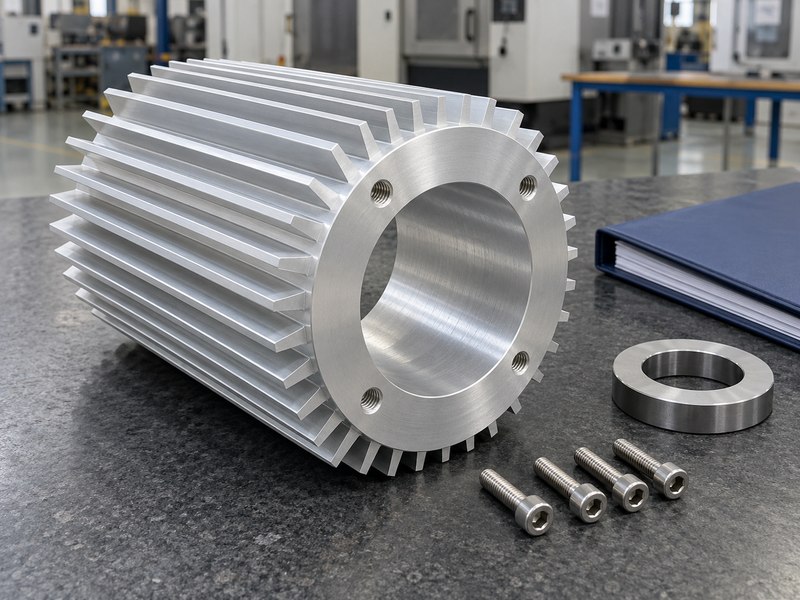
Approve a finished sample against the drawing, assembly fit, surface requirements and the thermal evidence needed for the application. Identify which operations represent the intended production route and which are prototype exceptions. Keep a controlled reference with both parties where practical. Appearance approval alone should not release a part with unresolved bore fit, contact alignment or mounting access.
What should the approval record contain?
Record the sample revision, inspected material condition, finish and any accepted deviations. Review it with the intended heat sink mounting hardware or a representative assembly so fastening access and contact are checked together. If a thermal test is required, retain the heat input, interface, sensor locations and rejection conditions with the result. State which checks must be repeated after a change; an attractive hand-finished prototype is not evidence for every requirement of a different production route.
- Approve the final treated configuration where practical.
- List open or accepted deviations explicitly.
- Retain the inspection and application-specific test evidence.
| Approval item | Record |
|---|---|
| Drawing conformity | Dimensions, material and surface condition |
| Assembly fit | Interfaces, fasteners and installation access |
| Thermal evidence | Tested configuration and boundary conditions |
Key takeaway: approve a documented configuration rather than a photograph or a general sample email.
7. Which records prove the supplied parts conform?
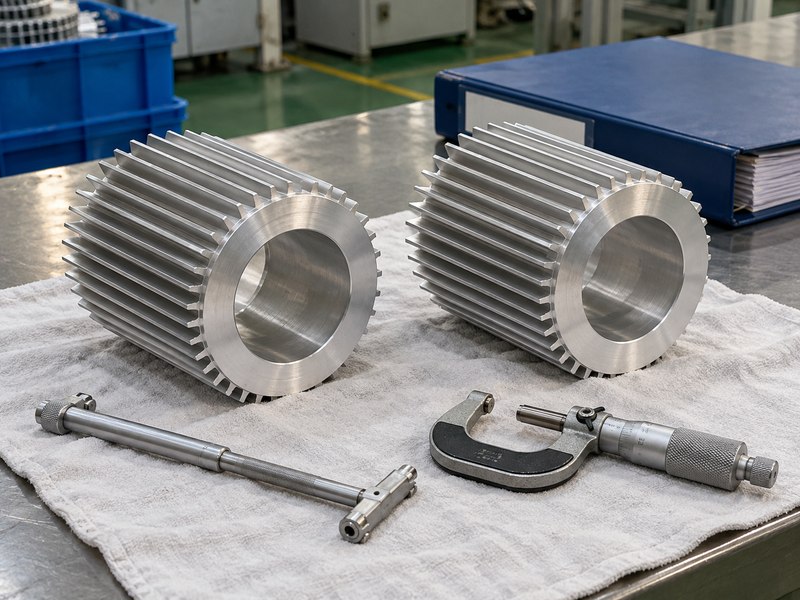
Quality evidence comes from defined requirements, suitable inspections and records connected to the supplied batch. Decide which characteristics control function and how they will be checked. A material record cannot prove a finished bore dimension, and a dimensional report cannot prove thermal performance under unspecified conditions. Each requirement needs evidence suited to the question it answers.
How should the supplier report conformity?
Identify the inspected drawing revision, sample or lot reference, methods and results for the agreed characteristics. Bore size, straightness, end-face alignment and the fin envelope may need different methods rather than one general caliper check. Include cleanliness and damage limits where they affect contact or assembly. When a nonconforming condition appears, agree containment and corrective work before release, then repeat the checks that the proposed rework could change.
- Mark critical characteristics in the inspection plan.
- Link material and inspection records to the shipment.
- Define how deviations and rework are reviewed.
| Evidence | Question answered |
|---|---|
| Material record | Which defined stock was used? |
| Dimensional inspection | Does the checked feature meet the drawing? |
| Application test | Does the tested assembly meet its stated target? |
Key takeaway: keep evidence traceable to a requirement and the supplied parts.
8. Who controls the finish and contact surfaces?
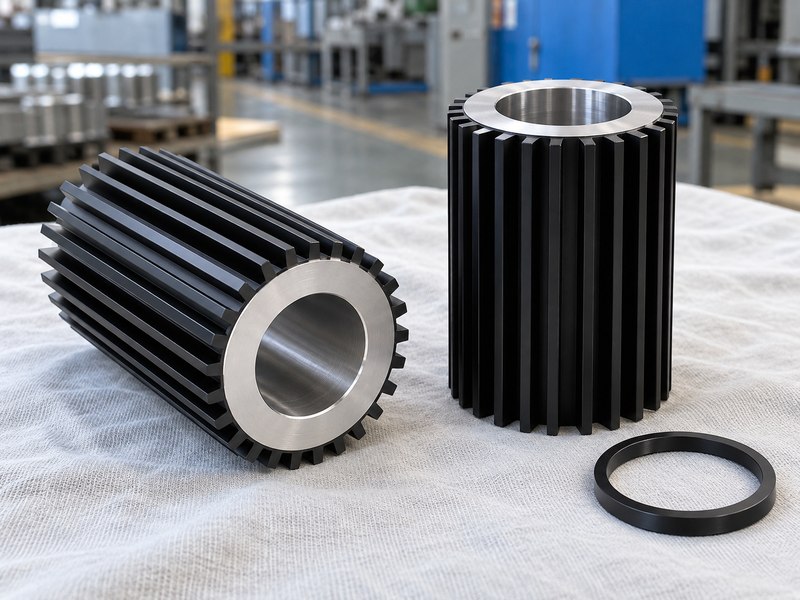
The supplier responsible for the finished component should coordinate the specified treatment, masking, cleaning and appearance acceptance. Name those requirements even if another company performs the coating. Bore fits, contact lands and electrical bonding surfaces may need different controls from visible fins. The agreed finish should preserve the functional definition of the part rather than replace it with a color description.
How do you avoid an appearance dispute?
Agree a finished master and practical inspection conditions before production. Confirm the material, texture and final treatment used for that sample, since changes can affect the visible result. Review the controlled contact surfaces alongside the intended thermal interface material and mounting method. For specification background, the Aluminum Anodizers Council explains the relationship between mechanical texture and anodized appearance; a cosmetic coating note still does not establish an electrical safety insulation rating.
- Identify treated and protected surfaces by drawing reference.
- Approve the appearance after the complete finishing route.
- Check the interfaces after the processes that affect them.
| Finish control | Retain |
|---|---|
| Appearance | Final master and agreed viewing conditions |
| Functional surfaces | Coating, masking and dimensional requirements |
| Outside processing | Responsible source and release checks |
Key takeaway: give the finishing operation the same revision control as the geometry.
9. How should finished tubular heat sinks be packed?
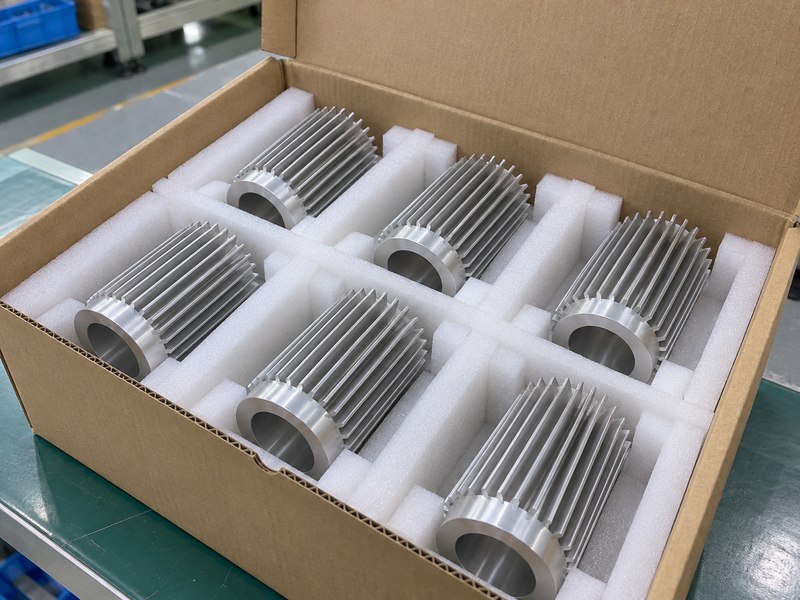
Pack the finished parts to prevent fin damage, contact-face marks and metal-to-metal rubbing during handling and transport. Review how the package supports the component and limits movement without loading delicate features. Protective film or separators must suit the surfaces they contact. A part that passed inspection can still become unsuitable if an unreviewed packing method bends fins or leaves residue in the bore.
Which packing details belong in the release scope?
Agree the separation method, quantity per container, identification and protection of controlled interfaces. Ask the supplier to show how accepted parts move from inspection into packing without mixing with parts awaiting rework. Retain a packaging reference for repeat orders and define the receiving evidence needed to investigate damage. A change in stacking, separators or handling can affect delivered condition even when machining and coating remain the same, so treat relevant packaging changes as part of supply control.
- Support the hub or another reviewed structural surface.
- Keep cosmetic and functional faces separated.
- Preserve part, revision and lot identification through packing.
| Packaging feature | Risk addressed |
|---|---|
| Structural support | Movement and fin deformation |
| Surface separation | Scratches and rubbing marks |
| Clear identification | Mixed revisions or untraceable receiving issues |
Key takeaway: approve the delivered condition as well as the inspected part.
10. What should repeat orders preserve?
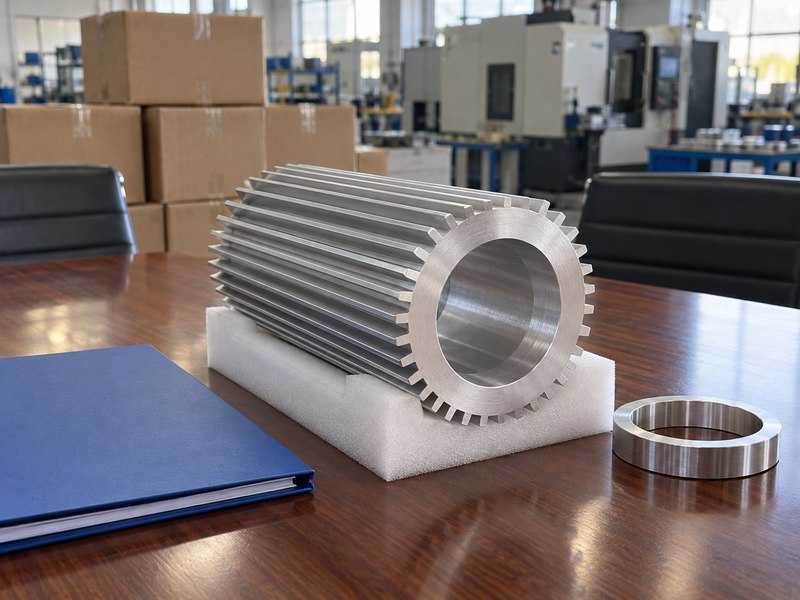
Repeat orders should reference the approved drawing, material, finish, route and acceptance records. Keep that definition accessible to engineering, purchasing and the supplier’s release team. Require review before a relevant substitution or process change reaches the next shipment. A previous purchase number is useful for retrieval, but it should lead to a current controlled product definition.
What should be confirmed before another release?
Check whether the equipment requirements, forecast or component design have changed since approval. Keep accepted deviations and corrective actions connected to the revision they affect, rather than assuming an old email applies indefinitely. To review a new or revised tubular component, contact us with the drawing, heat load, mounting details and expected quantities. The next order should identify the same conforming part and delivery condition that both teams intend to manufacture and receive.
- Confirm the current technical and commercial scope.
- Review substitutions before production or shipment.
- Retain the approved sample, route and packaging references.
| Repeat-order record | Confirm |
|---|---|
| Product revision | Current drawing, material and finish |
| Approved route | Relevant sources and process changes |
| Release evidence | Inspection, deviations and packing requirements |
Key takeaway: reorder from a controlled definition, then review what has changed.
Frequently asked questions
Q1: Can I use “wholesale tubular heat sink customized” as a specification?
No. Add the geometry, material, finish, operating conditions and acceptance requirements. The phrase alone does not identify a conforming finished part.
Q2: Can a supplier outsource extrusion or anodizing?
Yes, if the proposed route meets your requirements and the responsible supplier controls it. Review process ownership, inspection and relevant change notifications.
Q3: Should I choose the lowest unit price?
Compare the same finished scope and delivery assumptions. Missing machining, masking, inspection or protective packing can make apparently similar offers different purchases.
Q4: How do I know if the sample represents production?
Request the material and process route used for it, including prototype exceptions. Repeat the checks that depend on any later production change.
Q5: Can I accept a different profile for a repeat order?
Only after reviewing the affected requirements. Recheck the bore, contact path, mounting, airflow and finished condition before approving the substitution.