
Choose a welding cold plate by checking device losses, duty cycle, contact quality and the coolant loop as one system. An anodized water cooled heat sink for welding equipment combines that heat path with a specified aluminum surface finish. If your prototype passes short welds but overheats during production, review device losses, contact quality and coolant conditions together. Begin with the selected module’s data and the equipment manufacturer’s operating limits.
1. What is an anodized water cooled heat sink for welding equipment?
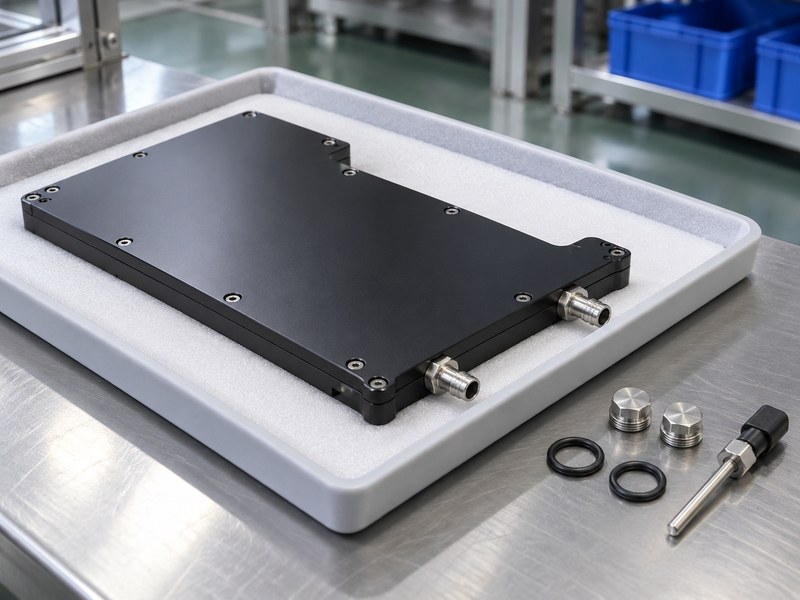
An anodized water cooled heat sink for welding equipment is an aluminum cooling plate with enclosed liquid passages and specified anodized surfaces. It supports heat-producing components such as switching modules and rectifiers where the equipment design calls for liquid cooling. Coolant collects heat beneath the mounting area and carries it elsewhere for rejection. Although exterior color describes the finish, channel geometry and operating conditions determine cooling performance.
Where does it fit within your power source?
Define which devices mount on the plate before choosing its construction. An inverter switch, output rectifier and nearby magnetic component may have different thermal paths and allowable temperatures. Leave room for electrical clearances, hose connections and service access around those devices. A cold plate removes heat from the components connected with it; auxiliary boards and enclosure air may still need separate cooling.
- Identify every device served by the plate.
- Mark its footprint and mounting references.
- Allocate clearance for connections and servicing.
| Part of the system | Design role |
|---|---|
| Module interface | Conduct device heat into the plate |
| Internal passages | Transfer heat into coolant |
| Remote heat exchanger | Reject transported heat |
Keep the cooling boundary visible on your assembly drawing.
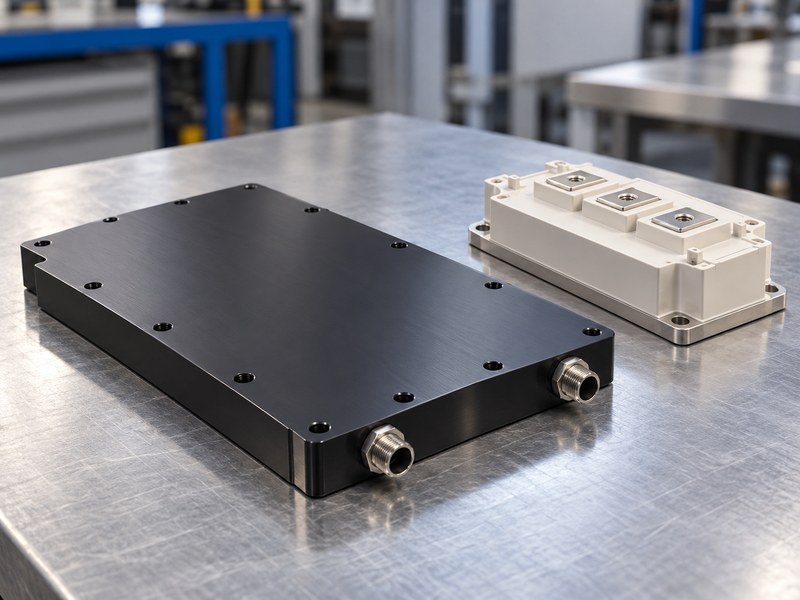
2. Which heat losses must the cold plate remove?
Size the plate around component losses that enter its mounting surface. An anodized water cooled heat sink for welding equipment should not be sized from arc output power alone. Output power largely travels into the welding circuit while conduction and switching losses heat the semiconductors. Rectifier, transformer and auxiliary losses need their own allocations whenever their heat reaches a different cooling path.
How should you build the heat-source map?
Record each mounted device’s losses at the intended current, switching conditions and temperature. Use supplier data within its stated conditions and validate the resulting estimate on representative equipment. Because equal loss allocation can hide a local hotspot, map uneven loading across devices sharing the plate. Keep estimated losses, uncertainty and measured results separate so a later control-setting change can trigger a traceable thermal review.
- List continuous losses by device position.
- Record operating modes that change those losses.
- Identify heat rejected through other structures.
| Input | Why it belongs in the review |
|---|---|
| Device loss estimate | Defines local heat input |
| Source footprint | Defines heat concentration |
| Temperature target | Sets available thermal margin |
Compare proposals using the same source map and coolant boundary.
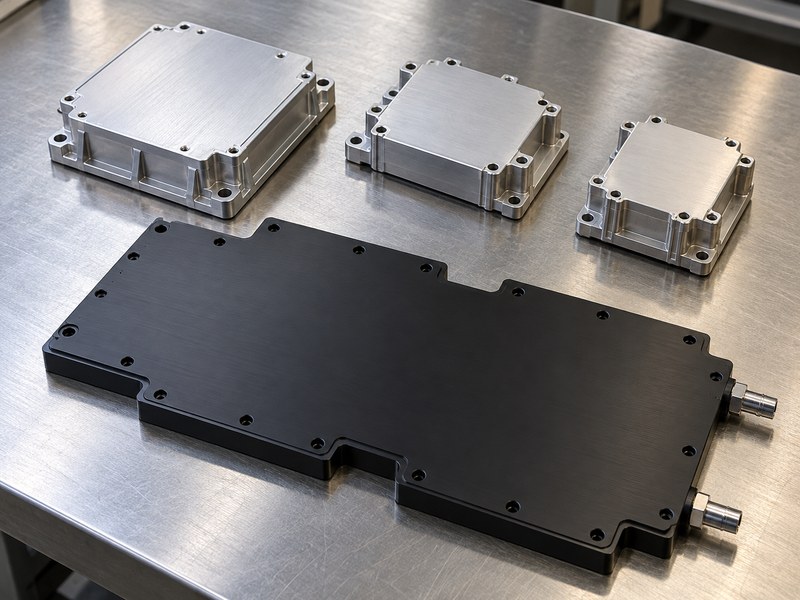
3. How should duty cycle and short heat bursts be checked?
Check both the repeating welding schedule and the hottest short-duration operating state. An anodized water cooled heat sink for welding equipment can meet an average heat budget while a semiconductor exceeds its temperature target during a burst. Welding duty cycle and semiconductor switching duty describe different time scales. Preserve both in the design inputs instead of reducing them to one average percentage.
Which operating sequence should your model reproduce?
Model weld time, pauses, starts and repeated cycles using the device supplier’s applicable transient thermal data. Because earlier welds warm the assembly, include that thermal state and a warm coolant inlet. Confirm whether your sequence approaches a repeating temperature pattern or continues accumulating heat. A single cold-start weld provides little evidence about the last weld in a demanding production sequence.
- Supply representative and worst-case weld schedules.
- Define inlet temperature after repeated operation.
- Check peak junction and mounting-face temperatures.
| Operating case | Question to resolve |
|---|---|
| Short burst | Does junction temperature peak too high? |
| Repeated welds | Does heat accumulate between cycles? |
| Sustained duty | Can the loop reject ongoing losses? |
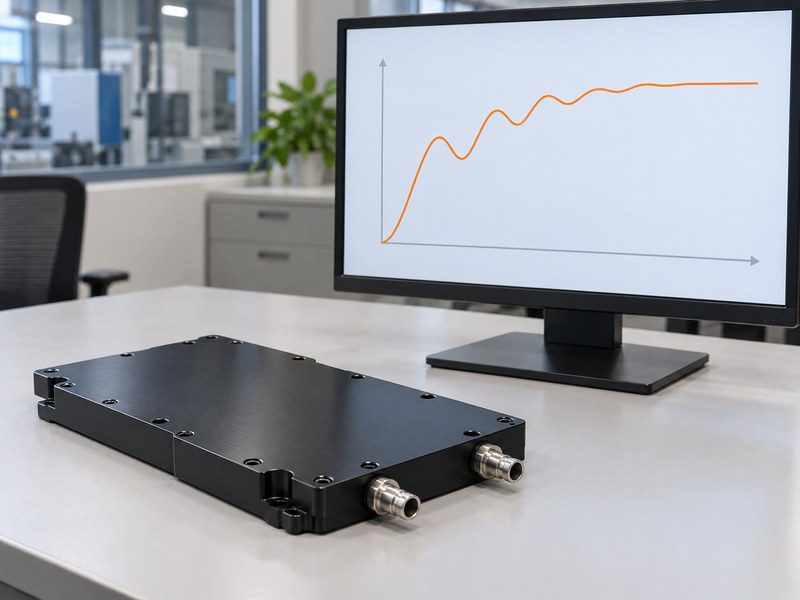
4. How should the module contact face and TIM be specified?
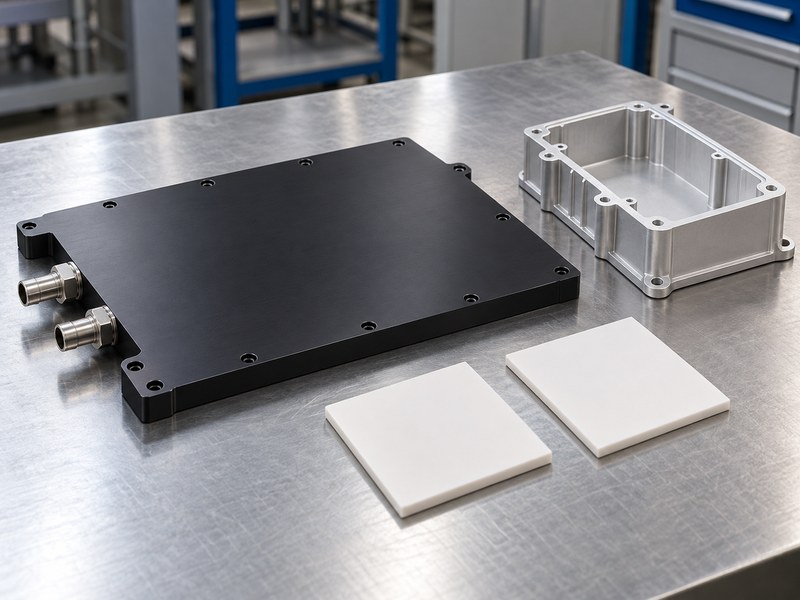
Specify the contact face and thermal interface material together, following the selected module’s mounting requirements. An anodized water cooled heat sink for welding equipment depends on this interface even when internal convection performs well. Surface flatness, local support and the compressed interface condition affect heat transfer. Extra interface material can increase thermal resistance when it creates an unnecessarily thick heat path.
What belongs on the approved interface drawing?
Define the finished contact area, surface condition, fastening arrangement and permitted interface material. Use thermal pads only where their compressed thickness, mechanical behavior and electrical properties suit that module. A compliant gap pad cannot replace every grease or phase-change interface. Check assembly repeatability and stability after thermal cycling rather than accepting material conductivity as proof of assembled performance.
- Identify whether the contact face remains bare.
- Specify the supplier-approved mounting method.
- Control contamination and interface placement.
| Interface feature | Acceptance evidence |
|---|---|
| Finished contact face | Inspection against local drawing requirements |
| Interface material | Approved material and application condition |
| Mounted assembly | Thermal verification after representative cycling |
Resolve the assembled interface before increasing pump capacity.
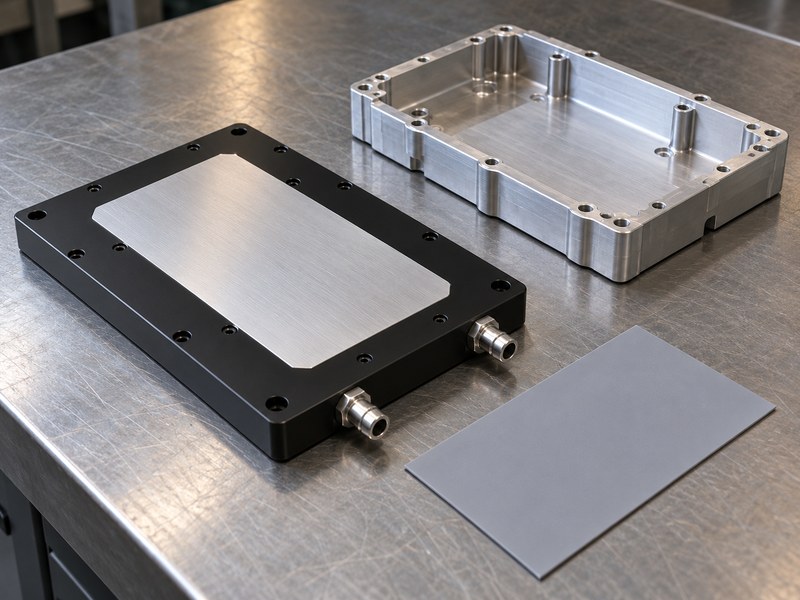
5. Can anodizing provide the required electrical isolation?
Do not treat ordinary anodizing as a guaranteed electrical safety barrier. An anodized water cooled heat sink for welding equipment needs an insulation design based on the module, assembled geometry and applicable equipment requirements. Oxide properties depend on processing and coating condition. Scratches, edges, fasteners and exposed features can interrupt the insulation path assumed from a coated sample.
Who should define the insulation boundary?
Have the equipment’s qualified electrical designer identify which parts require isolation and how that isolation will be verified. Some module packages provide internal isolation; others require a separate qualified interface or mounting arrangement. Include creepage, clearance and coolant-related conductive paths in that review. A coating result on a flat coupon does not establish the safety of the complete cold-plate assembly after installation and service.
- Confirm the module’s documented isolation structure.
- Identify exposed metal and fastening paths.
- Specify assembly-level electrical acceptance checks.
| Proposed barrier | Evidence to request |
|---|---|
| Module insulation | Applicable device documentation |
| Separate isolating interface | Qualified material and assembly conditions |
| Anodized finish | Application-specific electrical verification |
Keep cosmetic finish approval separate from electrical safety acceptance.
6. Where should conductive grounding contacts remain?
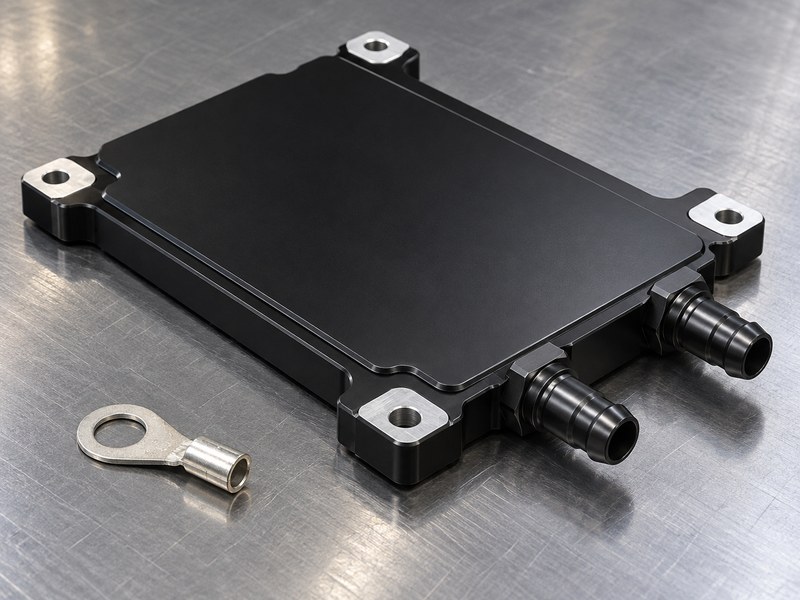
Keep intended conductive bonding contacts at locations defined by the equipment’s electrical design. An anodized water cooled heat sink for welding equipment can lose a planned metal contact when anodizing covers its contact land. Specify masking or another approved contact treatment during design. Protective bonding and the welding current return serve different purposes and need separate, documented paths.
How should you describe a contact land?
Mark its location, finished dimensions, surface condition and permitted surrounding coating on the drawing. Before finishing, coordinate that contact detail with corrosion protection and service access. Leave the connection hardware and verification method under the equipment designer’s control rather than improvising a connection on a finished part. A random scratch through black anodizing gives neither a controlled contact area nor repeatable inspection evidence.
- Identify each intended conductive interface.
- Keep coating boundaries clear of contact lands.
- Record bonding verification with the assembly revision.
| Drawing detail | Purpose |
|---|---|
| Contact-land boundary | Controls the conductive area |
| Finish requirement | Defines an inspectable surface |
| Approved connection | Preserves the intended electrical path |
Review contact access before hose routing or enclosure panels obstruct it.
7. Can the electronics share a welding torch cooler?
Share a cooler only when both equipment suppliers approve the combined thermal, hydraulic and coolant requirements. An anodized water cooled heat sink for welding equipment adds a load and wetted materials that a torch cooler may not support. Some welding applications require low-conductivity coolant. That requirement alone says nothing about compatibility with an aluminum cold plate or its seals.
Which differences can prevent a shared circuit?
Compare allowable coolant chemistry, inlet temperature, available flow and fault behavior for both loads. Some torch coolants explicitly exclude aluminum wetted paths, so a familiar bottle can be the wrong choice for exposed aluminum channels. Tube-in-plate cold plates offer a separate tubing boundary, but tube material and thermal contact still need review. If a blockage or service event can disable both loads, review whether a shared loop is acceptable.
- Obtain approval for the complete wetted-material list.
- Check simultaneous torch and electronics loading.
- Assign ownership of coolant maintenance and alarms.
| Shared-loop question | Decision needed |
|---|---|
| Coolant approvals agree? | Select a mutually accepted formulation |
| Combined load fits? | Verify heat rejection and flow distribution |
| Common fault acceptable? | Define isolation or shutdown behavior |
Approve the combined circuit before connecting another cooling branch.
8. How do flow, fluid chemistry and pressure drop interact?
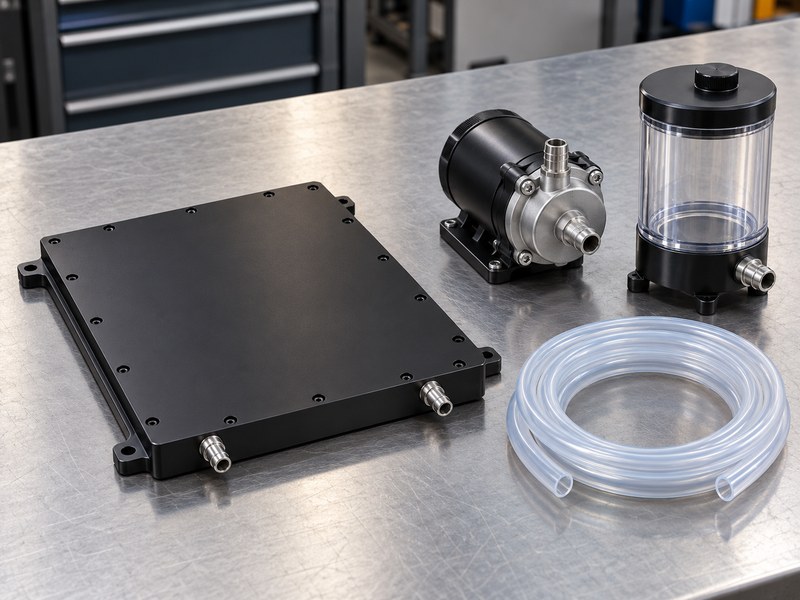
Select flow from the plate’s thermal performance and the complete loop’s hydraulic resistance at the specified fluid condition. An anodized water cooled heat sink for welding equipment needs more than a pump’s free-flow rating. Passages, fittings, hoses and filters consume pressure. Fluid viscosity changes that operating point, especially during cold starts or after changing the coolant mixture.
What should a supplier’s performance package include?
Request thermal and pressure-drop curves for the proposed coolant and inlet conditions. Check the loop operating point against the chosen pump, including service-related restriction. For friction stir welded cold plates, review channels, supported joining lands and port geometry together. The joining method does not establish coolant compatibility; list every wetted metal, seal and fitting when evaluating corrosion and cleanliness.
- Define fluid formulation and maintenance limits.
- Review seal compatibility across operating temperatures.
- Include filters and connections in pressure losses.
| Variable | Consequence to check |
|---|---|
| Increased restriction | Reduced delivered flow |
| Changed fluid mixture | Different thermal and hydraulic properties |
| Corrosion or deposits | Leaks, blockage or degraded heat transfer |
Keep thermal results tied to their stated flow and fluid conditions.
9. Can an anodized water cooled heat sink for welding equipment fail?
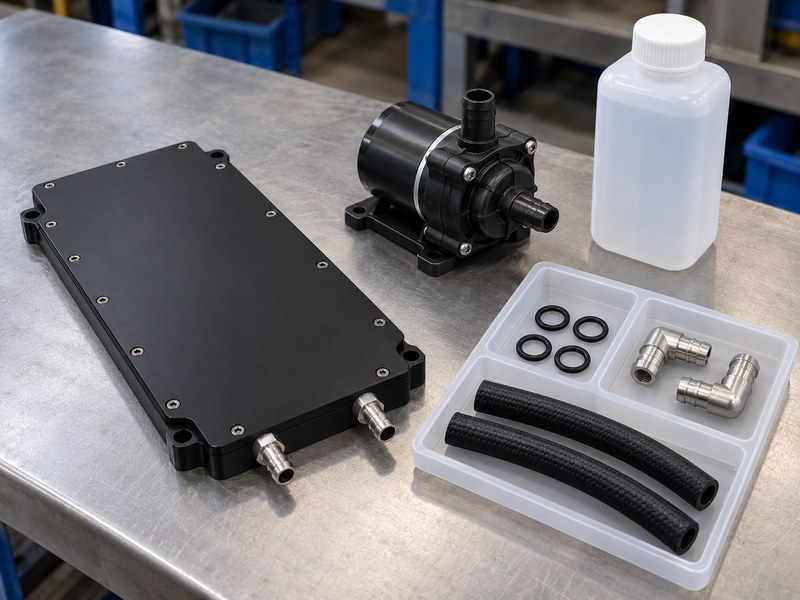
Yes, coolant leaks, restricted flow or pump failure can interrupt cooling and threaten connected electronics. An anodized water cooled heat sink for welding equipment needs containment checks and a validated fault response. An intact exterior finish establishes neither leak tightness nor circulation. Evaluate the fitted assembly and the control system against the same operating envelope used for thermal approval.
What must leak validation establish?
Agree on test medium, pressure, temperature, duration and detectable leakage against the assembly’s rated boundary. Distinguish a strength check from a sensitive leak test. Identify which permanent joints, ports and fitted connections the record covers, then repeat relevant checks after representative mechanical and thermal exposure.
What should happen when coolant flow stops?
The controller should reduce power or stop welding before the defined thermal limits are exceeded. Verify the response with representative hardware, including detection delay and sensor faults. Even if a pump is energized, circulation can stop. Give restart behavior the same review as the initial shutdown.
- Test pump stoppage and restricted circulation.
- Include failed or disconnected sensing.
- Tie acceptance records to the assembly revision.
| Validation item | Required outcome |
|---|---|
| Leak check | Defined detection and acceptance evidence |
| Loss of circulation | Timely derating or shutdown |
| Sensor fault | Documented protective state |
Release the plate and its protection logic as a coordinated package.
10. What should you send with a welding cold-plate RFQ?
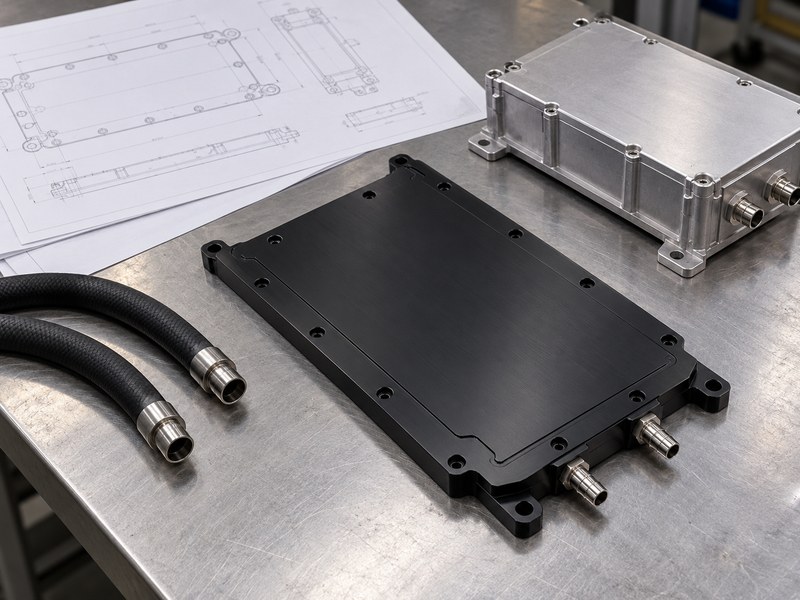
Send the device loss map, operating sequence, interface drawing and coolant limits with your request for quotation. An anodized water cooled heat sink for welding equipment should be quoted against defined performance and acceptance conditions. State production quantities and revision expectations alongside those inputs. Missing thermal or electrical boundaries can produce attractive quotations for parts that cannot meet your assembled requirements.
Which responsibilities need agreement before release?
Assign ownership of the module interface, cold plate, pump, heat exchanger, coolant and protection controls. Request a proposed construction route with unresolved assumptions identified. Check how drawing changes, coolant substitutions and replacement fittings will trigger review. Your approval package should preserve those decisions beyond the prototype so purchasing and maintenance teams receive the same requirements as engineering.
- Provide drawings and heat-source positions.
- State normal operation and fault cases.
- Agree on acceptance records and change control.
| RFQ attachment | Information it carries |
|---|---|
| Thermal brief | Losses, duty sequence and temperature targets |
| Interface drawing | Mounting, finish, ports and electrical boundaries |
| Validation plan | Thermal, containment and fault acceptance |
Send your module layout, loss estimates and coolant specification when you contact us. Request a cold-plate review that lists open assumptions before prototype approval.
FAQ
Q1: Can I size the plate from my welder’s rated output?
No. Use losses from the components mounted on the plate. Rated welding output does not establish semiconductor losses or their distribution across mounting areas.
Q2: What’s the best anodized color for a liquid cold plate?
Choose color against the finish requirement. Verify cooling through the module interface, plate and coolant; a black surface alone cannot establish operating temperature.
Q3: Can I use the coolant already in my torch cooler?
Only with approval for the combined system. Check the exact formulation against aluminum, other wetted metals, seals, conductivity requirements and both equipment manuals.
Q4: How do I know if the cold plate needs more flow?
Compare mounting temperatures and pressure loss with the approved performance curves. A temperature problem can also come from interface resistance or excessive inlet temperature.
Q5: Can I keep welding after a pump alarm?
Follow the equipment’s defined fault response. Continued operation needs a validated reduced-power state; the plate’s stored thermal capacity does not establish a safe operating interval.