
Specify custom heat pipes by the heat they must move, their finished geometry, their interfaces, and the evidence needed to accept them. A drawing of bent copper alone leaves the supplier guessing about temperature, orientation, and contact conditions. That gap often appears when a prototype fits the enclosure but runs too hot after installation. Define custom heat pipes as part of a complete source-to-sink assembly, then carry the approved configuration into purchasing and inspection.
1. What should an RFQ for custom heat pipes contain?
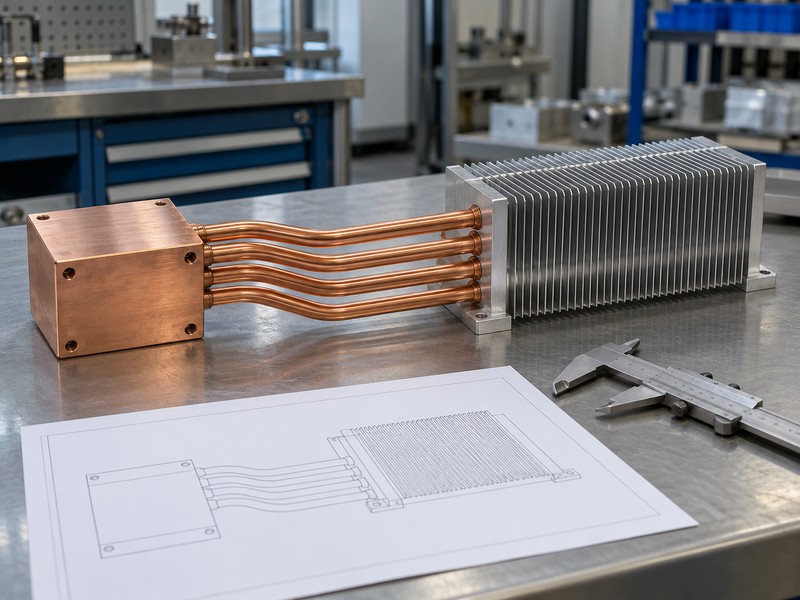
An RFQ for custom heat pipes should describe the thermal job before prescribing the tube shape. Give the supplier the heat-source footprint, operating power map, temperature limits, and available cooling boundary, together with the mechanical envelope. Identify whether you want a loose formed pipe, a block-to-block assembly, or a finished finned heat sink, because each scope needs different fixtures, inspection records, and responsibility for thermal contact.
Which inputs help suppliers quote the same job?
Separate fixed requirements from dimensions that engineering may change. A locked mounting plane may be necessary, while a slightly different pipe route could reduce forming difficulty without affecting installation. Ask each bidder to return the same assumptions sheet so purchasing can compare the proposed scope before comparing unit prices.
- Mark mandatory interfaces and negotiable routing space.
- State prototype quantity, forecast demand, and delivery destination.
- List the drawings, inspection records, and tests you require.
| RFQ item | State explicitly |
|---|---|
| Supply boundary | Loose pipe or complete assembly |
| Operating boundary | Heat input and cooling conditions |
| Approval boundary | Required evidence and acceptance owner |
Send unresolved inputs as open questions with named owners so an assumption cannot silently become a production requirement.
2. How do you define a fair thermal target?
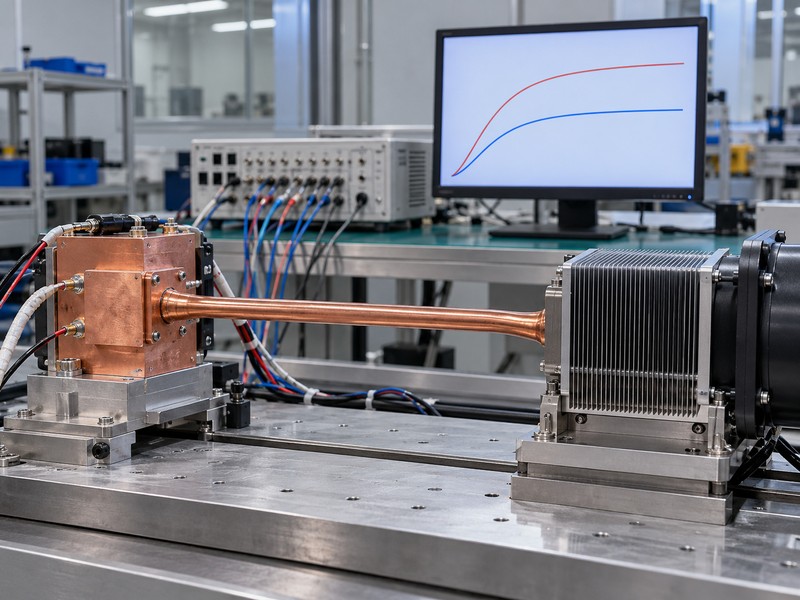
Define custom heat pipes against a temperature rise measured between named locations under stated conditions. A maximum case temperature means little without the inlet-air or coolant temperature, applied heat, and interface stack. Distinguish the device junction limit from the contact-block temperature, and identify which parts of the thermal path the supplier must include in its prediction and test.
How much resistance can the assembly use?
For a hypothetical screening calculation, assume a contact block may reach 80°C, inlet air is 40°C, and the assembly receives 100 W continuously. The allowable block-to-inlet resistance is then (80 − 40)/100 = 0.40 K/W; this assumed budget includes every interface and air-side contribution inside that boundary. Pipe capacity and final fin-stack size still require separate validation.
- Supply steady, peak, and simultaneous heat loads.
- Define temperature reference points and sensor locations.
- Include fan operating point, bypass, filters, and altitude where relevant.
| Budget term | Question for review |
|---|---|
| Device package | Already included or separate? |
| Interface | Which material and installed thickness? |
| Cooling boundary | Installed flow at what inlet temperature? |
Approve the temperature boundary before asking suppliers to guarantee a number that could otherwise describe different thermal paths.
3. Which drawing dimensions control the assembled fit?
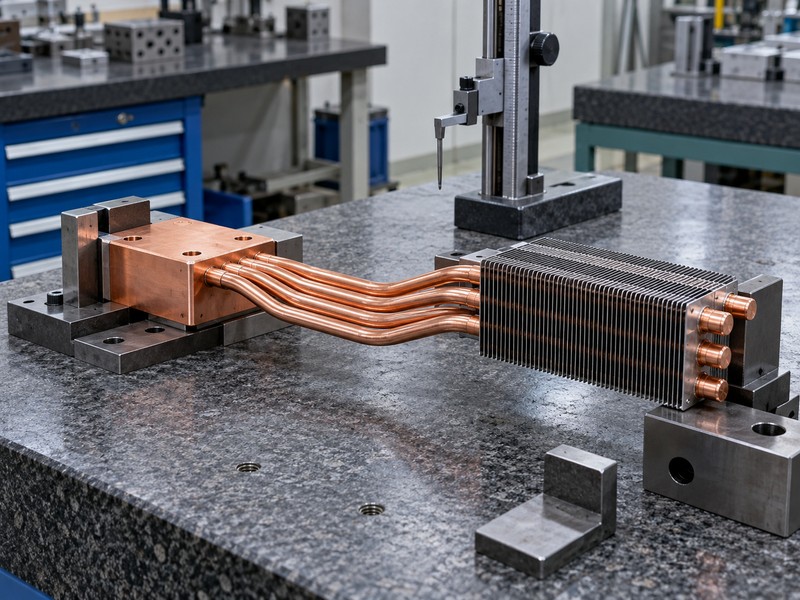
The useful dimensions for custom heat pipes locate their working surfaces in the installed assembly. Establish datums from the contact face, mounting features, and condenser position rather than dimensioning every visible tube curve independently. Add keep-out volumes for connectors, fastener tools, insulation, and neighboring boards, including the clearance needed while an operator inserts the assembly.
Where should tolerances be concentrated?
Place tighter control where variation changes contact, mounting alignment, or electrical clearance. A long unsupported route may need a profile tolerance relative to functional datums, while the overall free-state shape may allow more movement. Ask how the supplier will support the assembly during measurement, since forcing a flexible-looking pipe into a gauge can conceal a poor free-state fit and store unwanted load in the joint.
- Define contact flatness and surface finish where needed.
- Locate mounting holes from the chosen functional datums.
- Identify the free-state condition and permitted inspection restraint.
| Feature | Functional reason |
|---|---|
| Contact plane | Consistent interface seating |
| Condenser position | Fin and duct alignment |
| Route envelope | Clearance throughout installation |
Release a drawing that an inspector can reproduce without using the heat pipe itself as a spring to close dimensional errors.
4. How should bends and flattened zones be specified?
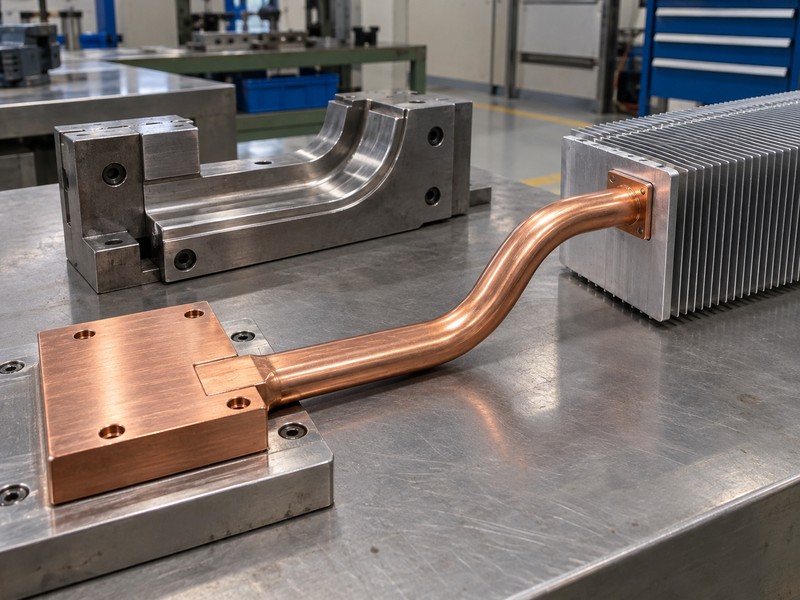
Specify custom heat pipes in their final formed state, including bend locations, radius convention, flattened dimensions, and protected working zones. Bending and flattening change the wall, wick, and vapor passage together, so a straight-pipe capacity curve cannot settle the finished design. Treat published radius ratios and percentage derating rules as preliminary guidance that needs confirmation for the selected construction and process sequence.
What should the supplier review before tooling?
Ask whether forming occurs before or after the pipe is sealed, where the tooling grips, and which geometry combinations need development samples. Define radius to the centerline or inside surface explicitly so both teams review the same shape. If assembly personnel may make any adjustment, specify its location, method, and permitted number rather than leaving a general instruction to bend the pipe to fit.
- Show bend planes, tangent points, and local thickness limits.
- Keep connection zones accessible to the approved joining process.
- Require thermal evaluation after all forming and assembly steps.
| Geometry change | Evidence to request |
|---|---|
| Tight bend | Formed sample and thermal check |
| Flattened section | Final width, thickness, and capacity |
| Multiple bends | Complete routed-assembly validation |
Accept the geometry only after the proposed manufacturing route has produced a thermally acceptable sample with the same finished shape.
5. Which wick and fluid details belong in the RFQ?
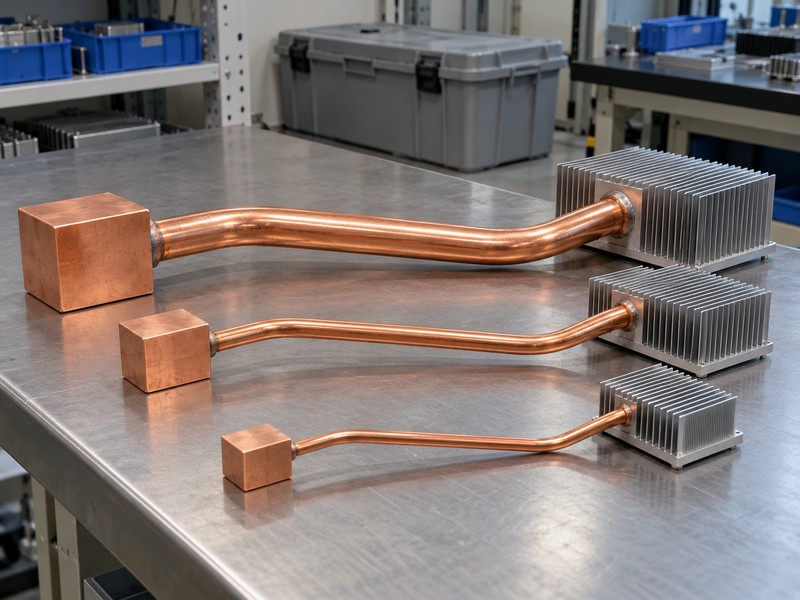
Specify the operating conditions for custom heat pipes first, then ask the supplier to identify the proposed envelope, fluid, and wick construction. Wick selection affects liquid return, and the appropriate choice depends on length, temperature, heat load, and gravity. A construction described only as copper-water does not define performance in an installation where the evaporator sits above the condenser.
What evidence supports the proposed construction?
Request capacity data at the relevant operating temperature and installed attitude, with the evaporator and condenser lengths stated. Include cold storage, startup, and freeze-thaw exposure in the discussion instead of assuming an acceptable steady-state result covers them. Where the supplier protects detailed wick recipes, the agreement can still control the construction identity, validated performance envelope, and notification rules for changes.
- State every permitted installation orientation.
- Identify storage temperature separately from operating temperature.
- Ask what changes require renewed thermal qualification.
| Requirement | Supplier response |
|---|---|
| Liquid return | Wick type and relevant test basis |
| Temperature range | Fluid-envelope compatibility review |
| Construction control | Identified specification or controlled code |
Buy an identified construction with relevant performance evidence instead of accepting the same external dimensions as proof of technical equivalence.
6. How do joints affect custom heat pipe performance?
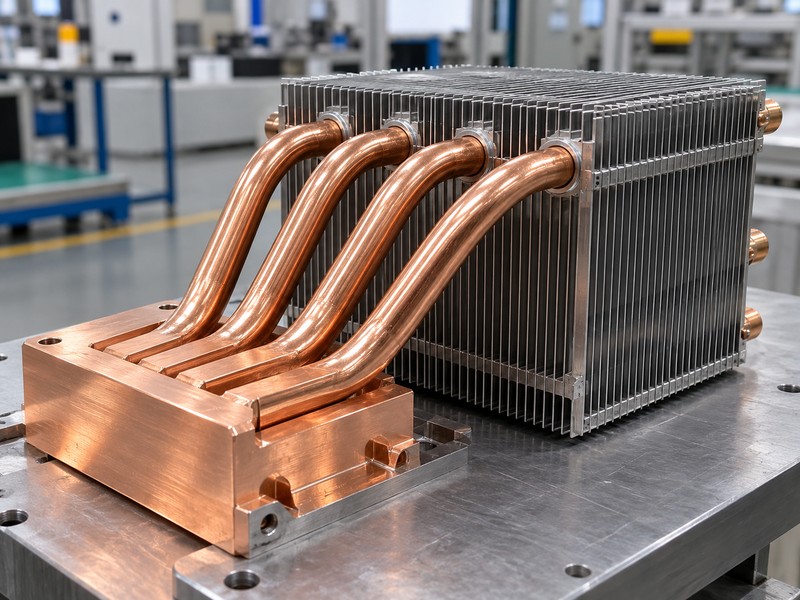
The joints around custom heat pipes determine how heat enters and leaves the sealed transport device. A pipe with adequate internal capacity can still perform poorly if a contact block touches only a narrow strip or a condenser joint contains gaps. Select the joint method with material compatibility, service temperature, dimensional control, and the sealed pipe’s permitted process exposure in view.
How can a drawing control a hidden interface?
Define the groove or collar geometry, joining material, surface preparation, and relevant inspection method with the supplier. Soldering or bonding needs a controlled process; an aggressive heating cycle can damage a sealed device even when the finished joint looks tidy. For zipper fin heat sinks, distinguish the tabs that hold the stack together from the pipe-to-fin connection that carries heat into each fin.
- Confirm the allowed joining temperature and dwell.
- Specify bond coverage or joint acceptance where measurable.
- Link assembly thermal checks to the approved process revision.
| Interface | Typical concern |
|---|---|
| Pipe to block | Contact area and bond continuity |
| Pipe to fin | Collar contact and joint consistency |
| Dissimilar materials | Environment and surface compatibility |
Qualify the joined assembly because pipe-only data excludes the interfaces that your equipment will depend on during operation.
7. How should fins and mounting be purchased together?
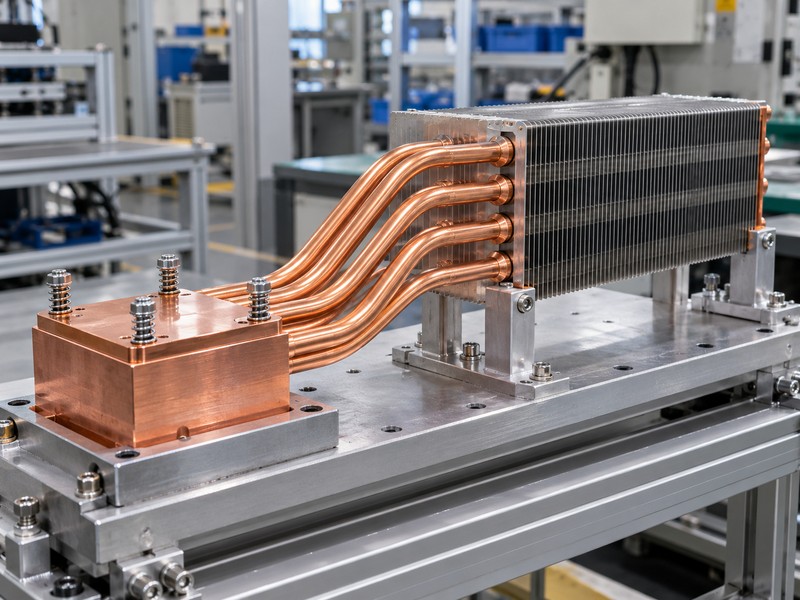
Purchase the interfaces around custom heat pipes as one coordinated stack when they determine the thermal result. Fins require usable airflow, and the source requires controlled contact pressure; neither condition follows automatically from adding more pipes. Define brackets and support points so shipping loads, vibration, and assembly forces travel through the structure rather than through unsupported tube sections.
Which details belong on the assembly BOM?
Include the approved interface material, fasteners, spacers, and tightening sequence where these form part of the supply. Review heat sink mounting hardware against the device load limits and the tolerance stack. If a compliant interface is needed, select thermal pads by compressed thickness and force as well as conductivity, and preserve access for inspection and service.
- Define support near heavy or remote fin stacks.
- Reserve an unobstructed inlet and outlet air path.
- Identify which party supplies and installs each interface item.
| Assembly element | Coordinate with |
|---|---|
| Fin pitch | Fan pressure and contamination |
| Mount preload | Device and interface limits |
| Structural bracket | Mass, vibration, and service access |
Freeze the interface stack before accepting the thermal sample so the production line installs the configuration that engineering approved.
8. What should prototype acceptance prove?
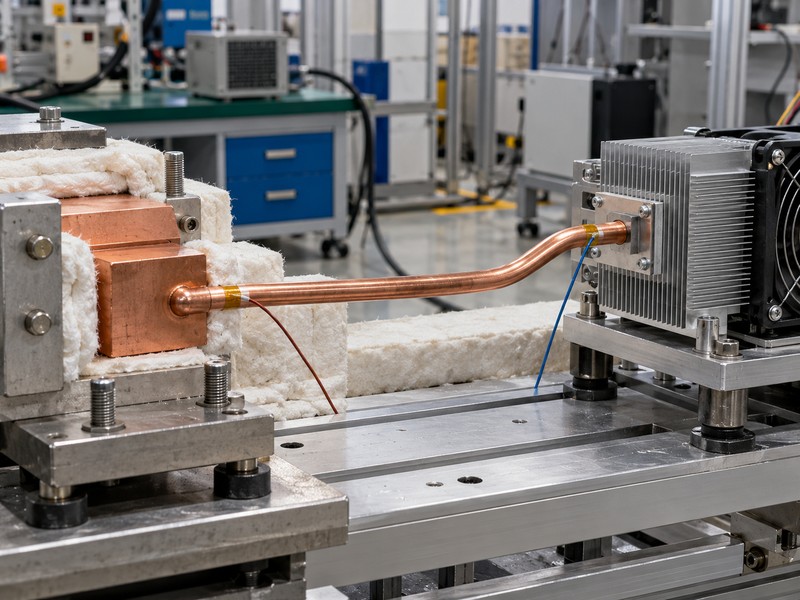
Prototype acceptance should prove that custom heat pipes meet fit, thermal, and handling requirements in the proposed configuration. Test the routed assembly with its approved interfaces, supports, and cooling boundary rather than substituting convenient laboratory contact conditions. Record enough information for another engineer to repeat the setup, including power measurement, sensor attachment, stabilization criterion, orientation, and fixture heat losses.
How should the approval plan separate failure causes?
Start with dimensional fit and contact checks, then run the agreed thermal points and any required environmental exposure. Repeat thermal measurements after vibration or temperature cycling when the qualification plan calls for them, because a visually intact assembly can still lose interface quality. Define what happens to marginal results before testing begins, including retest rules, measurement uncertainty, and responsibility for fixture corrections.
- Match heater footprint and contact load to the application.
- Photograph sensor positions and insulation arrangements.
- Retain raw readings and the tested drawing revision.
| Acceptance stage | Evidence retained |
|---|---|
| Mechanical | Fit and critical dimensions |
| Thermal | Conditions, readings, and acceptance margin |
| Environmental | Specified exposure and post-test checks |
Approve a repeatable result with documented margin, then preserve the tested sample as a reference for later build investigations.
9. How do you keep repeat orders consistent?
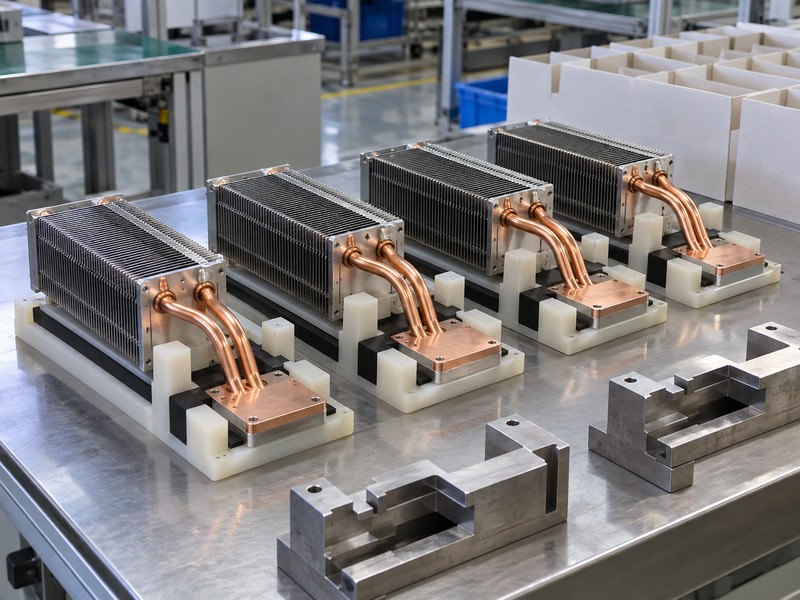
Keep custom heat pipes consistent by controlling the released configuration and the processes that can change its thermal behavior. Link the drawing, BOM, construction identity, forming route, joining process, and inspection plan through a revision record. An approved appearance sample helps with handling and finish, but it cannot replace measurable thermal acceptance or notification of internal construction changes.
Which production checks deserve agreement?
Set incoming and shipment checks around the features whose variation could defeat the application. Agree on the thermal sampling method, lot definition, identification, and record retention instead of assuming that every commercial order includes full qualification testing. Specify packaging that supports contact blocks and protects thin fins, because a pipe displaced in transit can remain sealed while failing the installed clearance or mounting requirement.
- Require approval before relevant material or process substitutions.
- Define lot traceability and the inspection record format.
- Identify triggers for renewed first-article or thermal approval.
| Change | Review before release |
|---|---|
| Wick or fluid | Transport and startup behavior |
| Forming tool | Geometry and thermal consistency |
| Joint material | Process exposure and interface resistance |
Make change notification part of the purchase agreement so a repeat part number continues to describe the approved technical configuration.
10. What should you settle before ordering custom heat pipes?
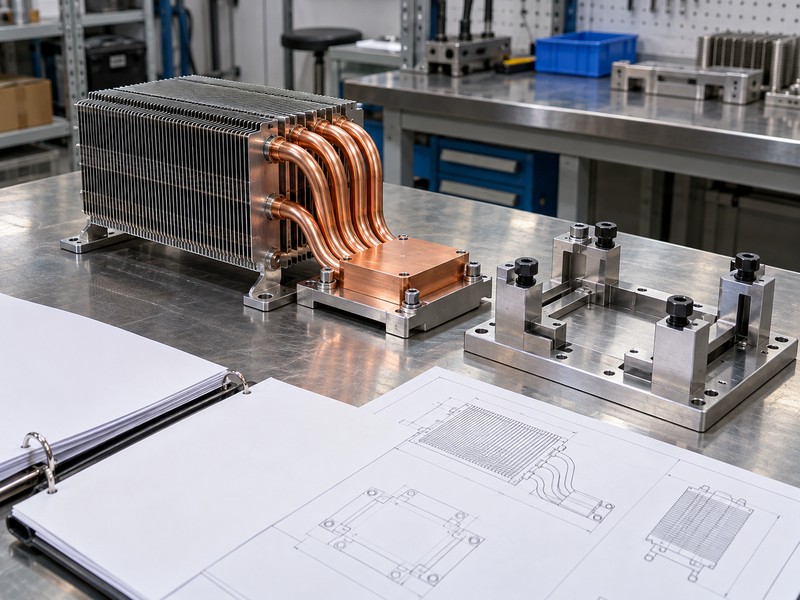
Settle technical scope, approval ownership, and commercial assumptions before ordering custom heat pipes. Ask the quotation to distinguish development work, tooling, samples, recurring production, and required documentation. Confirm who owns the fixture and drawing revisions, what happens if testing exposes a design change, and which acceptance conditions apply to the first production shipment.
How can engineering and purchasing close the order?
Use the quotation review to resolve exclusions while both teams can still change the specification. A lower unit price can accompany a different inspection scope, customer-supplied interfaces, or a thermal target based on cooler inlet air. Compare these details explicitly and attach the agreed requirements to the order rather than relying on earlier email descriptions.
- Reconcile every supplier assumption against the RFQ.
- Assign owners to remaining validation tasks.
- Release production after the agreed approval record exists.
| Order attachment | Purpose |
|---|---|
| Released drawing and BOM | Identify the supplied configuration |
| Acceptance plan | Define how compliance is decided |
| Change agreement | Preserve the approved design |
Select the offer that covers the required thermal result, inspection evidence, and production controls within the agreed commercial scope.
FAQ
Q1. Can I order from a CAD model alone?
You can request a preliminary review, but approval needs operating conditions, functional tolerances, and acceptance criteria alongside the model.
Q2. What’s the best way to compare quotations?
Compare matched boundaries. Check geometry, interfaces, test conditions, documentation, and exclusions before comparing unit price.
Q3. Can I bend the delivered pipes during installation?
Only use a supplier-approved procedure. Uncontrolled adjustment can damage the wall, wick, or approved thermal performance.
Q4. How do I know if a sample has enough margin?
Review the worst required condition with measurement uncertainty and expected operating variation included in the acceptance decision.
Q5. Should every repeat order receive full qualification?
Use an agreed control plan. Routine lot checks and changes that trigger renewed qualification serve different purposes.
For a Morton assembly review, send your RFQ with the heat map, installed cooling conditions, CAD envelope, required orientations, and sample acceptance plan.