
Choose an extruded tubular heat sink after checking the hollow section, machining allowances, finished interfaces and intended production volume together. A profile that looks economical in a catalogue can become expensive when its bore needs extensive rework or its fins cannot survive the chosen fixture. Review the extruded tubular heat sink as a manufactured component, including the operations after extrusion. A feasible die is one part of that route; the finished part still needs to fit, cool and pass inspection.
1. What is an extruded tubular heat sink?
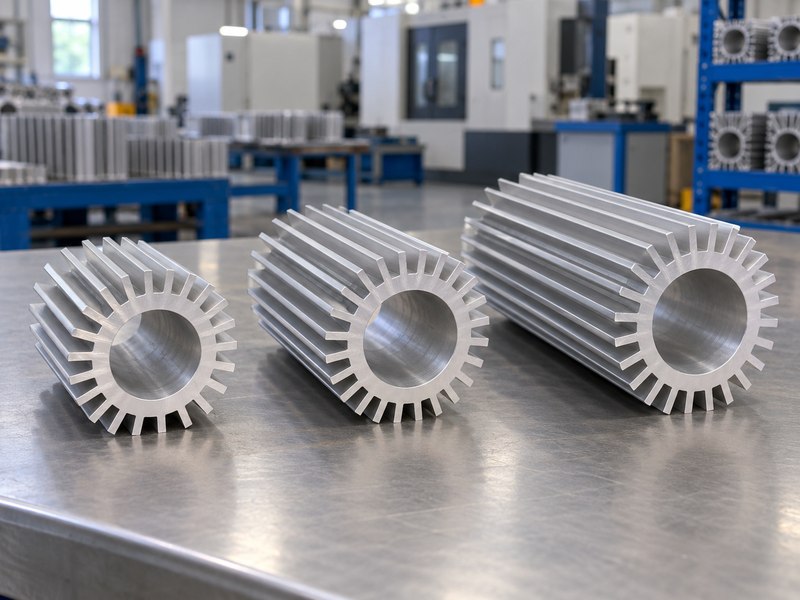
An extruded tubular heat sink uses an extruded tube-like profile as the starting geometry for a heat-dissipating part. In the hollow longitudinal-finned example discussed here, the bore, annular wall and axial fins continue along the extrusion direction. Cutting changes the length, while machining can add local features. The initial constant section therefore needs to support both the thermal design and the remaining manufacturing operations.
Which features come from the profile?
Mark the drawing to distinguish as-extruded surfaces from features produced later. Straight longitudinal fins can belong to the original section, whereas a local contact flat, axial step or mounting-hole pattern may require another operation. A circumferential fin stack or a helical feature should receive a separate process review rather than being assumed to emerge from an ordinary straight profile. Keep this distinction in the enquiry so the supplier quotes the actual part rather than the nearest available length of finned stock.
- Identify the extrusion direction and constant section.
- Mark local features that need later processing.
- Separate the raw profile from the finished component drawing.
| Feature | Manufacturing question |
|---|---|
| Longitudinal fins | Can the die form the proposed section? |
| Bore and annular wall | What can remain as-extruded? |
| Local holes or steps | Which operation creates each feature? |
Key takeaway: define what extrusion produces and what the later route must add.
2. Which extruded tubular heat sink sections are feasible?
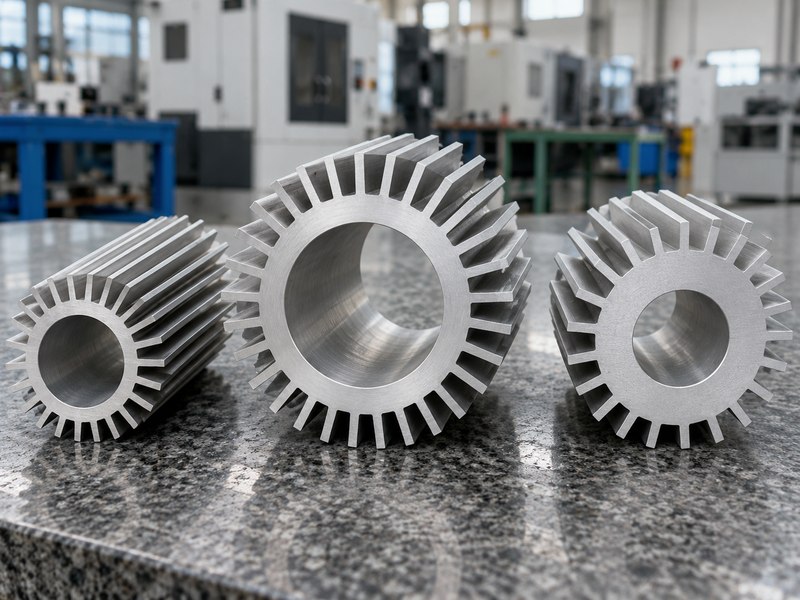
An extruded tubular heat sink section is feasible only after the supplier reviews its overall size, wall distribution, fin geometry and die support requirements. A round outline does not make every internal or external feature easy to extrude. The section also needs enough material for handling, straightening and any planned machining. Review the actual drawing with the intended extrusion source before treating a proposed geometry as an available capability.
What should the section review examine?
Discuss thin fins, deep gaps, abrupt wall changes and the relation between the bore and outer hub. These details influence metal flow and the ability to hold the required dimensions. An existing profile may reduce initial tooling work, but compare its remaining wall and fin envelope with the functional design before accepting it. If a geometry needs substantial changes after extrusion, compare the complete route with a machined or assembled alternative rather than selecting a process solely from its starting-stock price.
- Review fin and wall geometry with the die supplier.
- Preserve the material needed at functional surfaces.
- Compare alternatives using the complete production route.
| Section feature | Review concern |
|---|---|
| Deep fin gaps | Tooling feasibility and profile quality |
| Uneven wall distribution | Metal flow and dimensional control |
| Limited machining stock | Ability to finish the functional interface |
Key takeaway: a manufacturable section must leave a manufacturable finished part.
3. How does extruded tubular heat sink tooling work?
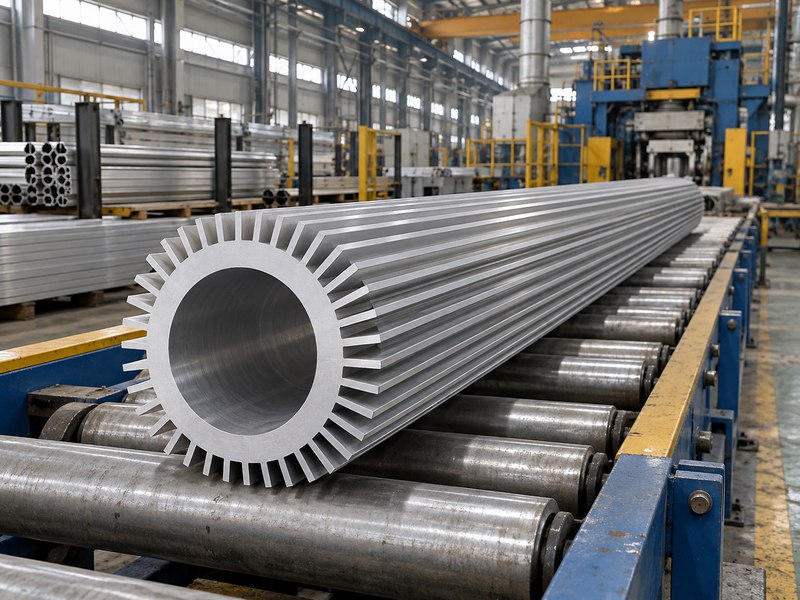
An extruded tubular heat sink with a hollow section needs tooling that supports the internal cavity while forming the external contour. A supplier may propose a bridge or porthole die route, depending on the profile and equipment. That route can produce longitudinal extrusion weld seams. Ask the source to identify the process instead of assuming that every smooth-looking bore is seamless.
Why does the hollow-profile route need agreement?
Hydro’s die guidance describes how supported internal tooling forms hollow profiles as material flows around bridges and rejoins. Its pipe and tube literature also distinguishes structural tube routes and their application limits. Those explanations do not qualify a finned heat sink as a pressure vessel. If the bore will carry coolant, state that requirement separately and obtain a reviewed fluid-boundary design, material route and validation plan.
- Confirm the proposed hollow-profile process.
- Discuss seam-related requirements where they affect function.
- Separate dry heat-sink geometry from fluid-pressure qualification.
| Tooling question | Required clarification |
|---|---|
| How is the bore formed? | Die or mandrel route proposed |
| Are extrusion seams present? | Source explanation and relevant controls |
| Is coolant involved? | Separate pressure and compatibility requirements |
Key takeaway: a hollow extrusion description does not establish seamlessness or pressure capability.
4. Which alloys suit an extruded tubular heat sink?
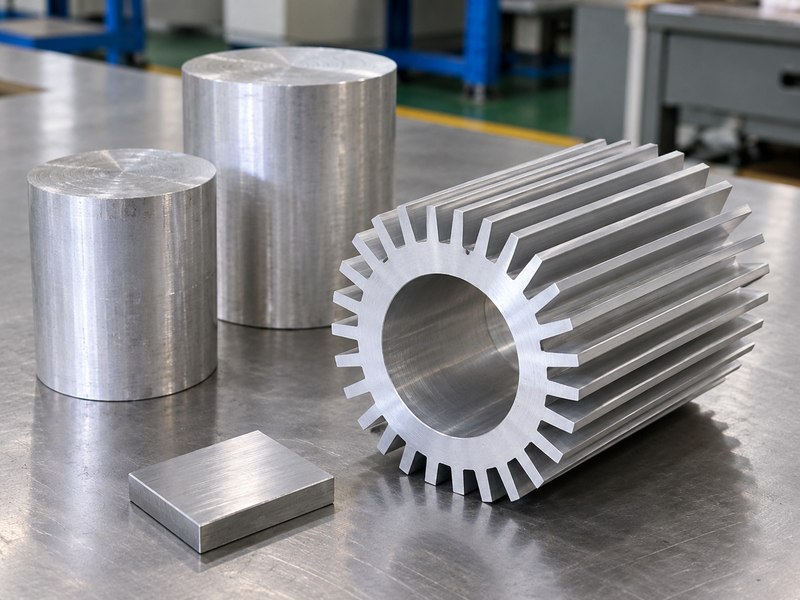
An extruded tubular heat sink needs an alloy and temper compatible with its thermal, structural, finishing and manufacturing requirements. Specify the selected condition on the drawing and request supporting material records. The extrusion source should review the grade alongside the profile. A material that suits a simple shape may create different constraints when the same enquiry adds thin fins, a tight bore or a controlled visible finish.
How should sample material match production?
Identify the stock form and material condition used for the approval sample. A prototype machined from solid stock can verify some interfaces without demonstrating the full behaviour of a production extrusion route. Record those differences so the release plan repeats the checks that depend on the final material and process. Treat a change of alloy, temper or stock source as an engineering review item whenever it can affect conductivity assumptions, dimensional behaviour, finish response or the agreed documentation.
- State alloy, temper and stock form explicitly.
- Connect material records to the production batch.
- Record prototype-to-production material differences.
| Material record | Purpose |
|---|---|
| Alloy and condition | Defines the purchased material |
| Batch connection | Links records to supplied parts |
| Approved substitution | Records review of a material change |
Key takeaway: approve the material route that production will actually use.
5. How do you control extruded tubular heat sink dimensions?
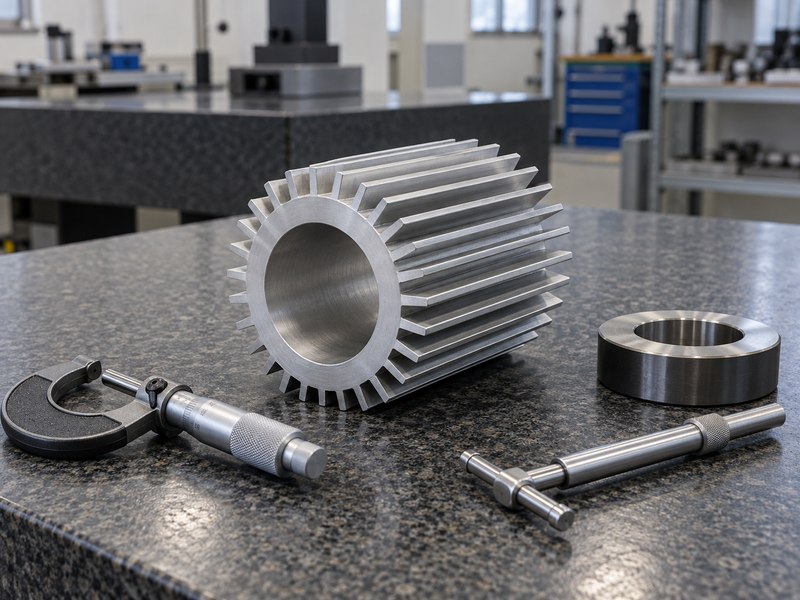
An extruded tubular heat sink needs tolerances tied to function, supported by a suitable inspection method. Overall fin diameter, bore size, bore-axis location, straightness and end-face alignment describe different characteristics. A caliper reading across two points cannot establish all of them. Separate the raw-profile limits from the finished dimensions and identify the datums used to inspect the assembled interfaces.
Which surfaces may need finishing stock?
Allow sufficient material where the part needs a controlled bore or contact face, then check whether the proposed setup can reach it. For CNC machined heat sink features, agree how the fixture locates the part and which dimensions remain dependent on the extrusion. Coating and later handling can also affect the final fit. Avoid assigning the same tight tolerance to every surface when only a few interfaces determine whether the component assembles correctly.
- Identify critical finished characteristics and datums.
- Review straightness over the relevant functional length.
- Inspect after the processes that can change the interface.
| Characteristic | Inspection discussion |
|---|---|
| Bore size | Gauge method and usable contact length |
| Fin envelope | Clearance and damaged-fin limits |
| Axis and end face | Relationship to the mounting datums |
Key takeaway: specify a measurable functional relationship, not an unexplained tolerance everywhere.
6. Which extruded tubular heat sink features need machining?
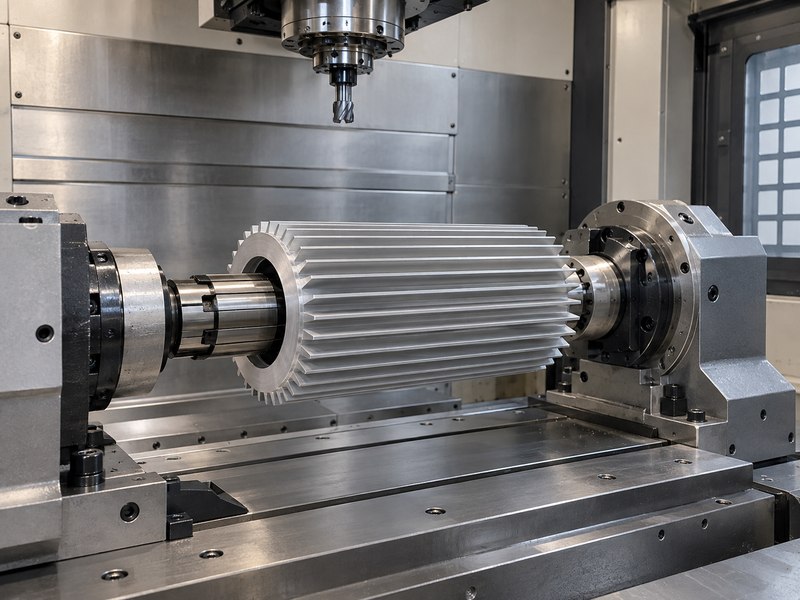
An extruded tubular heat sink commonly needs secondary work when the design includes local bores, mounting holes, threads, contact flats or controlled end faces. The operation sequence should leave those features in the required finished condition. Review tool access and workholding before approving the drawing. Thin fins and hollow walls need a support strategy that suits the cutting forces and inspection requirements.
How should the fixture protect the part?
Locate through a suitable hub, bore or deliberately provided fixture surface rather than treating fin tips as convenient clamp points. An internal support may help some geometries, but the fit and release method need review so it does not distort or mark a functional bore. Coordinate the mounting features with the intended heat sink hardware and assembly sequence. Leave access for installation tools as well as manufacturing tools; a correctly machined hole is of little use if the final assembly blocks the fastener.
- Mark the surfaces available for location and support.
- Review tool access to every local feature.
- Check assembly access after adding the mounting hardware.
| Secondary feature | Process question |
|---|---|
| Controlled contact face | Setup, flatness and final treatment |
| Bore finishing | Support, tool reach and wall allowance |
| Threads and holes | Access, position and fin interference |
Key takeaway: include the fixture and assembly access in the machining review.
7. How is an extruded tubular heat sink finished?
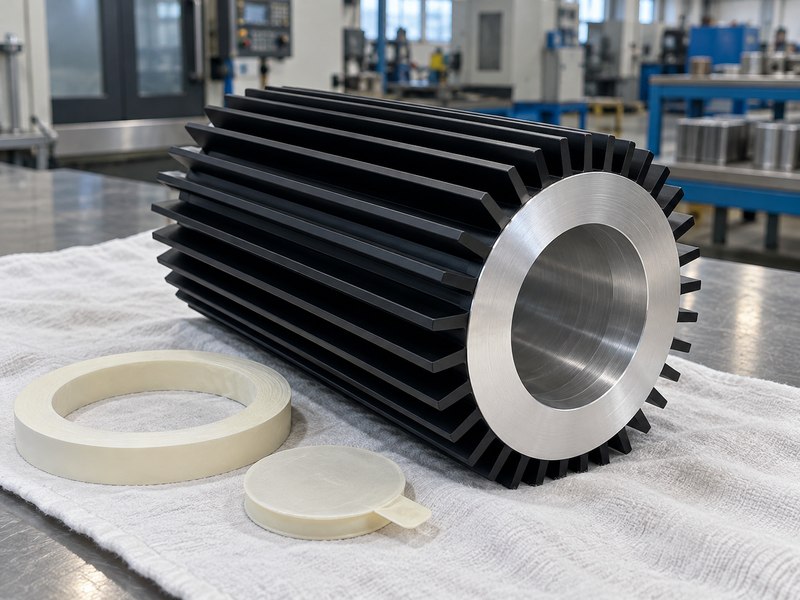
An extruded tubular heat sink is finished according to its environmental, cosmetic and functional surface requirements. Specify treatment and masking by surface rather than applying an undefined finish everywhere. The bore, annular contact face and threads may need different controls from the external fin field. Agree the treatment sequence so the sample represents the condition that will be shipped.
What should remain controlled after treatment?
Inspect critical dimensions after the processes that can affect them, including coating or later machining where applicable. Review cleaning and residue removal inside the bore and between fins. If the part uses a thermal pad, coordinate the finished interface condition with the assembled gap and compression requirements. A final color sample should accompany, rather than replace, those functional checks; visual approval cannot establish contact quality, fit or an electrical insulation rating.
- Name treated and protected surfaces on the drawing.
- Specify cleanliness for the intended assembly.
- Approve appearance after the complete treatment route.
| Finished area | Requirement to review |
|---|---|
| External fins | Finish coverage and handling condition |
| Bore or contact land | Fit, coating and cleanliness |
| Threads and bonding points | Assembly and electrical function |
Key takeaway: release the treated component against both dimensional and surface requirements.
8. How should extruded tubular heat sink samples be checked?
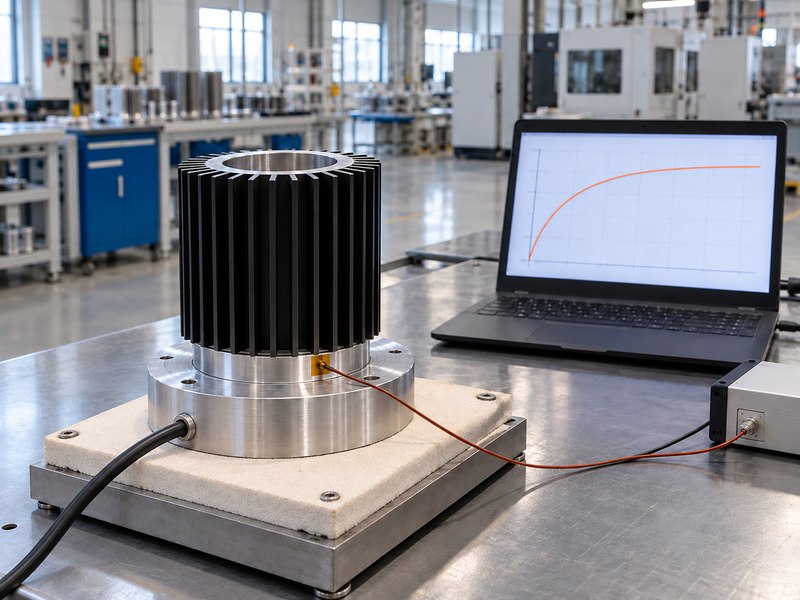
Check an extruded tubular heat sink sample for the requirements affected by its final production route. Those checks may include dimensional conformity, assembly fit, finish, handling damage and thermal performance. Identify any prototype-only operations before accepting the sample. A successful test on a heavily reworked prototype may not demonstrate that an as-extruded production feature will meet the same requirement.
Which evidence belongs with sample approval?
Link the inspected sample to its drawing, material and process revisions. For thermal testing, record the source interface, heat input, sensor locations, orientation and air conditions. For dimensional review, record the applicable methods and the state of the part when measured. Keep unresolved deviations visible until they are accepted, corrected or addressed by a revised drawing; a general approval email should not conceal a difference that changes fit or cooling in the intended equipment.
- Retain a production-intent sample where practical.
- Record deviations from the intended production route.
- Repeat the checks affected by later changes.
| Sample evidence | What it supports |
|---|---|
| Dimensional report | Conformity of the controlled features |
| Assembly review | Fit and installation access |
| Thermal record | Performance under stated conditions |
Key takeaway: approve the demonstrated configuration and document its remaining limitations.
9. What changes an extruded tubular heat sink’s unit cost?
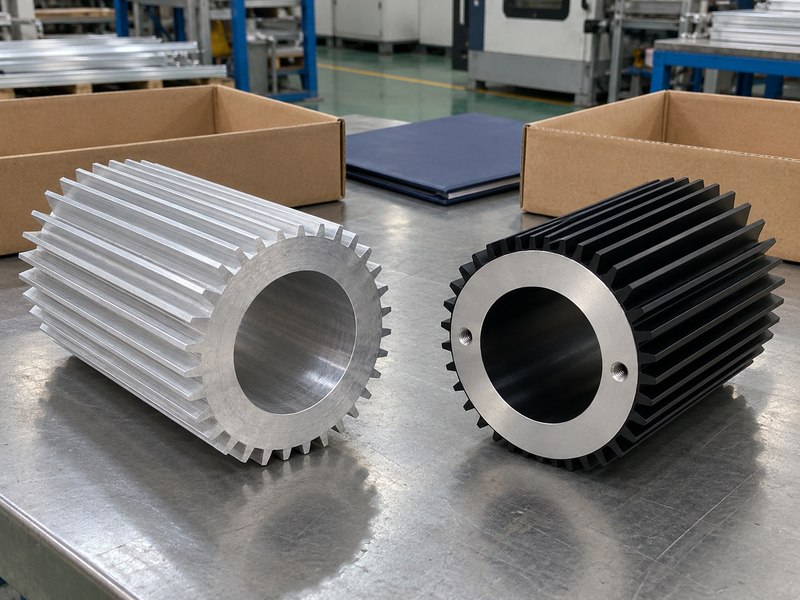
An extruded tubular heat sink’s cost depends on more than aluminum weight or cut length. Tooling, usable yield, machining time, finishing, inspection and packaging all contribute to the finished supply scope. A larger order can spread some setup costs, but the effect depends on the route and commercial terms. Request a quotation based on the approved geometry and finish rather than an undefined stock profile.
Where can a profile change save work?
Compare the complete sequence before changing a wall or fin arrangement to reduce material. A slightly different starting section may leave better machining stock, reduce fixture changes or avoid an inaccessible feature. Conversely, an inexpensive standard profile may need costly rework to match the bore and contact surfaces. Ask the supplier to explain its proposed alternative and identify the changed requirements so the comparison includes performance, fit and inspection rather than unit price alone.
- Separate one-time tooling from repeat unit costs.
- Compare identical finished-part requirements.
- Ask which design changes remove actual process steps.
| Cost element | Clarification |
|---|---|
| Tooling and setup | Ownership, revision and repeat-use terms |
| Finished operations | Machining, coating and inspection scope |
| Delivery condition | Quantity, separation and packaging requirements |
Key takeaway: compare the cost of a conforming finished part, not only its starting stock.
10. How do you release an extruded tubular heat sink?
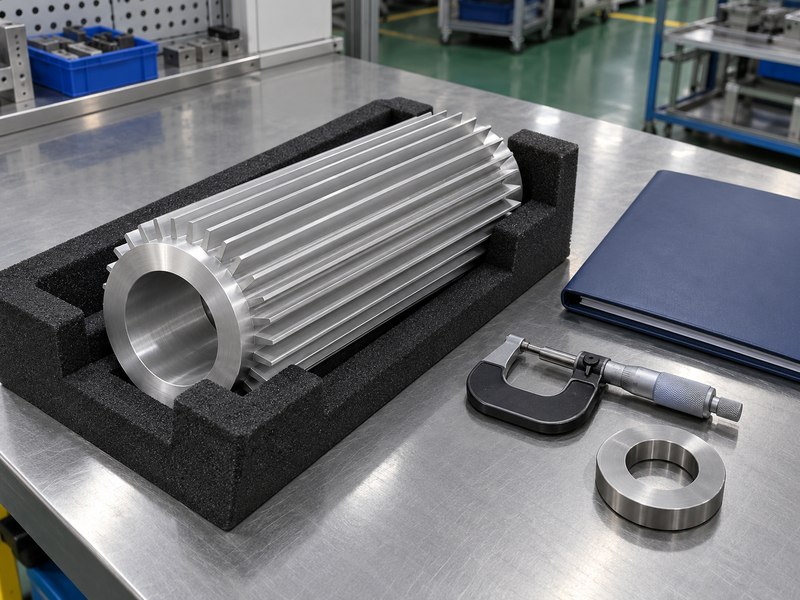
Release an extruded tubular heat sink when the drawing, material, production route and acceptance evidence describe the same component. Confirm which extrusion source and finishing operations are approved. Keep the inspection and packaging requirements with the purchasing specification. Repeat supply becomes harder to control when those details live in separate messages with no common revision reference.
What should repeat orders preserve?
Retain the finished master, approved deviations and records needed to identify the supplied batch. Require review before substitutions or process changes that could affect the defined part. If the cross-section or quantity is still evolving, contact us with the model, source interface, thermal conditions and production forecast so the route can be reviewed before tooling decisions are fixed. A release package should tell the next production team what to make, what to inspect and which changes need approval.
- Keep drawing, finish and sample revisions connected.
- Define notification requirements for relevant changes.
- Protect finished bores, contact faces and fin channels in transit.
| Release record | Retain |
|---|---|
| Product definition | Drawing, material and surface requirements |
| Approved route | Extrusion, machining and treatment sequence |
| Acceptance evidence | Sample results, inspection and packaging plan |
Key takeaway: release a controlled production route for a defined component.
Frequently asked questions
Q1: Can an extruded tubular heat sink be assumed seamless?
No. Ask which hollow-profile route is proposed and whether extrusion weld seams are present. A smooth bore does not identify the manufacturing process.
Q2: Can I run coolant through any hollow profile?
No. Fluid service needs a separate review of the pressure boundary, materials, joining, seals and validation. A heat-sink profile description is insufficient evidence.
Q3: What is the best way to specify a tight bore?
Define its function, required finished condition and measurement method. Review whether the extrusion can meet the requirement directly or needs a finishing operation.
Q4: Can I approve a prototype machined from solid stock?
It can support specific checks, but record the route difference. Repeat the requirements that depend on the final extrusion material, geometry or processing.
Q5: Does more fin area always justify a more complex die?
No. Compare the thermal result under installed airflow with tooling feasibility, handling and total finished-part cost before accepting the change.