
Choose a sandblasted aluminum heat sink by checking its thermal contact surface, final finish, installed airflow and inspection records. An attractive sample can still arrive with trapped grit or a base that rocks during assembly. Specify the condition you need when buying a sandblasted aluminum heat sink, then approve evidence that matches that condition.
1. What defines a sandblasted aluminum heat sink?
A sandblasted aluminum heat sink is an aluminum cooling component whose selected surfaces receive abrasive blasting to create an agreed texture or surface condition. The description does not identify its alloy, manufacturing route or thermal rating. Ask whether the offered part is extruded, machined, cast or made by another process. Also confirm whether the quoted surface is bare blasted aluminum or a blasted surface with a later coating.
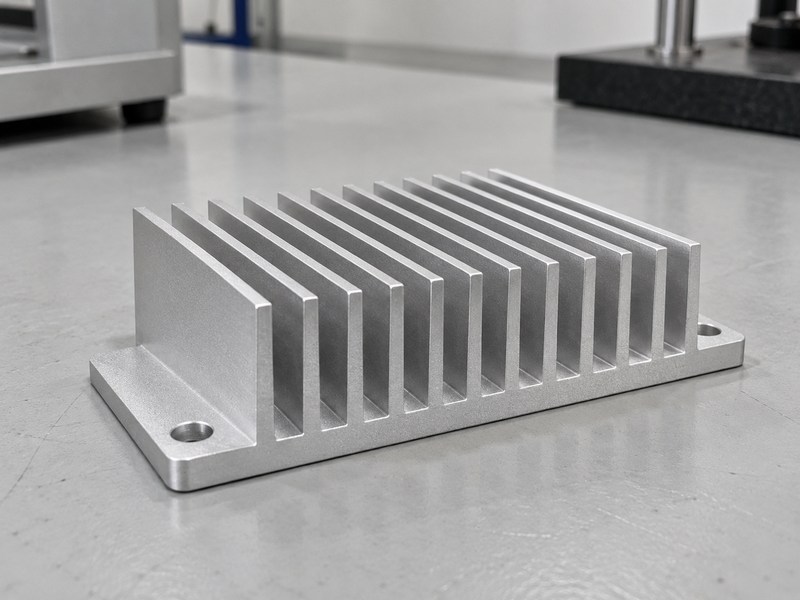
What should a part description contain?
Use a drawing revision and a complete material designation to identify the product. Then list finishing boundaries, dimensions and the final state in which the supplier must inspect it. For a replacement part, record mounting geometry and available clearance before comparing external appearance. Two heat sinks with similar fins can have different base thicknesses, contact areas and installation methods, so a catalog photograph cannot establish that they are interchangeable.
- Identify the alloy and material condition.
- Separate texture from protective treatment.
- Link the approved sample to a drawing.
| Description | What it identifies | What remains unspecified |
|---|---|---|
| Aluminum heat sink | Material family and function | Alloy and geometry |
| Sandblasted finish | A surface process | Final coating and acceptance |
| Approved part number | Controlled product identity | Any undocumented revision |
Ask suppliers to resolve missing details before they confirm price or delivery.
2. How should a sandblasted aluminum heat sink look?
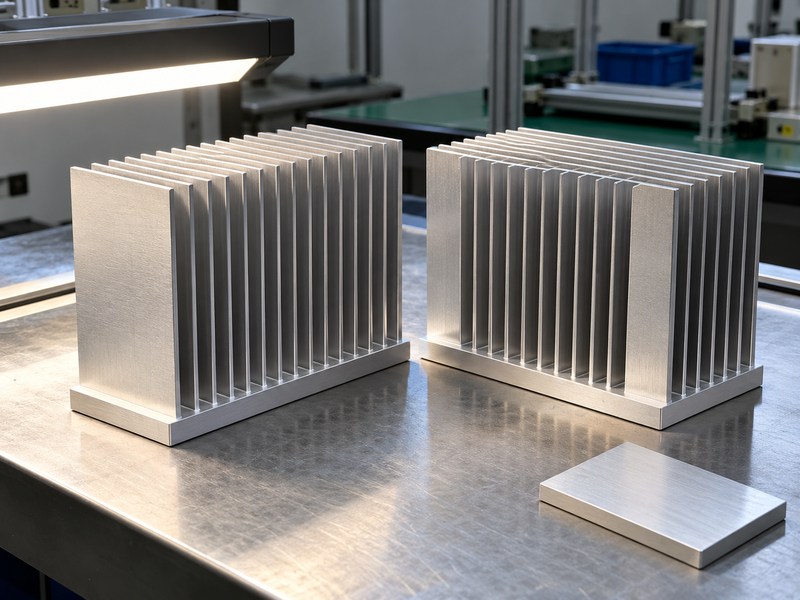
A sandblasted aluminum heat sink should match the agreed appearance sample under a defined inspection condition. Uniformity depends on geometry, prior machining and the approved finishing route. A deep channel may look darker because of lighting even when its surface condition is acceptable. Define which areas are cosmetic and which marks are permitted so inspection does not become an argument over photographs taken under different lights.
How can you make cosmetic approval practical?
Keep representative boundary samples if a single ideal sample leaves too much room for interpretation. Agree on lighting, viewing distance and orientation before judging streaks, dents or differences in sheen. If surface texture has a functional requirement, inspect that characteristic with its specified method separately. A visual appearance sample cannot replace a roughness measurement, and a roughness value alone cannot describe color variation or a visible handling dent.
- State the cosmetic inspection area.
- Show acceptable and rejected conditions.
- Review the final cleaned and coated part.
| Observation | Possible explanation | Acceptance route |
|---|---|---|
| Dark channel | Shadow or surface variation | Agreed viewing condition |
| Local shiny patch | Handling or uneven texture | Boundary sample |
| Base scratch | Cosmetic or functional damage | Surface-specific limit |
This approach gives purchasing and quality teams the same basis for accepting a shipment.
3. Does a sandblasted aluminum heat sink need anodizing?
A sandblasted aluminum heat sink needs anodizing only when the product’s finish requirements call for it. Blasting creates texture; anodizing changes the surface through an electrochemical process. Select the final treatment for the actual environment, appearance and interface requirements. Keep the coating decision open until you have identified grounding contacts, thermal lands and dimensions that the treatment could affect.
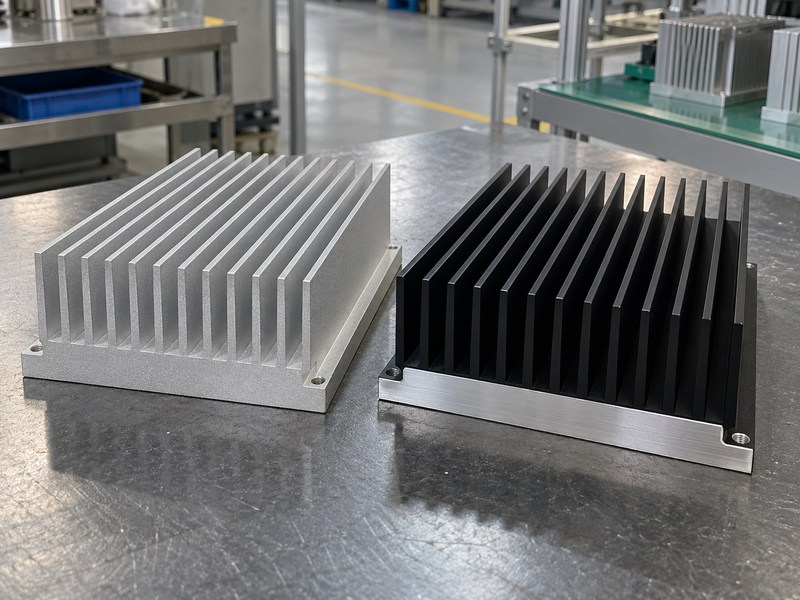
What does a black finish establish?
A black finish identifies an appearance, not a complete performance or electrical isolation specification. For context, heat sink finish guidance distinguishes anodized finishes from a qualified insulation system. Request the treatment designation and inspection requirements rather than accepting a color description alone. When corrosion resistance or isolation determines product acceptance, use the applicable customer specification and assembly-level verification instead of inferring compliance from a photograph.
- Define any masked contact areas.
- Check coating-related dimensional changes.
- Keep electrical isolation requirements separate.
| Final condition | Purchasing question | Evidence |
|---|---|---|
| Bare blasted | Is it approved for this exposure? | Product specification |
| Anodized | Which process and final condition? | Finish record |
| Selectively finished | Which areas stay conductive? | Marked drawing |
Approve the treatment that the application requires and keep its identity on the order.
4. Which sandblasted aluminum heat sink face touches the device?
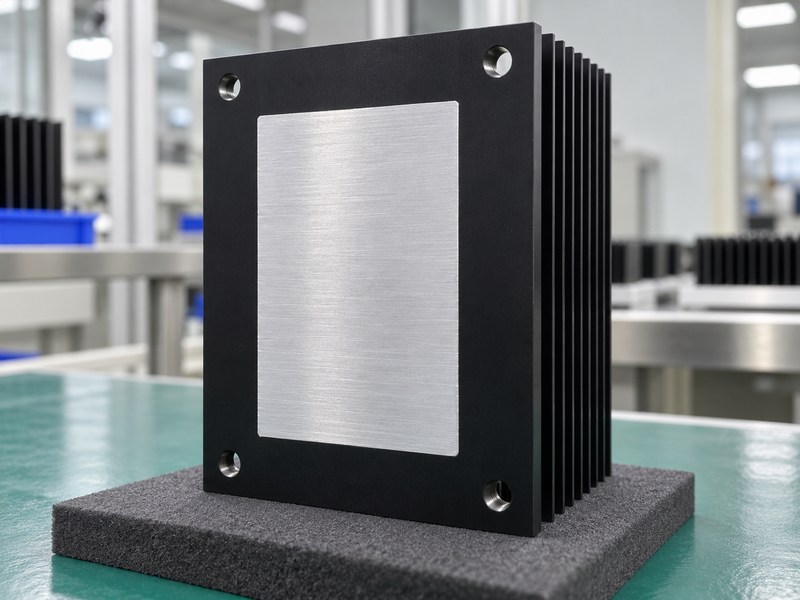
The sandblasted aluminum heat sink face that touches the device must meet the package and interface material requirements. This contact land may need a different finish from the visible fins or outer walls. Identify its location and usable area on the drawing. Confirm that hole edges, masking boundaries and coating transitions do not interfere with the package seating surface or its intended mounting load.
Why check more than surface roughness?
Flatness, local damage and mounting alignment also affect contact. A surface can look smooth yet touch only near an edge because the base or package is bowed. The interface material must fill the intended gap at the specified pressure without becoming an uncontrolled spacer. Ask how the supplier measures the finished land, and confirm the assembly procedure rather than trying to correct every seating problem with extra grease or a thicker pad.
- Check the actual package footprint.
- Inspect after the final finishing step.
- Follow the interface supplier’s assembly limits.
| Contact feature | Requirement owner | Inspection or review |
|---|---|---|
| Land geometry | Product drawing | Dimensional check |
| Interface thickness | Assembly specification | Controlled installation |
| Mounting load | Package requirements | Retention review |
Accept the part against its contact requirements before assessing the appearance of surrounding surfaces.
5. How is sandblasted aluminum heat sink cooling verified?
Verify sandblasted aluminum heat sink cooling in the intended assembly or a justified representative test. A finish description does not supply a thermal resistance value. Ask which airflow, orientation, heat-source footprint and interface produced the quoted result. If those conditions differ from your enclosure, request a relevant test or calculation before using the number in a temperature budget.
Can you compare two supplier ratings directly?
Only compare values with compatible definitions and boundary conditions. A sink-to-air resistance does not include every package or interface resistance, and a fan’s free-air rating does not describe flow through a restrictive enclosure. The chart shown here is qualitative and contains no measured supplier results. Build your comparison from documented data, including sensor locations, power measurement and steady-state criteria, then retain the test conditions beside each reported value.
- Confirm what temperatures define the rating.
- Match the operating airflow condition.
- Keep measurement uncertainty with small differences.
| Quoted item | Check before comparison | Potential mismatch |
|---|---|---|
| Thermal resistance | Temperature definitions | Different resistance paths |
| Air velocity | Measurement position | Duct flow versus free stream |
| Heat load | Source size and location | Different base spreading |
Use a rating only where its conditions reasonably represent your application.
6. Will the sandblasted aluminum heat sink fit your airflow path?
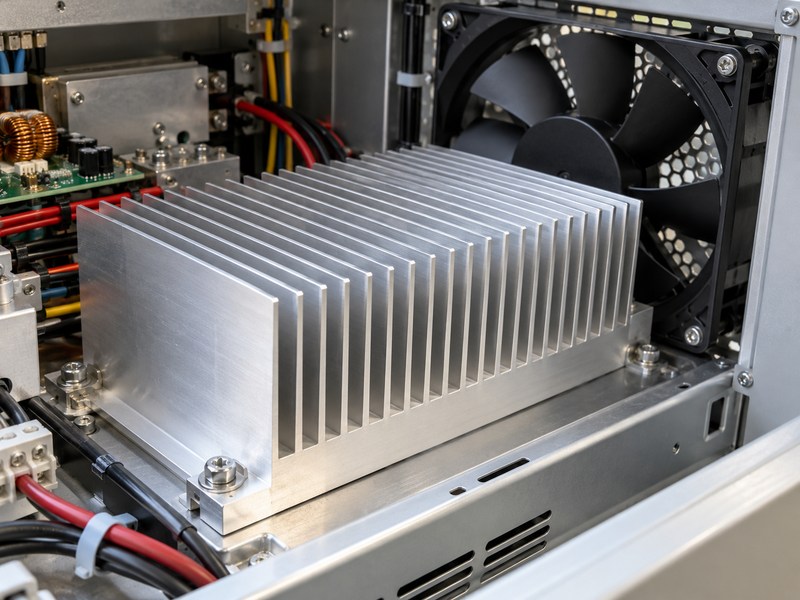
A sandblasted aluminum heat sink fits the airflow path when its fin channels, fan arrangement and surrounding clearances work together inside the enclosure. Check where air enters, where it leaves and whether it can bypass the fins. A physically larger part can restrict a small fan enough to reduce useful flow. Review the installed configuration rather than choosing by fin count or overall size alone.
What should you inspect in a crowded chassis?
Look for cables, brackets and neighboring boards that obstruct the channel entrances. Check the fan’s operating point against system resistance where forced airflow is required. For natural convection, consider orientation and the space needed for warm air to leave. A benchtop test with open surroundings may miss recirculation in the final product, especially when a nearby power supply already warms the air entering the heat sink.
- Review air inlet temperature near the part.
- Keep channel entrances clear during assembly.
- Test with the intended enclosure panels fitted.
| Installation feature | Review question | Practical check |
|---|---|---|
| Fan position | Does useful flow enter channels? | Installed airflow review |
| Nearby hardware | Does it block or bypass flow? | Assembly inspection |
| Exhaust route | Can hot air recirculate? | Enclosed thermal test |
Include the airflow arrangement in sample approval so a later mechanical change receives thermal review.
7. What sandblasted aluminum heat sink dimensions matter most?
The sandblasted aluminum heat sink dimensions that matter most are those controlling contact, mounting and clearance in your assembly. These may include base flatness, hole position, overall height and the envelope around neighboring parts. Define them from the functional drawing. Avoid accepting a part because its length and width match while an altered mounting land or hole pattern prevents proper installation.
What should incoming inspection measure?
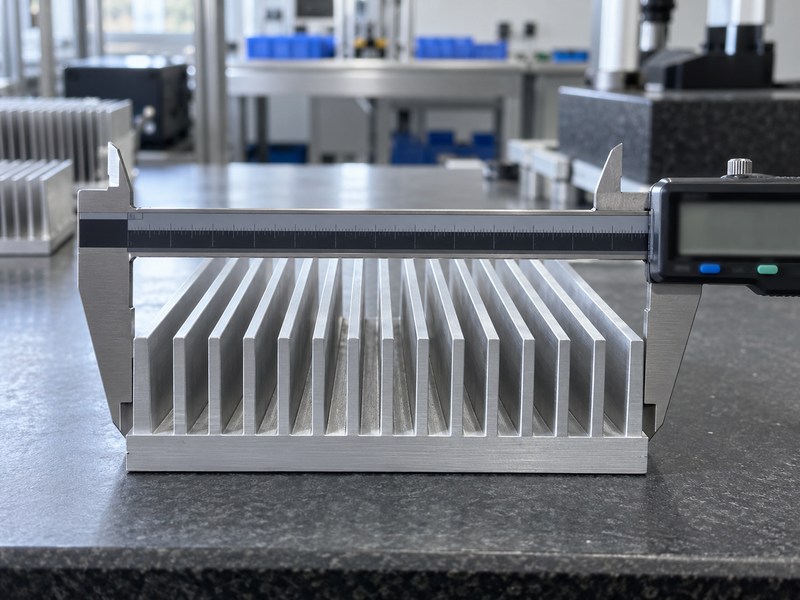
Use an inspection plan that identifies the feature, method, sampling and acceptance limit. A caliper can check some external dimensions, but it cannot establish every geometric tolerance or surface requirement. Keep delicate fins free from measuring force and use the intended datum system. If a finishing process changes thickness locally, inspect the finished condition rather than relying on a report produced before blasting or coating.
- Match reports to the supplied revision.
- Check gauges suited to each feature.
- Separate fin damage from nominal dimensions.
| Feature | Typical assembly consequence | Evidence to request |
|---|---|---|
| Hole location | Retention misalignment | Datum-based results |
| Overall height | Enclosure interference | Finished-part measurement |
| Contact land | Uneven seating | Specified surface check |
Use the inspection plan to detect functional changes that a visual sample may conceal.
8. How clean should a sandblasted aluminum heat sink arrive?
A sandblasted aluminum heat sink should arrive clean enough for the defined assembly process, with no unacceptable loose media, residue or contamination. The required evidence depends on where the part will be installed. A general industrial enclosure and a particle-sensitive electronics assembly may need different acceptance methods. State the requirement in the purchase specification so suppliers do not substitute an undefined claim such as clean finish.
What should the acceptance method reach?
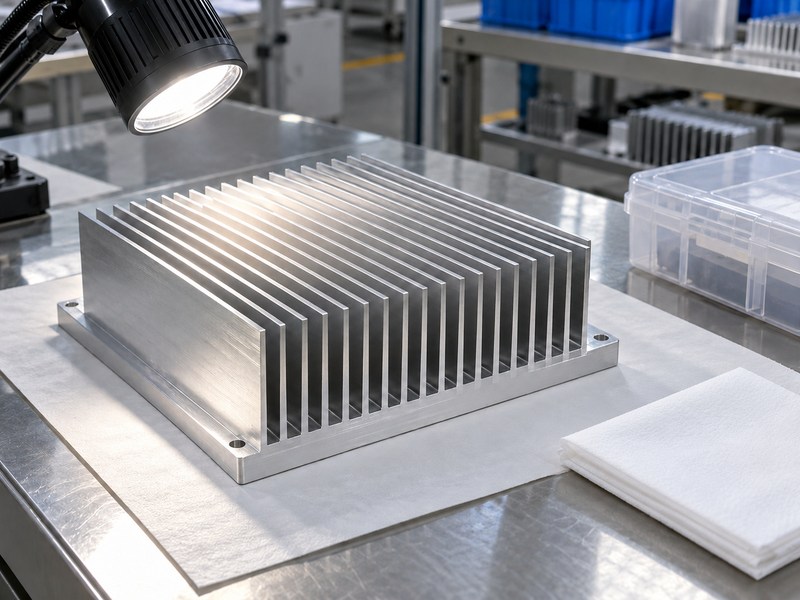
Inspect channel roots, mounting holes and any sheltered pockets where residue can remain. Agree how the supplier validates cleaning and protects the part afterward. Do not assume that a wipe on an outside wall represents debris inside narrow channels. If your assembly introduces its own cleaning step, confirm that the chemistry, handling and drying are compatible with the final coating, masking remnants and nearby components.
- Define what contamination means for the product.
- Check difficult geometry after cleaning.
- Protect approved parts from dirty handling areas.
| Location | Possible issue | Acceptance action |
|---|---|---|
| Fin root | Retained particles | Agreed internal-area inspection |
| Mounting hole | Media or plug residue | Feature cleanliness check |
| Contact land | Film or handling contamination | Controlled surface check |
The supplier should demonstrate the required delivered condition before the shipment reaches your assembly line.
9. How should a sandblasted aluminum heat sink be packed?
A sandblasted aluminum heat sink should be packed so transport cannot bend fins, scratch functional lands or introduce unacceptable debris. Separate parts and support features that can carry the expected handling loads. Avoid loose packing material that becomes trapped in narrow channels. The packing method belongs in sample approval because damage during transit can undo an otherwise acceptable finishing and inspection process.
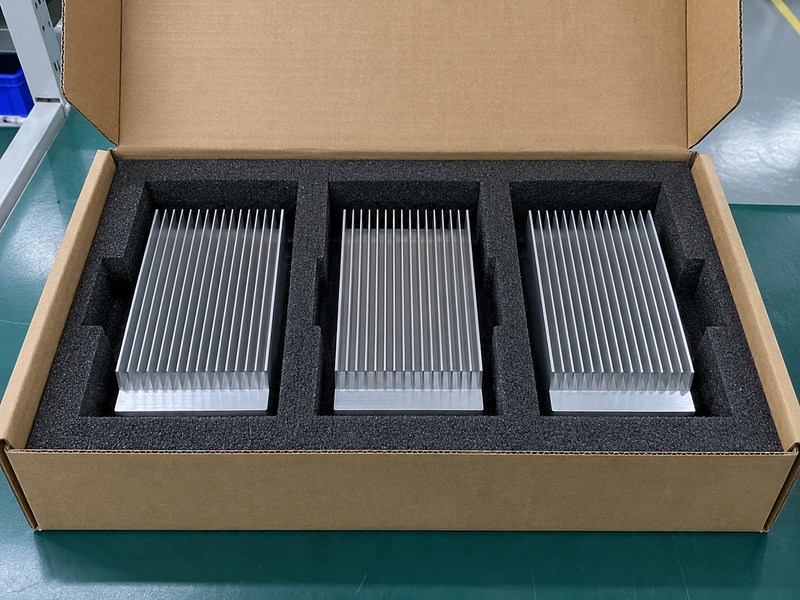
Which details belong in the packing instruction?
Show part orientation, separation, protective contact points and the condition of any contact-surface cover. Check whether packing material can shed particles or leave adhesive residue. Apply ESD controls where the delivered item includes sensitive electronic components; a bare heat sink and a populated assembly do not have identical handling requirements. Review unpacking as well as shipping so operators can remove a part without dragging thin fins against a tight container.
- Keep part identity and revision traceable.
- Protect the thermal land during handling.
- Check the part after representative shipment handling.
| Packing detail | Failure it addresses | Approval check |
|---|---|---|
| Individual separation | Part-to-part impact | Trial packing review |
| Base support | Fin loading | Contact point inspection |
| Clean protection | Debris or residue | Delivered condition check |
Approve a packing arrangement that preserves the same condition accepted at final inspection.
10. How do you approve a sandblasted aluminum heat sink supplier?
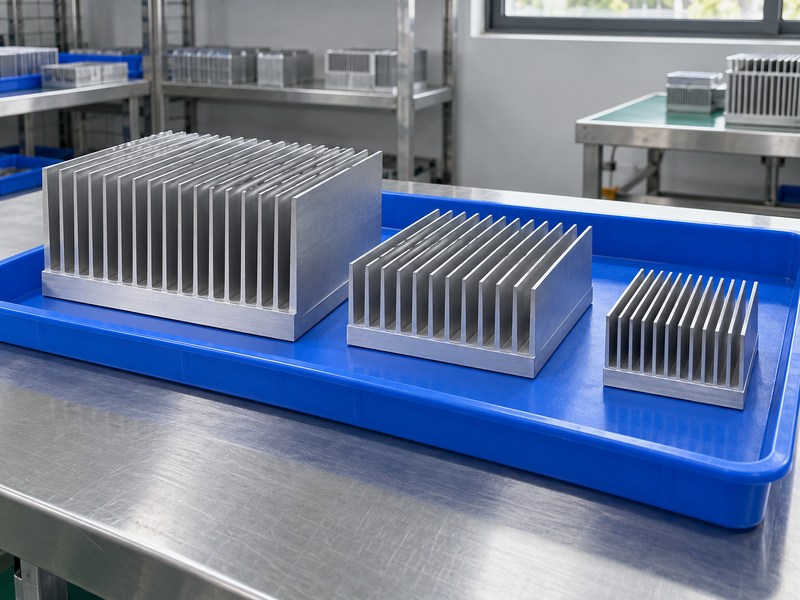
Approve a sandblasted aluminum heat sink supplier through a production-representative sample, relevant inspection evidence and a controlled order specification. Ask who performs machining, blasting, coating and final inspection, including any subcontracted operation. Establish which process or material changes require notice. A successful sample demonstrates one approved condition; your purchasing controls need to preserve that condition across later batches and revisions.
What makes a quotation ready to compare?
Request the same material, quantity, finish, masking, cleanliness, inspection and packing scope from each supplier. Separate tooling or setup charges from recurring piece costs, and clarify what sample approval includes. For a drawing review, share your device footprint, mounting method, heat load and airflow constraints when you contact us. Keep approved exceptions in writing so purchasing, quality and assembly teams all work from the same release record.
- Identify the approved drawing and sample.
- Define nonconformance and change handling.
- Check the final condition before batch release.
| Approval record | What it controls | Update trigger |
|---|---|---|
| Drawing and material | Product definition | Design revision |
| Finish sample | Appearance and boundaries | Process change |
| Inspection plan | Acceptance evidence | Requirement change |
Place the order against the approved records and review substitutions before accepting another delivery.
Frequently asked questions
Q1: Can I use a bare blasted part outdoors?
Only when your environmental specification permits it. Select the protective finish from the intended exposure and required verification rather than the sample’s appearance.
Q2: What’s the best way to compare thermal ratings?
Compare compatible resistance definitions and operating conditions. Include the installed airflow, heat-source footprint, orientation and interface material with each rating.
Q3: How do I know if the base is flat enough?
Use the package and assembly requirements to set the limit, then inspect with the specified method. A smooth-looking face does not establish flatness.
Q4: Can black anodizing provide electrical isolation?
Do not assume it does. Specify and verify the complete insulating interface and assembly where electrical isolation is required.
Q5: Should a replacement match the original finish exactly?
It should meet the released requirements. Review any finish substitution for contact, corrosion, electrical and thermal effects before treating it as an equivalent part.