
Choose a manufacturer that can verify your server’s cooling performance, mechanical fit, and repeatable production requirements. Your server radiator aluminum heat sink manufacturer needs the chassis, heat-source, airflow, and interface details behind those requirements. A sample that cools an open bench can still run too hot behind restrictive vents or a crowded duct. Qualify the installed assembly before committing to production.
1. What should a server radiator aluminum heat sink manufacturer do?
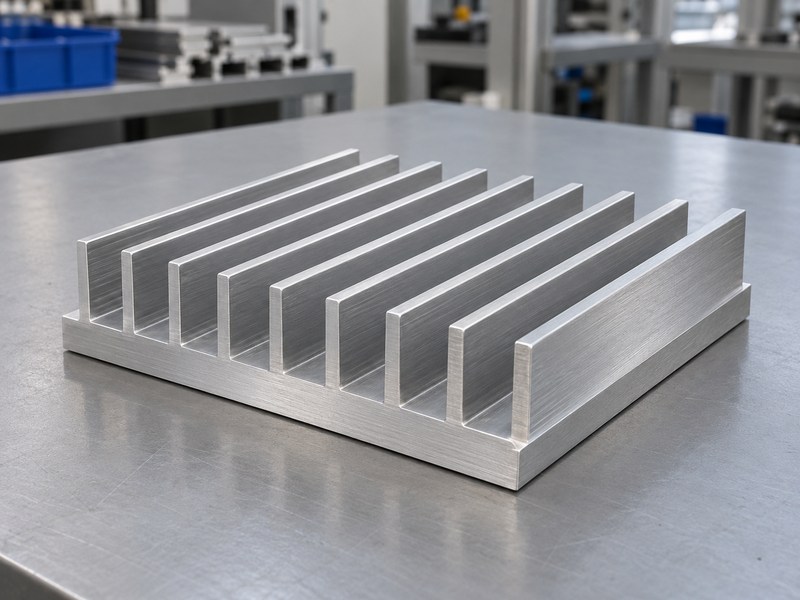
A manufacturer should translate the server’s thermal and mechanical requirements into a documented, repeatable cooling component. Your server radiator aluminum heat sink manufacturer should explain the proposed construction, manufacturing route, inspection points, and validation plan. Define the product before comparing suppliers: this guide concerns solid air-cooled heat sinks, sometimes described as radiators in sourcing requests. Liquid cold plates and liquid-to-air radiators need different fluid interfaces and qualification checks.
Which responsibilities belong in the proposal?
Confirm whether the supplier provides a component, a complete mounting assembly, engineering support, or a combination of those services. Assign responsibility for the thermal model, interface material, fastening method, and chassis test. A quotation can otherwise leave gaps between the part manufacturer and the system integrator.
- Identify the drawing and performance requirements each party owns.
- Define what prototype and production deliveries include.
- Request evidence relevant to the proposed construction.
| Proposal item | Clarify | Useful evidence |
|---|---|---|
| Product scope | Part or complete assembly | Drawing and bill of materials |
| Engineering scope | Design and test responsibilities | Agreed validation plan |
| Production scope | Process and inspection coverage | Manufacturing and quality records |
Compare suppliers against the same scope so differences in price correspond to differences you can evaluate.
2. What server data should you include in an RFQ?
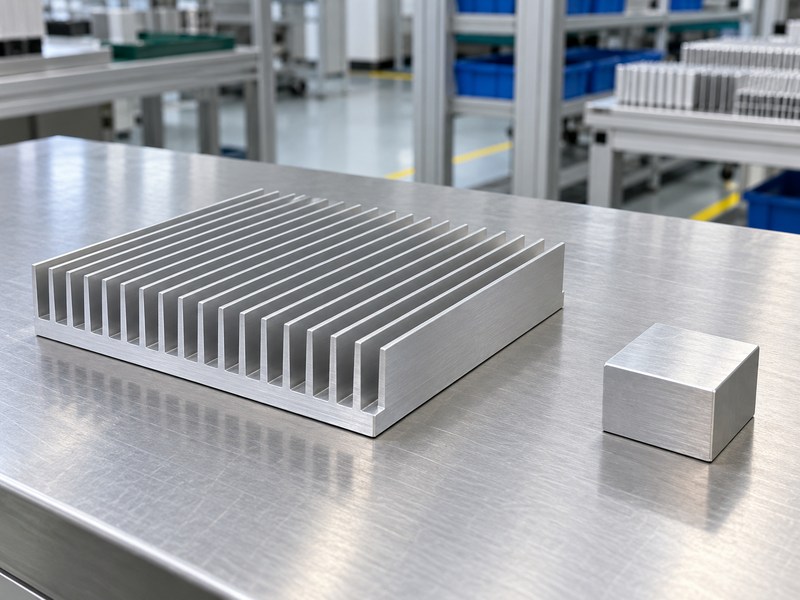
Include the heat-source limits, chassis envelope, available airflow, mounting interface, and expected production volume. A server radiator aluminum heat sink manufacturer can give a more useful response when the RFQ describes the operating assembly. Processor power terminology alone does not define every thermal condition. Provide the platform’s required dissipation, operating modes, and temperature criteria using the documentation for the exact device and configuration.
What helps the supplier identify missing information?
Send a dimensioned model with the contact footprint, keep-out areas, and neighboring obstructions. State whether the design uses a case-temperature limit, junction-temperature limit, or another vendor-defined acceptance method. Describe the air entering the cooler, including upstream heat sources, rather than treating room temperature as the local inlet condition.
- Include the processor or module identification and applicable design guidance.
- Provide fan operating conditions and the surrounding flow path.
- Label preliminary inputs that still require confirmation.
| RFQ input | Specify | Why it affects the response |
|---|---|---|
| Heat source | Load, footprint, and limits | Thermal requirement |
| Assembly | Envelope, datums, and interfaces | Mechanical feasibility |
| Supply | Prototype quantity and forecast | Tooling and production planning |
Keep the input package under revision control so suppliers do not quote different versions of the server design.
3. Which aluminum heat sink construction suits the design?
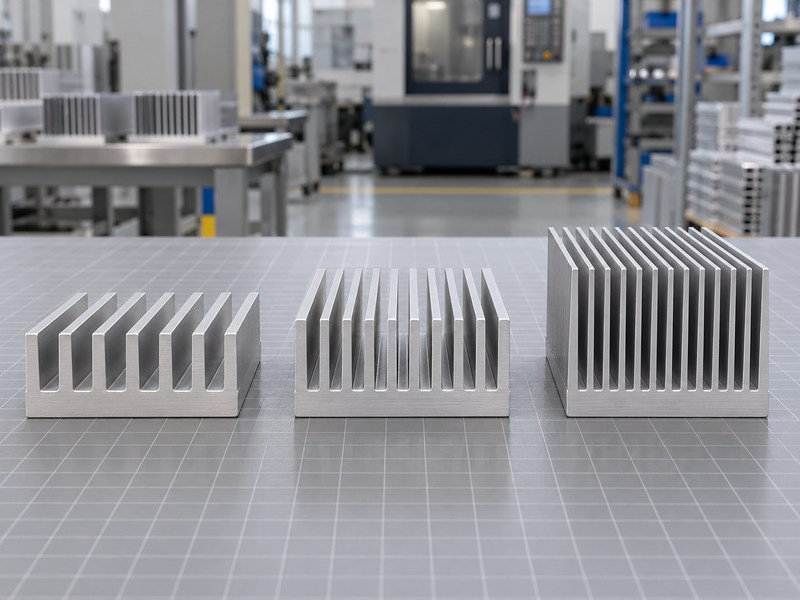
Select a construction that meets the installed thermal requirement and can be produced consistently at the intended volume. A server radiator aluminum heat sink manufacturer may propose extrusion, machining, skiving, or an assembled-fin design. Those processes offer different geometry and production options, so compare actual proposals against one requirement set. A fin pattern’s appearance does not establish its pressure drop, heat spreading, or production capability.
What should the process comparison explain?
Ask how the proposed base, fins, joining method, and mounting features support the design. Dense fins can add surface area while changing flow resistance and inspection access. If base spreading limits performance, a different base construction may deserve evaluation before adding more fins within the same envelope.
- Request the proposed material and condition on the drawing.
- Review geometry that needs secondary machining or joining.
- Compare qualified alternatives using the same airflow and interface conditions.
| Construction question | Supplier response needed | Check in the sample |
|---|---|---|
| How are fins formed? | Process and geometry limits | Fin consistency |
| How does heat enter the fins? | Integral base or joint details | Contact and joint condition |
| How are features finished? | Machining and coating sequence | Finished dimensions |
Use the comparison to select a feasible construction, then validate its performance in the server assembly.
4. How do you verify chassis and socket clearance?
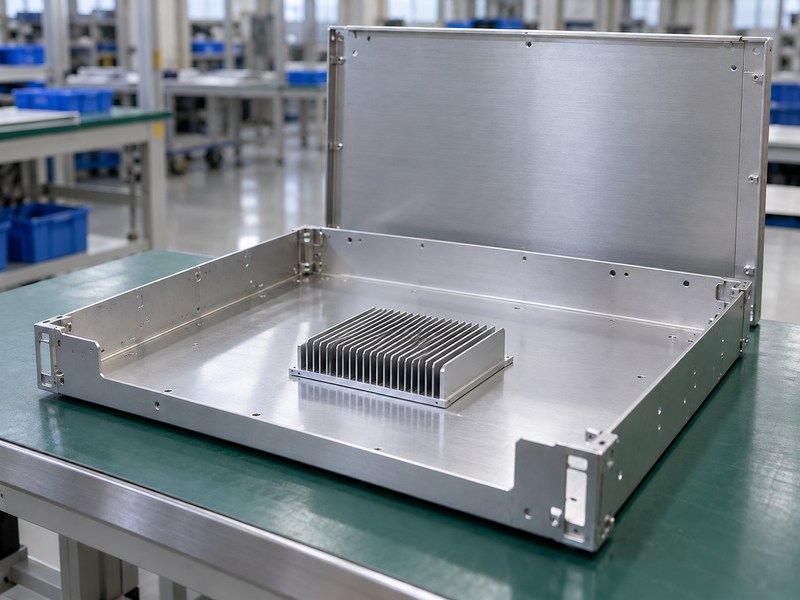
Verify clearance from a complete assembly stack-up that includes the board, socket, package, mounting system, and enclosure. A server radiator aluminum heat sink manufacturer needs those interfaces even when the product is described as a 1U or 2U cooler. Calculate the available component height after allocating space to the surrounding hardware. Check lateral access and installation motion alongside the final installed envelope.
Which interference checks belong in the review?
Include memory modules, retention hardware, cables, duct walls, and service tools in the model. Account for the permitted variation of mating parts and any movement relevant to transport or servicing. A sample that fits while the lid is removed still needs a check in the complete chassis.
- Confirm the mounting pattern and locating features for the exact platform.
- Check fin and hardware clearance at the drawing limits.
- Review installation, removal, and replacement access.
| Assembly condition | Evaluate | Acceptance basis |
|---|---|---|
| Installed | Envelope and mating interfaces | Approved stack-up |
| Assembly operation | Tool and insertion access | Work instruction |
| Servicing | Removal path and adjacent parts | Service requirements |
Record the chassis and interface revisions used for approval so later changes trigger a fit review.
5. What thermal and airflow evidence should you request?
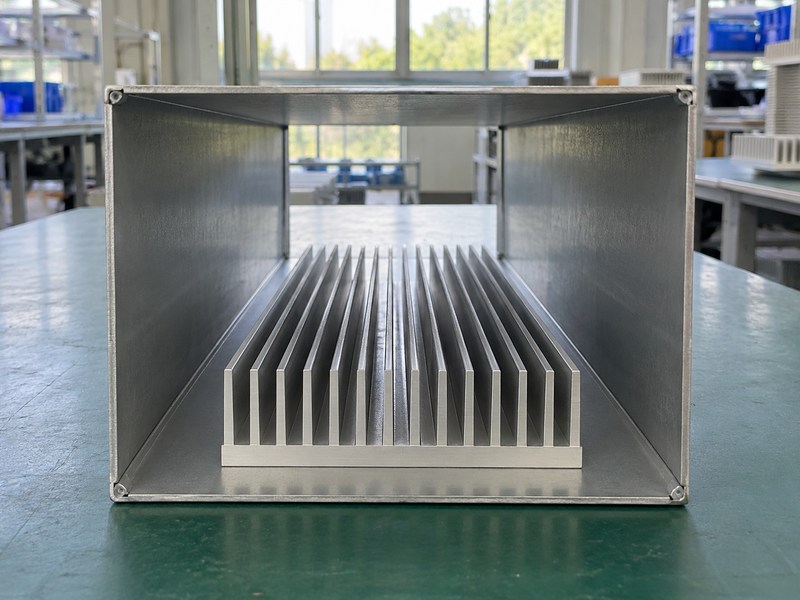
Request performance evidence that states the heat load, inlet-air condition, airflow arrangement, interface, and measurement method. Your server radiator aluminum heat sink manufacturer should distinguish an estimated requirement from a measured result. Fan free-air flow does not define the flow through a restrictive chassis. Review the fan and system resistance together, including bypass paths around the fin bank.
How can you check a preliminary thermal budget?
Assume a 200 W load, a 95°C case limit, and 40°C local inlet air. The illustrative case-to-air budget is 0.275°C/W, calculated from the 55°C permitted rise divided by 200 W. An assumed interface resistance of 0.025°C/W leaves 0.250°C/W for the sink-to-air path; these are example inputs, not a rating for a product.
- Apply the device vendor’s method when evaluating junction-temperature limits.
- Identify sensor locations and the condition used to judge thermal stability.
- Use a documented heat sink selection method for preliminary estimates.
| Illustrative budget item | Value | Meaning |
|---|---|---|
| Case-to-air allowance | 0.275°C/W | Total available resistance |
| Assumed interface | 0.025°C/W | Part of the heat path |
| Remaining sink-to-air allowance | 0.250°C/W | Requirement to validate |
Repeat the evaluation with the actual power, limits, interface, and inlet conditions before approving a design.
6. How should the mounting and thermal interface be specified?
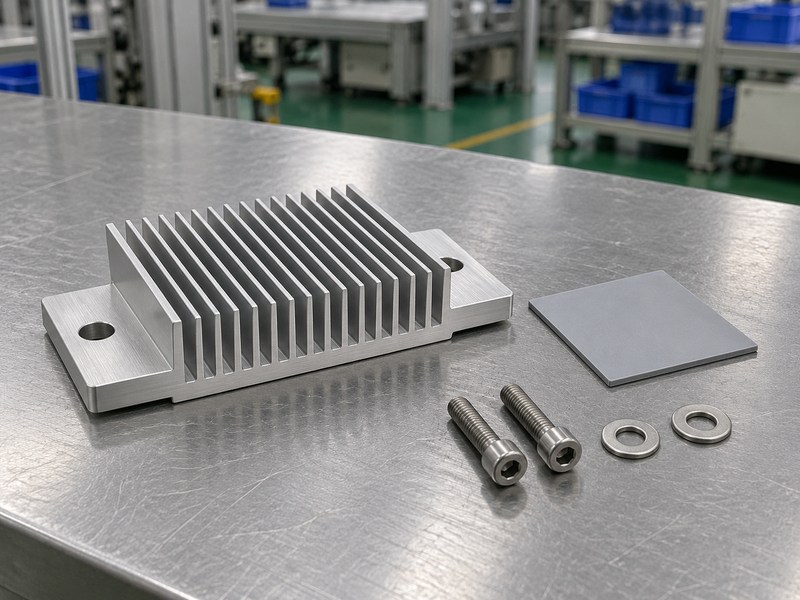
Specify the contact geometry, interface material, and mounting load as one assembly. A server radiator aluminum heat sink manufacturer needs the package’s mechanical limits and the intended retention method. The same metal part can produce different contact conditions with different hardware or interface thicknesses. Use the component vendor’s guidance and qualified assembly procedure to establish the permitted load and installation method.
What belongs on the assembly drawing?
Define the contact region, surface requirements, interface application, and retention hardware. Match the heat sink mounting hardware to the actual platform rather than assuming a generic screw pattern proves compatibility. Where a pad fills a gap, review its compressed thickness and resistance using the selected thermal pad data.
- Control the finished mounting surface and interface stack.
- State the fastening sequence and relevant assembly limits.
- Check the released part and the assembled contact condition.
| Assembly element | Define | Verify |
|---|---|---|
| Contact surface | Geometry and surface condition | Finished-part inspection |
| Interface material | Product and application method | Installed thickness or coverage |
| Retention system | Hardware and assembly procedure | Load, fit, and contact |
Keep these details with the approved bill of materials so an interface or hardware substitution receives a design review.
7. What should a prototype validation include?
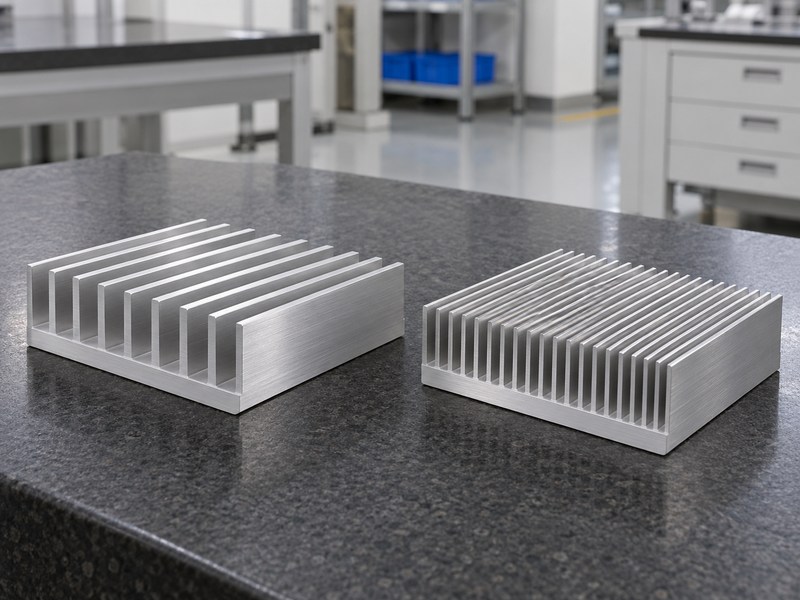
Validate the prototype in a representative mechanical and airflow assembly under the agreed operating conditions. A server radiator aluminum heat sink manufacturer should provide sample identification and a record of how the tested part was produced. Connect the thermal result to the tested chassis, interface, mounting method, and fan configuration. Otherwise, a reported temperature leaves too many conditions unresolved.
Which conditions deserve separate checks?
Use the operating cases that belong to your server requirements, including the relevant workloads and inlet conditions. If reduced fan operation is a specified condition, include it in the plan. Inspect the part after assembly or reliability exposures when those activities can change contact, fin condition, or mounting integrity.
- Define the load, duration, and thermal-stability criteria.
- Record the sample’s construction and any temporary modifications.
- Confirm which results apply to the proposed production process.
| Validation activity | Record | Decision supported |
|---|---|---|
| Mechanical fit | Complete assembly configuration | Installation approval |
| Thermal test | Load, airflow, interface, temperatures | Cooling acceptance |
| Relevant exposures | Conditions and post-test inspection | Continued assembly integrity |
Resolve deviations before treating the prototype as the reference for a production order.
8. Which production quality records should you review?
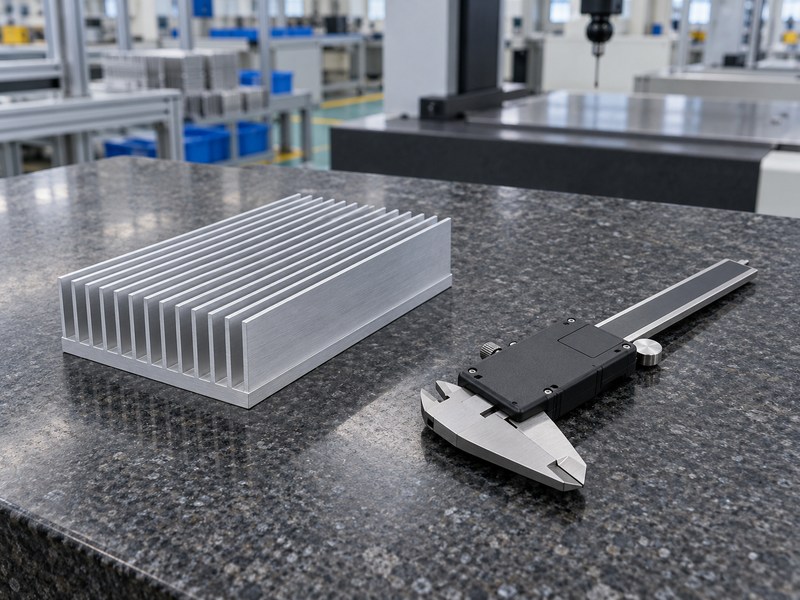
Review records that connect the approved design to the material, process, and finished features being supplied. A server radiator aluminum heat sink manufacturer should identify drawing revisions, material lots, inspection methods, and relevant process controls. Ask for measured evidence on the features that affect thermal contact and assembly. A general quality statement or certificate does not describe the condition of a particular production lot.
How can you make the review specific?
Link inspection characteristics to the drawing and the intended measurement condition. Agree on sampling, traceability, and the handling of results outside the specified limits. If a supplier claims certification, check the certificate’s scope, issuing body, and currency separately from the part’s performance evidence.
- Identify which critical features receive recorded inspection.
- Require review of changes to material, tooling, joining, or finishing.
- Preserve records that connect a delivered lot to its approved revision.
| Quality record | Look for | Connection to the part |
|---|---|---|
| Material record | Specified alloy and condition | Identified lot |
| Dimensional report | Features, values, and methods | Drawing revision |
| Process-change record | Change and approval evidence | Affected production |
Ask the supplier to demonstrate the record flow with representative documentation before repeat orders begin.
9. How should you compare tooling and unit-price quotations?
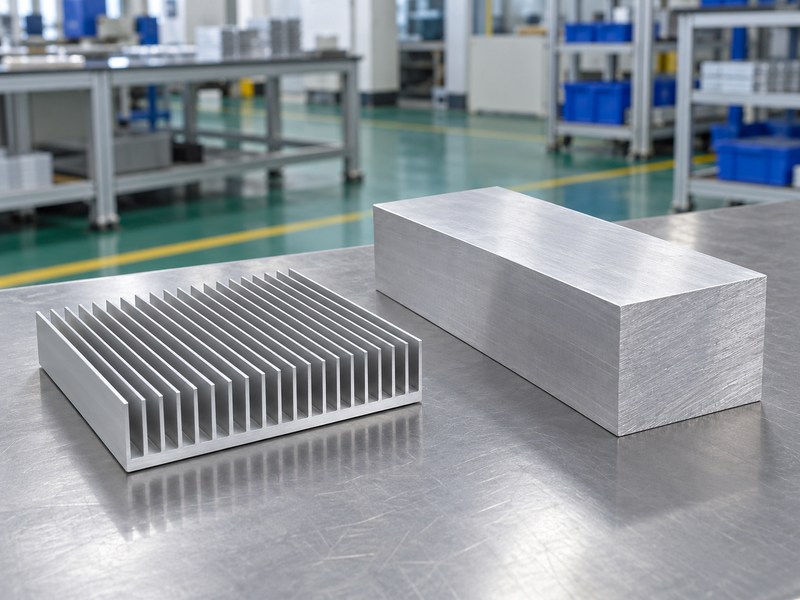
Compare quotations against the same approved scope, quantities, inspection requirements, and delivery assumptions. A server radiator aluminum heat sink manufacturer may separate tooling, engineering, samples, machining, finish, and packaging from the recurring part price. Identify those items before comparing totals. A lower quoted unit price may cover a different construction or omit work included in another proposal.
How can you separate recurring and one-time costs?
Use a stated volume when allocating one-time charges. For example, an assumed $1,500 tooling charge allocated across 500 parts adds $3 per part to that comparison. This arithmetic example is not a supplier price estimate; later orders, tool reuse, maintenance, or design changes can alter the allocation.
- Compare the drawing revision and included operations line by line.
- State the volume and order pattern behind the comparison.
- Clarify ownership, reuse, and changes for dedicated tools and fixtures.
| Illustrative cost input | Assumption | Comparison result |
|---|---|---|
| One-time tooling | $1,500 | Separate from recurring price |
| Allocation quantity | 500 parts | Stated comparison volume |
| Allocated tooling | $3 per part | Added for this comparison only |
Keep technical approval separate from commercial comparison so the selected quotation still meets the agreed server requirements.
10. What should you agree before repeat production orders?
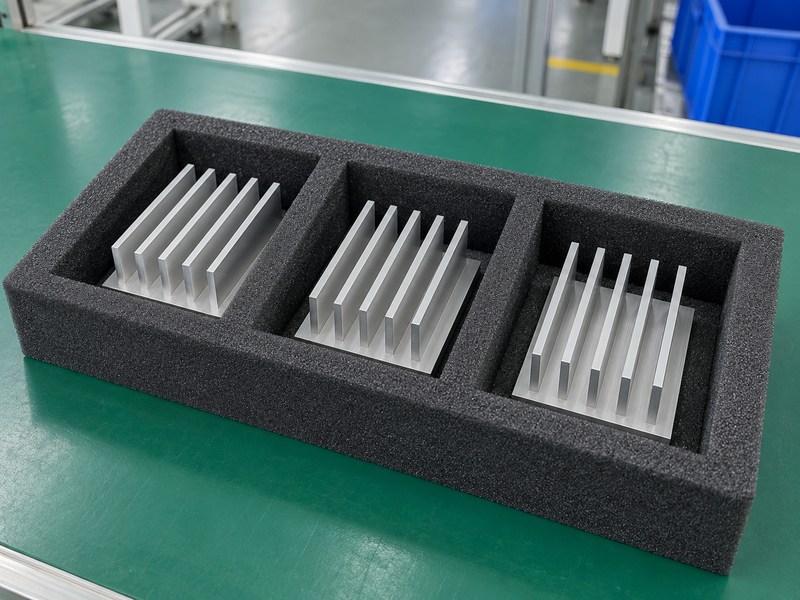
Agree on the released design, production milestones, packaging, traceability, and change-notification process before repeat supply. Your server radiator aluminum heat sink manufacturer needs a clear transition from prototype approval to recurring delivery. Confirm which tools, processes, and interface components belong to the approved build. Include how the supplier will protect delicate fins and contact surfaces during handling and shipment.
What belongs in the production release?
Identify the approved drawings, bill of materials, sample records, and inspection plan. Define milestones around drawing release, tooling readiness, pilot approval, and shipment rather than relying on one undifferentiated lead-time promise. Agree how substitutions or process changes reach the responsible engineering contact.
- Preserve part and revision identification through packaging.
- Protect fins without using them as load-bearing packing surfaces.
- Define the review needed before a production change is accepted.
| Release item | Agreed detail | Practical purpose |
|---|---|---|
| Approved build | Drawings, materials, and interfaces | Repeatable supply |
| Delivery plan | Milestones and dependencies | Visible schedule |
| Packaging and changes | Protection and notification | Part integrity and configuration control |
Send the chassis stack-up, device limits, inlet-air conditions, mounting requirements, and forecast volume when you contact us. Those inputs let the supplier review address your server’s fit, cooling, and production requirements together.
FAQ
Q1: Can I request a heat sink using only the processor TDP?
That information is insufficient by itself. Provide the exact platform requirements, operating conditions, interface, mounting details, and available chassis airflow.
Q2: What’s the best aluminum heat sink process for a server?
Choose it from the qualified design and production requirement. Compare construction options under the same envelope, airflow, interface, and operating conditions.
Q3: How do I know whether a manufacturer can support my server?
Ask for a documented proposal and representative validation evidence. Confirm that the proposed part and assembly match the platform you intend to qualify.
Q4: Can I reuse one cooler across different server models?
Only after validating the relevant configurations. Different socket stacks, ducts, fan settings, or inlet conditions can change fit and cooling performance.
Q5: Should I select the lowest quoted unit price?
Compare qualified proposals on the same scope. Include one-time charges, required operations, inspection, packaging, and the assumptions behind the order volume.