
Choose a stainless steel cold forged heat sink proposal by requiring evidence for the specified alloy, geometry and production route. A successful aluminum sample cannot establish the forming behavior of stainless. Define the thermal duty and ask the supplier to demonstrate a feasible part before committing to production tooling.
1. What does a stainless steel cold forged heat sink request mean?
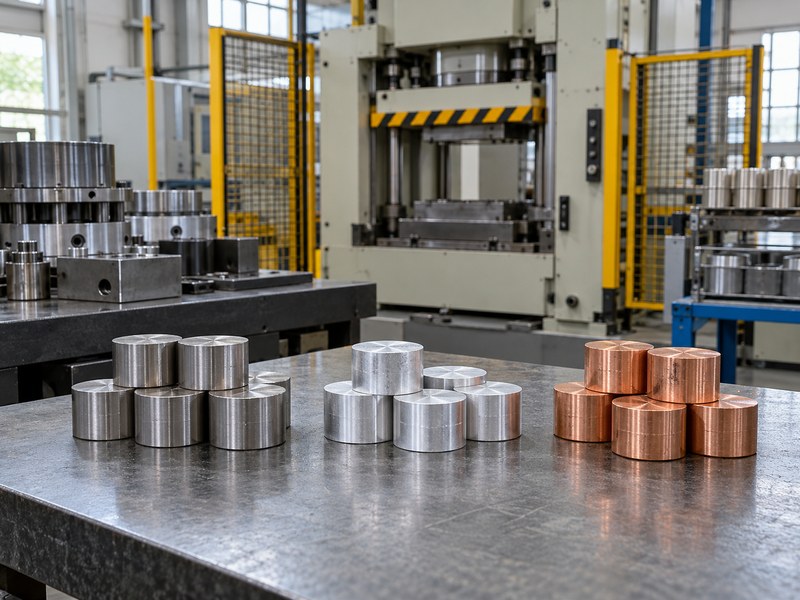
A stainless steel cold forged heat sink request specifies both a finished material and a forming route that must be validated together. Identify which metal becomes the heat sink and which metal belongs to the tooling. Steel dies used to form aluminum do not establish a stainless finished part.
Define the part before discussing the process label
Cold forging describes forming by plastic deformation at relatively low material temperature, commonly near room temperature. The proposed grade, supplied condition, reduction and geometry determine whether a particular route is practical. A process label alone leaves these details unresolved.
Give the supplier a drawing and a heat-load requirement rather than asking for a visually similar pin array. Include the reason stainless is needed so an alternative construction can be evaluated against the same exposure and mechanical conditions.
- Separate finished-part material from die and fixture material.
- Identify the actual forming and finishing sequence.
- State which geometry and material requirements can change.
| Item | Specify | Evidence |
|---|---|---|
| Finished part | Alloy, condition and geometry | Representative sample and records |
| Tooling | Proposed forming route | Manufacturability review |
| Thermal duty | Source and cooling conditions | Defined-condition validation |
Keep the material and process identity visible throughout the quotation.
2. How does stainless formability affect the proposal?
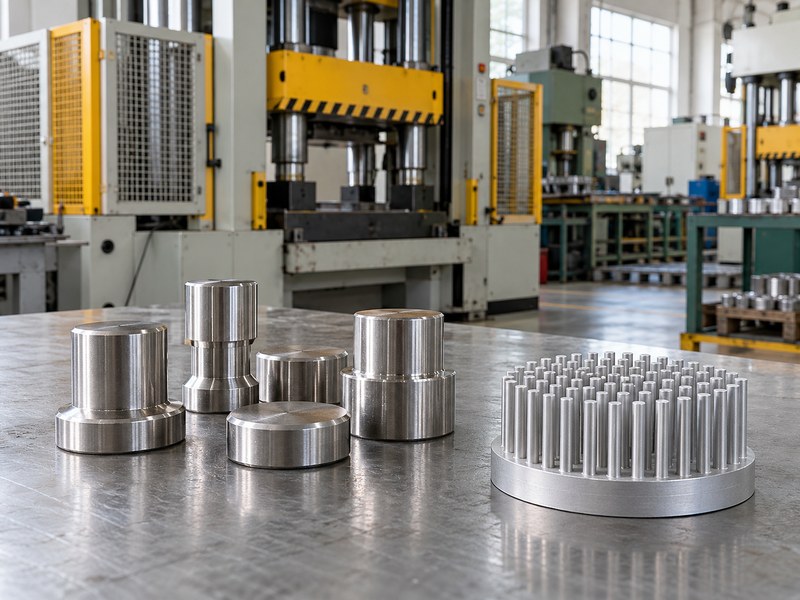
Stainless formability affects the loads, reductions and geometry of a stainless steel cold forged heat sink proposal. Different grades and conditions respond differently to cold work. A supplier needs material-specific evidence rather than a general statement that its press can form metal.
Review work hardening as well as initial strength
Published alloy-selection guidance for cold heading relates headability to mechanical properties and work-hardening behavior. An annealed tensile-strength value alone does not fully describe how a material will respond as forming progresses. The part’s complexity and reduction sequence also need review.
Ask the supplier to identify the supplied material condition and any proposed intermediate treatment. If a treatment or stock condition changes, determine which properties and dimensions must be rechecked before the route is accepted.
- State the exact grade and accepted material condition.
- Request the basis for the proposed forming sequence.
- Include final properties, cleaning and exposure requirements.
| Material input | Affects | Supplier question |
|---|---|---|
| Grade and condition | Forming response | What material was used in the trial? |
| Work-hardening behavior | Subsequent forming load | How is the sequence established? |
| Later treatment | Final properties and geometry | What needs requalification? |
Approve a material-specific route rather than selecting the grade solely from an appearance sample.
3. What should the supplier explain about press and die loading?
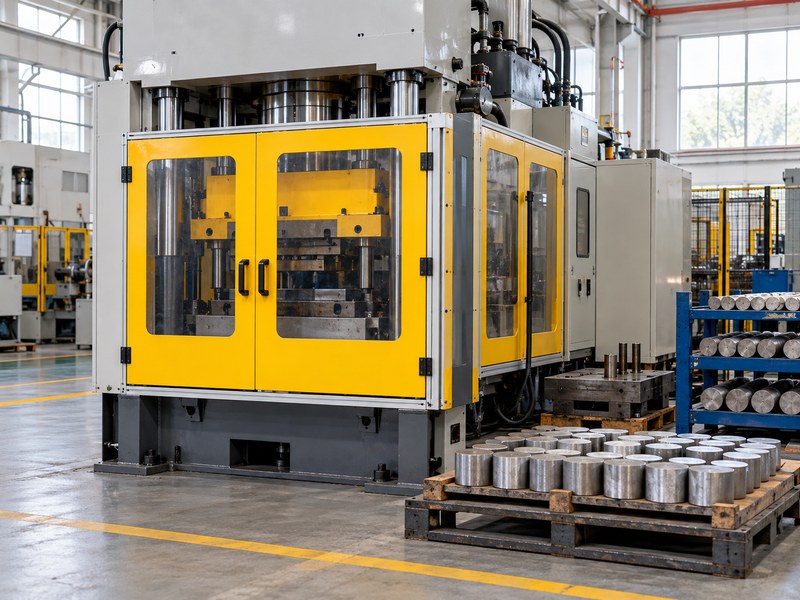
The supplier should explain how a stainless steel cold forged heat sink geometry relates to its forming loads, tooling limits and process control. Nominal press capacity is one part of that review. Local die stresses, contact, friction and the filling sequence also influence feasibility and tool life.
Ask for a route rather than a machine photograph
Request the proposed stages, blank condition and the features that create the greatest manufacturing difficulty. Where simulation or prior process data are used, ask how representative trials will verify the assumptions. A photograph of a large press cannot establish that a fine pin array will fill correctly.
Define who approves changes after a trial. A revised pin height, base thickness or material condition can affect thermal duty as well as manufacturing risk, so those changes belong in the engineering review.
- Identify the critical forming features and stage sequence.
- Ask how the tooling is monitored and maintained.
- Connect process changes to drawing and sample approval.
| Evidence | Can support | Still needs |
|---|---|---|
| Machine capability | Available equipment scope | Part-specific route |
| Analysis or prior data | Initial feasibility assessment | Representative validation |
| Trial parts | Observed forming result | Final geometry and property checks |
Keep the actual part geometry at the center of the capability review.
4. Which pin and base geometries need proof?
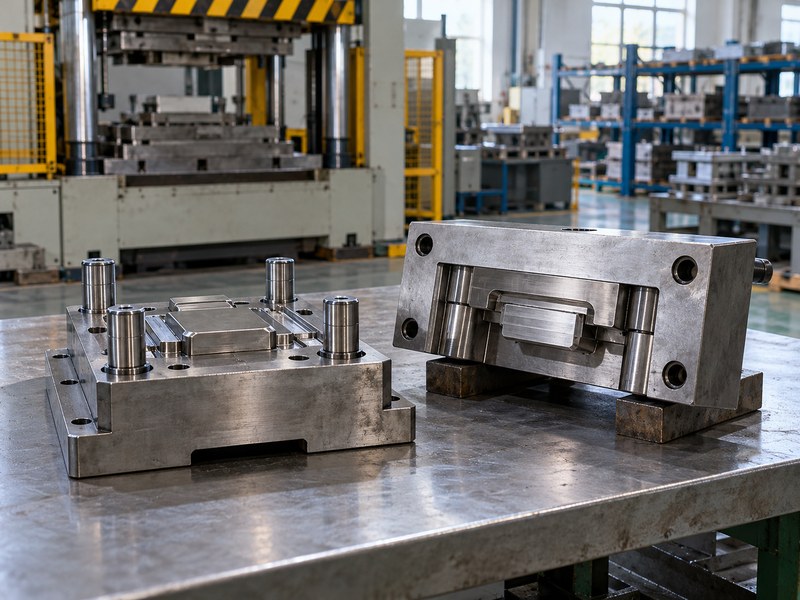
Every critical feature of a stainless steel cold forged heat sink needs proof that it can be produced and released from the proposed tooling. Pin height, diameter, pitch, root shape and base thickness interact. Geometry demonstrated in another alloy does not establish the same capability in the chosen stainless grade.
Allow a manufacturability review before freezing the model
Ask the supplier to identify the features that limit filling, increase local loads or complicate ejection. Shorter or more substantial features may change forming demands, but they also change area, mass and thermal behavior. Evaluate proposed changes against the actual operating target.
Keep the contact-face requirement distinct from the near-net forming shape. The process may still need a finishing operation to establish the final interface, hole pattern or assembly datum.
- Review pin roots and transitions as functional features.
- Identify surfaces established by forming and by later machining.
- Require approval for changes to thermally relevant dimensions.
| Feature | Manufacturing review | Thermal or assembly review |
|---|---|---|
| Pin height and pitch | Filling and release | Conduction and airflow |
| Root transition | Local flow and tooling | Heat path and retention |
| Base thickness | Forming and finishing | Spreading and stiffness |
Approve the revised thermal design with the revised manufacturing proposal.
5. What can an early forming trial establish?
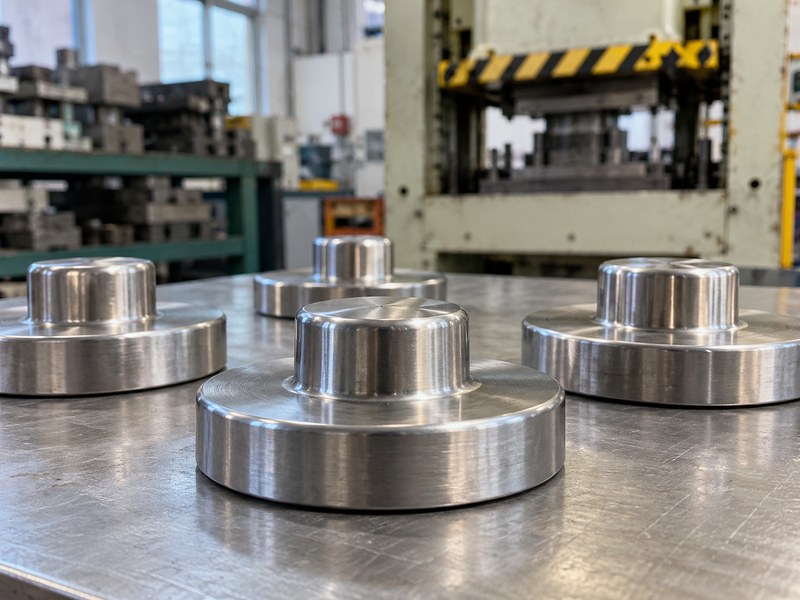
An early trial can establish specific observations about a stainless steel cold forged heat sink route, but its scope must match the claim. A simple upset or coarse feature can help assess part of the forming behavior. It does not prove a complete fine-feature heat sink or production consistency.
Record what the sample represents
Keep the material identity, stock condition and process route with the trial result. Identify which final features were formed and which were machined or assembled afterward. A finished sample can hide a route that differs from the process proposed for production.
Inspect the characteristics relevant to the trial, such as filling, cracking, folds, geometry or contact-face movement. Define any additional checks needed before progressing to a full part and then to repeated production runs.
- Mark the trial’s material and representative features.
- Identify later operations used to complete the sample.
- Define the evidence needed at the next stage.
| Trial scope | Useful observation | Unproven claim |
|---|---|---|
| Simple forming coupon | Local material response | Full pin-field capability |
| Full prototype | Finished geometry in one route | Batch consistency |
| Repeated production sample | Process repeatability under stated conditions | Every service condition |
Accept each trial for the evidence it actually provides.
6. When should machining or another material be compared?
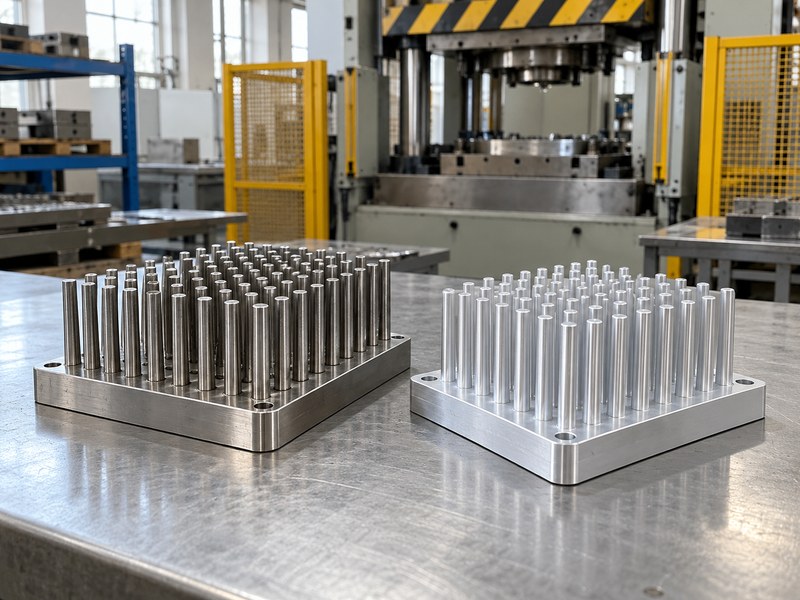
Compare machining or another material when the stainless steel cold forged heat sink proposal cannot yet demonstrate the required geometry, cost or thermal result. The project may need stainless exposure resistance, a particular shape or a low unit cost, and those requirements do not always point to the same process.
Preserve the application requirements during comparison
A machined stainless part can provide a useful reference geometry without proving a forming route. An aluminum or copper cooling part can provide another thermal option if the exposure and assembly permit it. A mixed-material design can also assign the structural and conductive duties to separate components.
Review CNC-machined heat sink options using the same source temperature, environment and mounting limits. Compare installed assemblies rather than accepting a material substitution merely because it is easier to manufacture.
- State which application requirements are mandatory.
- Compare source temperature, mass and mounting needs.
- Keep tooling, finishing and qualification scope consistent in quotations.
| Alternative | Can help with | Needs review |
|---|---|---|
| Machined stainless | Reference geometry and lower tooling commitment | Removal cost and thermal path |
| Conductive metal alternative | Heat spreading and mass | Exposure and mechanical duty |
| Hybrid construction | Separate functions | Added joints and compatibility |
Select an alternative only after it is checked against the same acceptance requirements.
7. Which material and internal-quality checks matter?
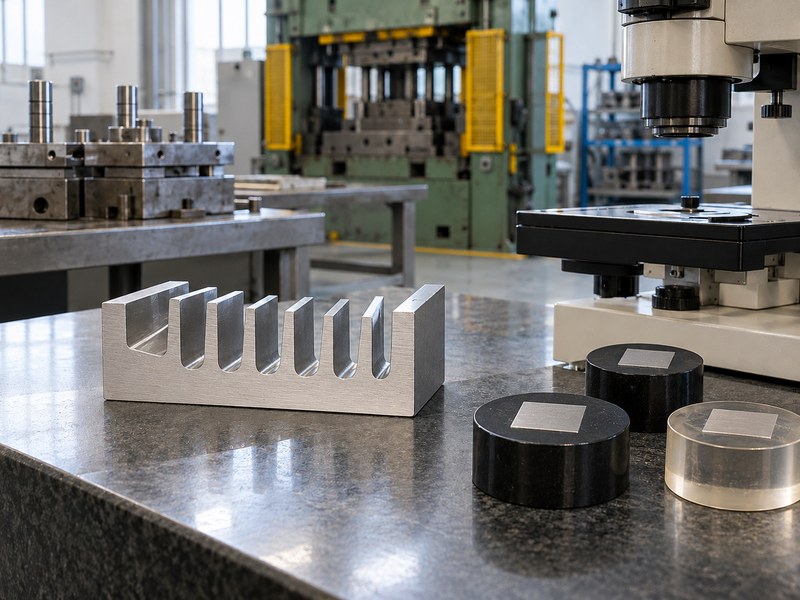
Material and internal-quality checks for a stainless steel cold forged heat sink should address the failure modes of the actual route and service. Geometry alone may not reveal a crack, fold or other defect. Define the required examination with the material and manufacturing specialists involved in the project.
Connect the inspection to a measurable requirement
Identify any final mechanical, corrosion or material-condition requirement and the method used to verify it. A photograph of grain flow does not establish thermal conductivity or complete part quality. Where sections, hardness checks or other examinations are proposed, define representative locations and acceptance criteria.
Include any machining, treatment or joining that occurs after forming. The final supplied part is the item that must meet the specification, so intermediate-stage records need a clear connection to it.
- Retain material and process traceability for the tested sample.
- Choose checks from the relevant failure modes.
- Define how production changes affect the qualification record.
| Inspection area | Question | Evidence |
|---|---|---|
| Material identity | Was the specified stock used? | Traceability record |
| Internal condition | Are relevant defects controlled? | Agreed examination |
| Final properties | Does the supplied state meet requirements? | Suitable material tests |
Approve the inspection plan before interpreting a sample as proof of production capability.
8. How should tooling cost and volume be compared?
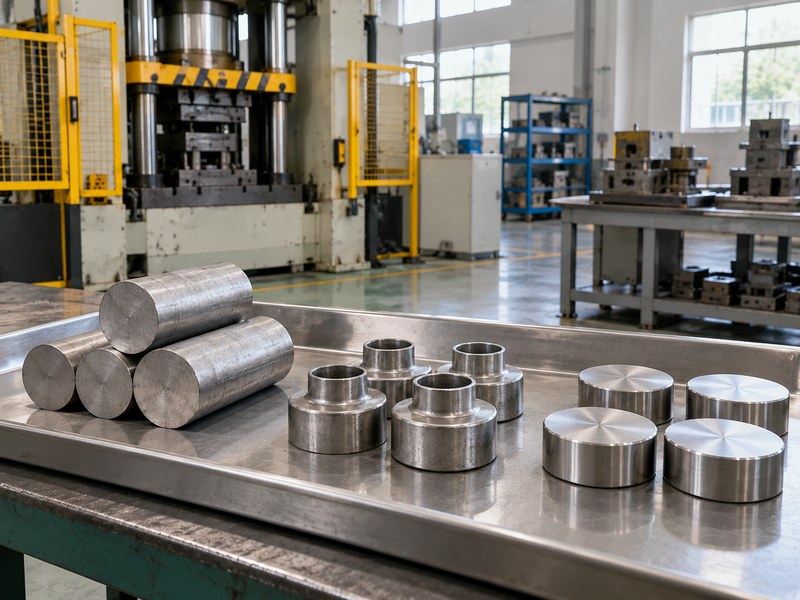
Tooling cost and expected volume affect a stainless steel cold forged heat sink decision, but they should follow a feasible production route. Include development, tool maintenance, secondary operations and inspection in the comparison. A low estimated cycle cost is incomplete if the final contact surface still requires substantial finishing.
Use an explicit cost example
Assume a hypothetical tooling cost of $12,000. Spread over 1,000 accepted parts, that allocation is $12 per part; over 10,000 accepted parts, it is $1.20. These are arithmetic examples, not supplier prices, and they exclude manufacturing, maintenance, rejects and all other costs.
Compare quotations at the same accepted quantity and evidence scope. Define tooling ownership, repair responsibility and the treatment of design changes so a lower initial price does not conceal a different commercial or production arrangement.
- Separate development and tooling from recurring unit cost.
- Include later machining, cleaning and inspection.
- Use accepted output rather than attempted production quantity.
| Example quantity | Assumed tooling allocation | Excludes |
|---|---|---|
| 1,000 accepted parts | $12 per part | All other costs |
| 10,000 accepted parts | $1.20 per part | All other costs |
Replace the assumptions with comparable supplier quotations after feasibility is established.
9. How should thermal performance be validated?
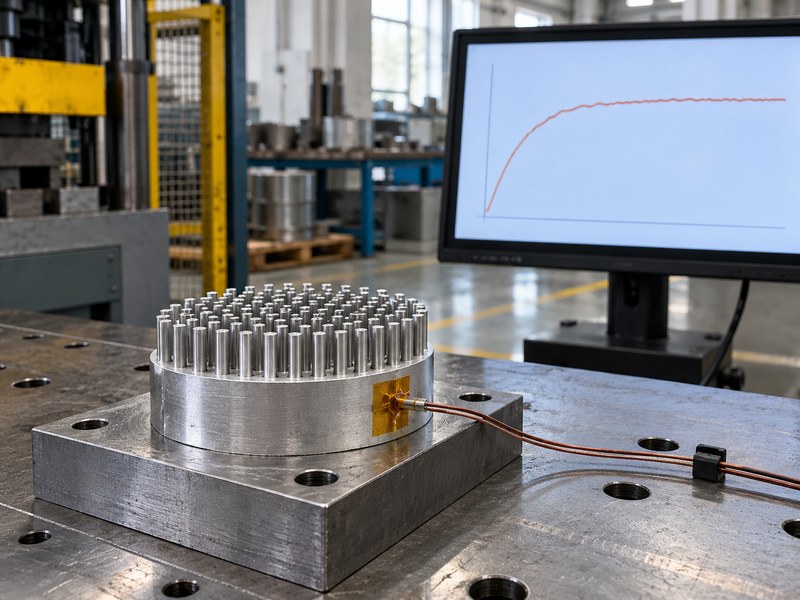
Validate a stainless steel cold forged heat sink with the final material condition, geometry and installation boundary. Forming does not remove the need to measure or predict the source temperature under load. A mechanical-property result cannot substitute for a thermal rating.
Test the supplied configuration
Use the intended source footprint, interface and mounting arrangement, then define local air or coolant conditions. For an illustrative calculation, a 30 K source-to-local-air rise at 25 W corresponds to 1.2 K/W assembly resistance. That number describes the stated boundary rather than an intrinsic material property.
If production changes a pin shape, finish, material condition or contact face, review whether the existing result still applies. Repeat the relevant checks after service exposure when movement or damage can affect contact or airflow.
- Record power, sensor positions and stabilization.
- Keep the actual manufacturing route connected to the tested part.
- Compare alternatives at the same temperature target.
| Test input | Record | Why |
|---|---|---|
| Source | Heat load and footprint | Defines local duty |
| Assembly | Interface and hardware | Controls contact |
| Cooling boundary | Air or coolant conditions | Defines heat rejection |
Accept thermal performance from the final configuration and its documented operating conditions.
10. What should you request before approving production?
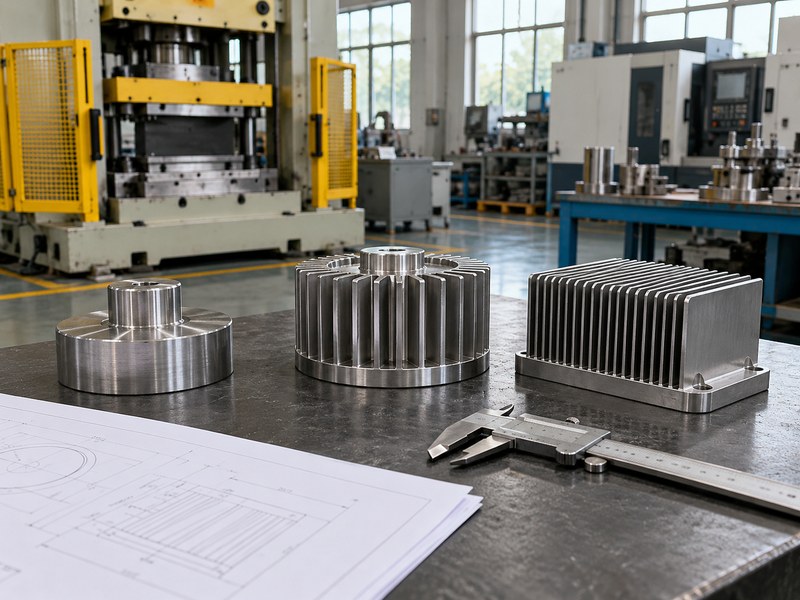
Before approving a stainless steel cold forged heat sink, request a material-specific process proposal, representative parts and the agreed validation records. Identify the remaining development work and who approves changes. A finished-looking sample should come with enough information to explain how production will reproduce it.
Freeze the evidence with the drawing
Include grade, condition, forming and finishing route, functional tolerances and final inspection requirements. Provide the heat-source layout, exposure, volume and target temperature. Ask the supplier to identify limitations and proposed alternatives before the tooling commitment is made.
Share the drawing and operating duty when you contact us. We can discuss relevant heat sink and cold plate alternatives while the stainless forming proposal is evaluated through its material and manufacturing evidence.
- Define the accepted sample and production route.
- Agree on material and process change approval.
- Retain the thermal and dimensional acceptance conditions.
| Approval item | Required clarity | Record |
|---|---|---|
| Material | Specified supplied and final condition | Traceability and property evidence |
| Process | Actual stages and secondary work | Approved route |
| Product | Geometry and operating performance | Sample and validation results |
Release production against the reviewed route and evidence package.
FAQ
Q1: Can stainless steel be cold formed?
Yes, for suitable grades, conditions and geometries. That capability does not establish that a particular fine-feature heat sink can be cold forged, so request part-specific evidence.
Q2: Can a supplier use its aluminum forging data for stainless?
It can use that experience to inform a review, but the data do not validate the stainless route. Material-specific forming behavior, tooling loads and final properties still need assessment.
Q3: Does cold forging automatically improve thermal conductivity?
No. Use relevant material and process data, then validate the finished heat path. A forming label or grain-flow image cannot establish the assembled thermal resistance.
Q4: What is the best early reference if the forming route is uncertain?
A representative machined or otherwise practical sample can help test the thermal geometry. Keep its purpose clear because it does not prove the proposed forging process.
Q5: How do I know whether a quotation includes all the work?
Ask for development, tooling, forming, secondary operations and inspection to be identified. Compare the same final drawing, accepted quantity and validation requirements across proposals.