
Care for a surface treated heat sink by using cleaning and handling methods compatible with its finish, assembly and service requirements. Dust can block channels, while an aggressive cleaning method can damage the coating or bend the fins. A cooler that looks cleaner may still have a disturbed thermal interface. Plan the work around the complete assembly, then inspect and verify it before returning equipment to service.
This guide covers a surface treated heat sink used in electronic equipment. It addresses external fins, coating condition, fans and device interfaces. Follow the equipment’s service procedure for isolation and disassembly, and use the finish supplier’s compatibility guidance where cleaning agents or repairs are involved.
1. What should a surface treated heat sink service plan cover?
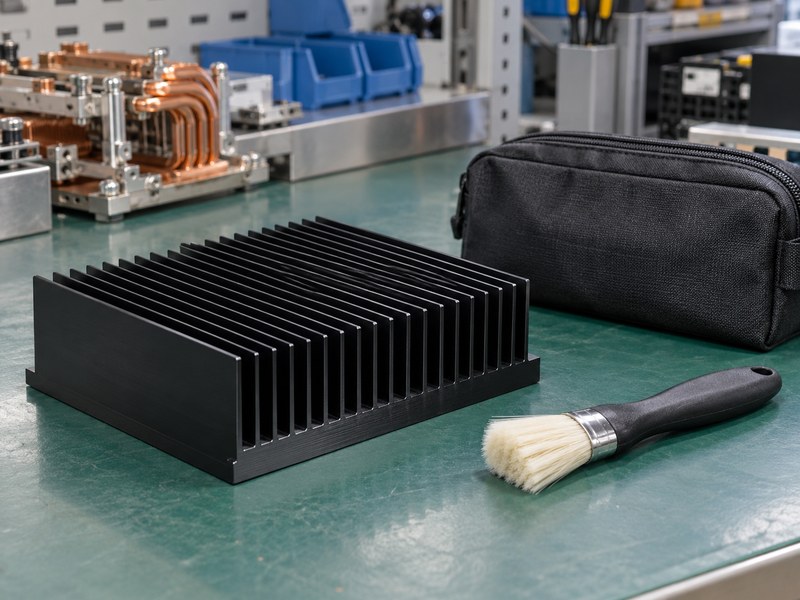
A surface treated heat sink service plan should define the inspection points, permitted cleaning methods and conditions for returning the equipment to use. Identify the finish and the component’s role before choosing tools. An external finned enclosure, an internal electronics cooler and a coolant-bearing plate have different access and contamination concerns. A plan based only on color or appearance leaves those differences unresolved.
How do you choose a useful inspection interval?
Use equipment guidance and service experience from the actual installation. Dust, oily deposits, moisture and operating hours can change how quickly a cooler needs attention. Record what you find rather than assuming one calendar interval fits every location. If temperature or airflow changes between services, investigate the cause and adjust the plan through the equipment’s maintenance process.
- Identify the cooler, finish and installation.
- Define permitted access and cleaning methods.
- Record contamination and operating condition trends.
| Service input | What it determines |
|---|---|
| Installation exposure | Likely contamination and corrosion risks |
| Assembly access | Permitted disassembly and tool use |
| Equipment guidance | Inspection and return-to-service requirements |
Keep the plan specific enough that different technicians can perform comparable checks.
2. How should the equipment be prepared for cleaning?
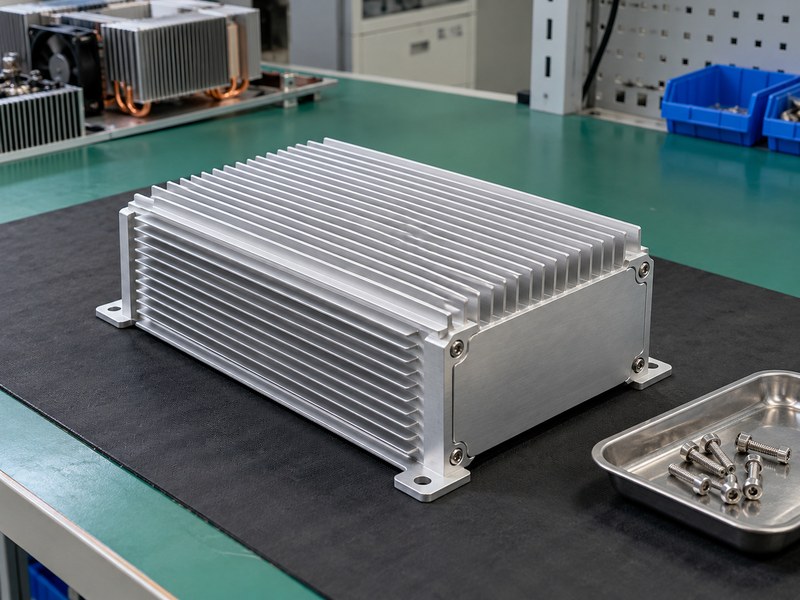
Prepare a surface treated heat sink for cleaning using the equipment’s isolation, cooling and access procedure. Identify connected fans, power devices and any stored-energy requirements in that procedure. A metal cooler can remain hot after operation. Remove covers or components only as permitted, and protect nearby electronics from debris that cleaning could release into the enclosure.
What should you document before disassembly?
Record the assembly arrangement, cable routing and any temperature or fault condition that prompted service. Keep fasteners and small parts identified so they return to their intended positions. Note whether removing the cooler will disturb a seal or thermal interface. If the task requires materials that must be replaced after disturbance, have the approved replacements available before starting the work.
- Follow the equipment’s isolation and access steps.
- Identify interfaces and seals that may be disturbed.
- Retain the original mounting arrangement.
| Preparation item | Purpose |
|---|---|
| Equipment condition record | Preserves the original symptom |
| Identified fasteners | Supports correct reassembly |
| Replacement materials | Prevents reuse of unsuitable disturbed items |
Preparation should leave the technician with a defined work scope and a recoverable assembly state.
3. How can you remove dust without bending fins?
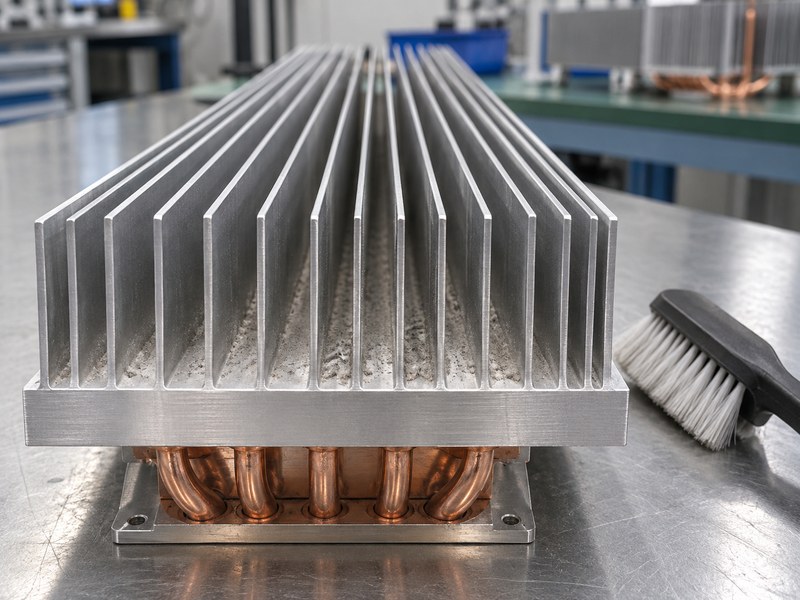
Remove loose dust from a surface treated heat sink with a method compatible with the equipment and finish. Work along accessible channels and avoid loading thin fin edges. A hard tool forced between fins can damage both the metal and its protective surface. Keep removed debris away from connectors, bearings and other parts that may be exposed during service.
Which access problems should be reported?
For extruded heat sinks, long straight channels may be accessible from an end, but the installed duct or bracket can block that route. Remove only the parts allowed by the service procedure to obtain access. If normal cleaning repeatedly requires bending tools around fragile features, report the access problem for a design review. Do not turn a difficult cleaning task into an unapproved modification of the cooler.
- Use finish-compatible tools and controlled force.
- Keep tool movement clear of fin tips.
- Collect debris without redistributing it inside equipment.
| Observation | Service response |
|---|---|
| Loose dry dust | Use the approved dry-cleaning method |
| Inaccessible packed debris | Review permitted access or disassembly |
| Bent or damaged fins | Record condition before deciding on repair |
Inspect the channels again after cleaning to confirm that the intended air path is open.
4. Which cleaners suit a surface treated heat sink?
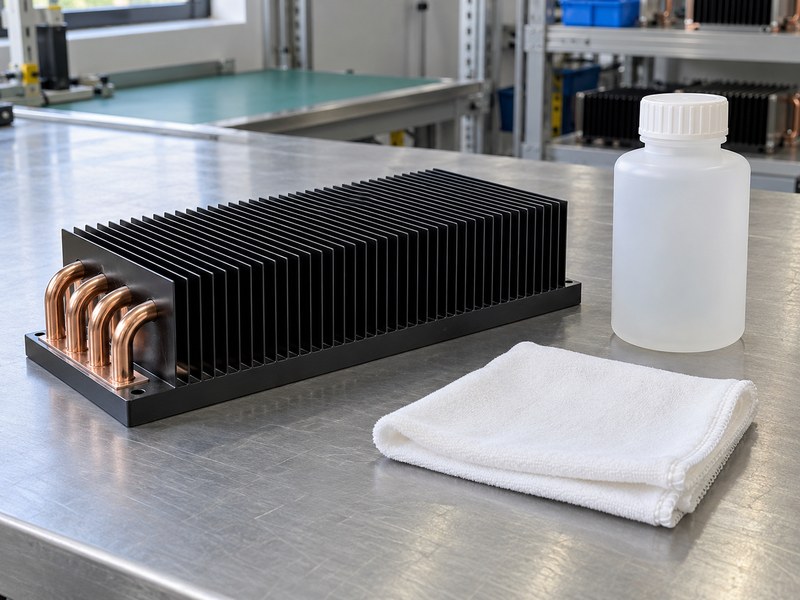
Use a cleaner on a surface treated heat sink only when it is compatible with the finish and the assembled equipment. A product suitable for bare aluminum may affect paint, dye, seals or adhesives. Residue can also interfere with a contact surface. Identify the actual coating and the contamination before selecting a liquid or solvent, rather than treating every dark finish as the same material.
What should compatibility guidance establish?
The approved process should identify the agent, application method and any required removal or drying steps. Follow limits on contact time and concentration where the supplier specifies them. Keep liquids away from components that are not approved for that exposure. An unseen trial area may help evaluate appearance under an approved process, but it does not establish compatibility with hidden seals or electrical parts.
- Identify the coating before selecting a chemical.
- Follow the approved application and drying method.
- Check for residue on functional surfaces.
| Compatibility question | Area to review |
|---|---|
| Does the cleaner affect the finish? | Coating and appearance |
| Can it reach a seal or adhesive? | Assembly materials |
| Can residue remain? | Thermal and electrical contact lands |
Use the supplier’s process guidance instead of a general-purpose cleaning assumption.
5. How do you assess a scratch or coating defect?
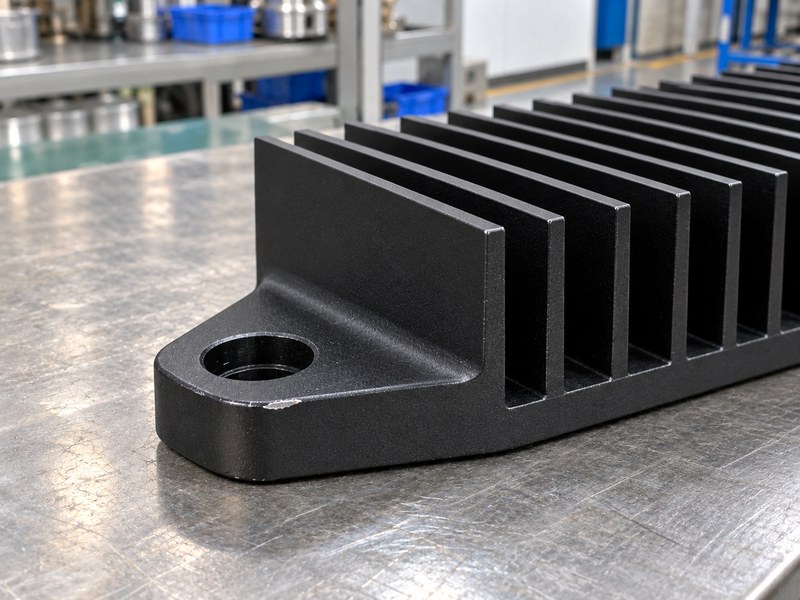
Assess a surface treated heat sink defect by its location, depth and effect on the specified function. A cosmetic mark on an outer edge differs from damage on a device pad, bonding land or seal surface. Record the condition before cleaning or touching up the area. A surface mark alone does not establish whether the underlying part has lost its mechanical or thermal function.
When should a part be held for review?
Use the equipment and part acceptance criteria to decide. Exposed material in a wet installation may require a different disposition from a similar mark inside a dry enclosure. A damaged functional face may need dimensional or electrical checks. If the defect falls outside the documented service limits, obtain an approved repair or replacement decision rather than hiding it beneath an improvised finish.
- Record location and visible extent.
- Identify any affected contact or sealing function.
- Apply the defined service acceptance limits.
| Defect location | Question to resolve |
|---|---|
| External edge | Cosmetic or protective-function concern? |
| Device pad | Does contact geometry remain acceptable? |
| Bonding or seal land | Does the required interface still function? |
Keep the defect evidence available until its disposition is complete.
6. How should fans and airflow accessories be serviced?
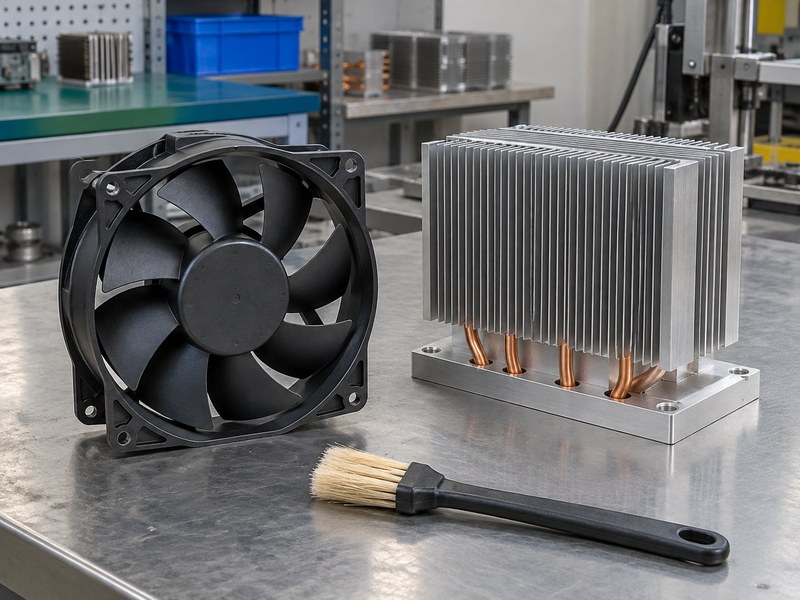
Service the fan associated with a surface treated heat sink using its manufacturer’s procedure. A fan and the bare metal cooler can require different cleaning methods. Protect the motor, bearings and wiring from unapproved exposure, and avoid applying excessive force to the blades. Check the duct, filter and grille as well, because clean fins cannot compensate for a blocked inlet or damaged airflow accessory.
What should be checked during reassembly?
Use the installed fan manufacturer’s procedure; this published fan-cleaning guide illustrates why motors and cooler surfaces need different treatment. Restore its orientation, cable route and mounting arrangement. Inspect the heat sink mounting hardware where a bracket or fastener was removed. A cable left across a fan opening or a missing duct seal can change cooling after an otherwise careful cleaning job.
- Follow the installed fan’s cleaning requirements.
- Inspect filters, grilles and duct seals.
- Restore the intended airflow and wiring arrangement.
| Accessory | Return-to-service check |
|---|---|
| Fan | Mounting, wiring and intended operation |
| Filter or grille | Cleanliness and condition |
| Duct or shroud | Position and sealing arrangement |
Compare the restored arrangement with the equipment’s service drawing or original record.
7. When should the thermal interface be replaced?
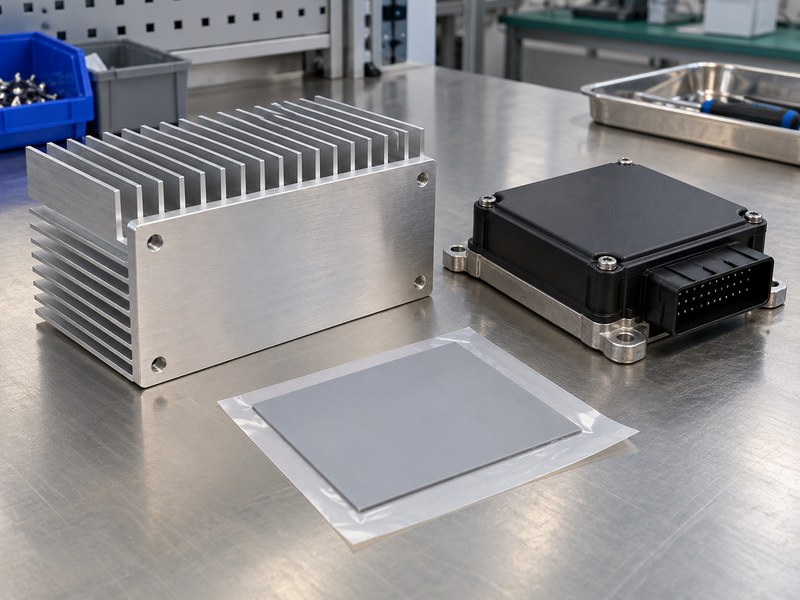
Replace the interface on a surface treated heat sink when its material requirements or condition call for replacement after service. Pads, grease and phase-change materials have different handling and reuse limits. If the cooler was removed, inspect both contact surfaces and follow the approved reassembly process. Reusing a disturbed interface without checking its requirements can change the contact resistance and obscure the result of the maintenance work.
Which details should remain unchanged?
Retain the specified material, placement, gap control and clamping arrangement. A thicker thermal pad may fill a gap while adding a different resistance or assembly load. Clean the contact face with a compatible method and avoid damaging masked boundaries. If a replacement material is proposed, review its thermal and mechanical effects before treating it as an equivalent service item.
- Check whether the original material permits reuse.
- Restore the specified thickness and placement.
- Use the approved clamping or tightening process.
| Interface detail | Reason to control it |
|---|---|
| Material identity | Defines the intended behavior |
| Thickness or gap | Affects contact and thermal resistance |
| Clamp arrangement | Establishes assembly pressure |
Record a material substitution as a change rather than an undocumented cleaning step.
8. Can a damaged finish be repaired in the field?
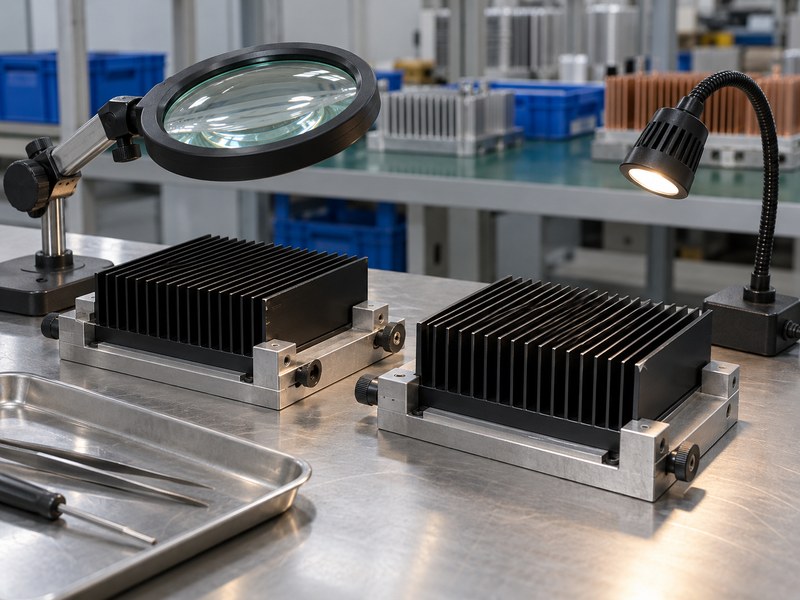
A surface treated heat sink finish can be repaired in the field only through a process approved for its materials and functions. A touch-up product may restore appearance without recreating the original conversion layer or protection. Added material can also affect a contact face, fit or bonding point. Identify what the repair is intended to restore before choosing a product or application method.
What should an approved repair record include?
Record the affected location, permitted process and checks required afterward. Keep repair materials away from functional lands unless the procedure allows them there. If the part needs stripping or substantial reprocessing, assess dimensional changes and the effect on attached components. In some cases a replacement part is easier to verify than a repair whose final condition cannot be inspected adequately in the installed location.
- Define the repair’s functional purpose.
- Use an approved material and application process.
- Repeat the checks affected by the repair.
| Repair scope | Question before release |
|---|---|
| Cosmetic touch-up | Is that the accepted purpose? |
| Protective restoration | What evidence supports the required function? |
| Reprocessing | Which dimensions and interfaces need rechecking? |
Retain the repair limits so later technicians can identify the changed area.
9. How do you verify cooling after maintenance?
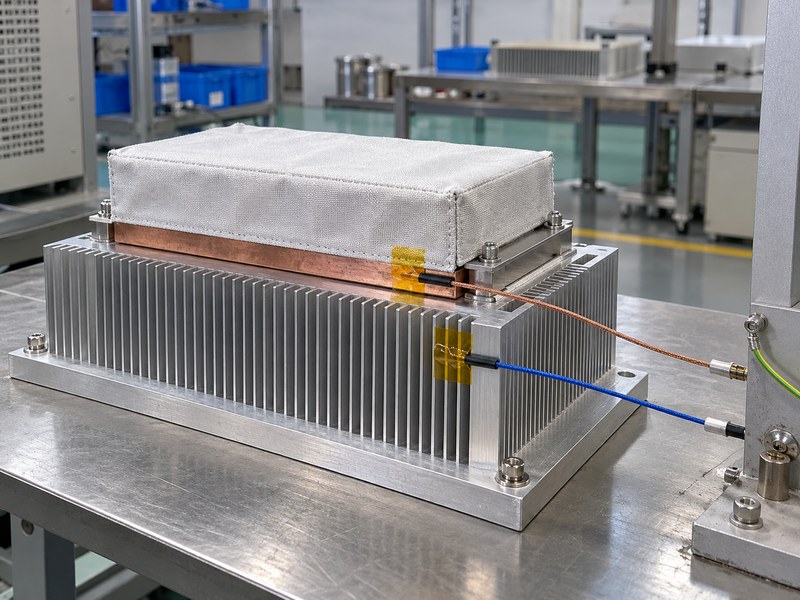
Verify a surface treated heat sink after maintenance using the equipment’s defined operating check. Confirm that fans, sensors and controls work before comparing temperatures. Use a representative load and record local inlet conditions. A cooler can run warmer after service because of an altered interface, a missing shroud or a changed operating condition, even when its fins are visibly clean.
Which comparison can identify a service problem?
Compare the post-service result with an appropriate baseline under comparable conditions. Record any difference in load, ambient temperature or equipment configuration. If the result is unexpected, inspect the restored assembly and sensor locations before attributing it to coating damage. A shiny surface can also complicate infrared measurement, so use the equipment’s approved measurement method for acceptance.
- Verify fan and control operation.
- Restore the intended load and cooling conditions.
- Investigate changes in assembly or measurement.
| Verification item | Purpose |
|---|---|
| Functional check | Confirms the cooling accessories operate |
| Temperature check | Evaluates the required operating condition |
| Assembly review | Finds disturbed interfaces or airflow paths |
Keep the final readings with the service record rather than recording only that cleaning was performed.
10. What belongs in the maintenance handover?
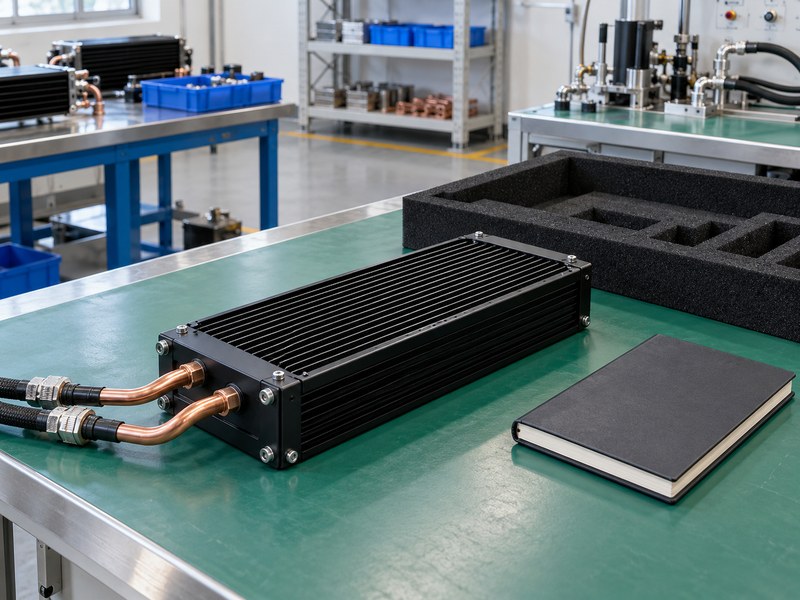
A surface treated heat sink maintenance handover should identify the work performed, materials changed and final equipment condition. Include unresolved defects and any approved repair limits. State which operating checks were completed and under what conditions. The next technician needs enough information to distinguish a new issue from a documented surface mark or a previously approved change.
How can service findings improve the next design?
Record recurring contamination locations, difficult access and packaging or handling damage. Share those observations with the equipment designer when a duct, protective feature or inspection point could reduce repeated service work. Keep the feedback specific to the installed assembly. A photograph and a clear description of the affected location are more useful than a general statement that the heat sink is difficult to maintain.
- Identify parts and materials changed.
- Retain defect and repair records.
- Record the final checks and remaining actions.
| Handover item | Information to retain |
|---|---|
| Work scope | Cleaning, disassembly and replacements |
| Part condition | Accepted marks, repairs and open issues |
| Verification | Operating conditions and results |
Share your installation and service constraints when you contact us about a cooling component that needs easier maintenance access.
Frequently asked questions
Q1: Can I use the same cleaner on every black heat sink?
No. Identify the coating and assembled materials before choosing a cleaner. Similar colors do not establish chemical compatibility.
Q2: What’s the best tool for dusty fin channels?
Use the equipment’s approved method with controlled force and suitable access. Avoid forcing hard tools between thin fins.
Q3: How do I know if a scratch needs repair?
Check its location and the required function. Damage on a contact or sealing land needs a different review from a superficial outer-edge mark.
Q4: Can I reuse a thermal pad after removing the cooler?
Only if the material and equipment requirements permit it and its condition remains acceptable. Follow the specified reassembly process.
Q5: Should I check temperatures after cleaning?
Yes, when required by the service procedure or the reason for maintenance. Use comparable load and inlet conditions when judging a change.