
Buy a surface treated radiator aluminum heat sink by specifying the finish, contact faces and finished dimensions together. A black sample may look right while its coated mounting pad adds unwanted thermal resistance. A drawing that calls for a color without identifying masked areas leaves that decision to the finishing shop. Give the supplier a functional drawing and an acceptance plan before comparing prices.
Your surface treated radiator aluminum heat sink should arrive ready for the intended assembly. Define the heat source, airflow, mounting and exposure, then decide which surfaces need protection and which need direct contact. The finish becomes one part of a complete cooling specification, rather than a separate cosmetic choice made after machining.
1. What is a surface treated radiator aluminum heat sink?
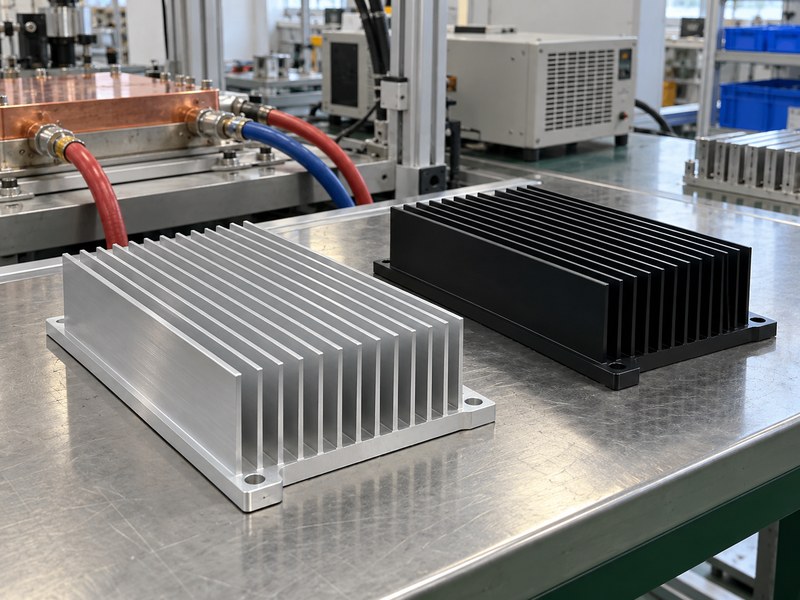
A surface treated radiator aluminum heat sink is an aluminum cooling component with a specified surface conversion, deposited coating or other finishing operation. Suppliers sometimes use radiator for an electronic finned heat sink. Confirm whether the quoted part rejects heat directly to air or carries coolant, because those designs have different interfaces and acceptance tests. Put that function on the drawing beside the product name.
What should the supplier identify?
Ask for the substrate alloy, manufacturing route and finishing process as separate items. Color alone cannot identify coating chemistry, thickness or electrical behavior. If the quotation includes masking, establish where the mask boundary will sit and how the supplier will check it. A marked sample can support appearance review, but it cannot replace dimensions or functional requirements that a purchasing team must enforce later.
- State whether the component contains fluid passages.
- Name the required finishing process.
- Mark functional contact areas on the drawing.
| Item | Information to define |
|---|---|
| Cooling component | Direct-air fins or coolant-bearing part |
| Substrate | Alloy and manufacturing route |
| Finish | Process, coverage and acceptance requirements |
Use the same part definition in the drawing, quotation and purchase order.
2. Which finish fits the operating environment?
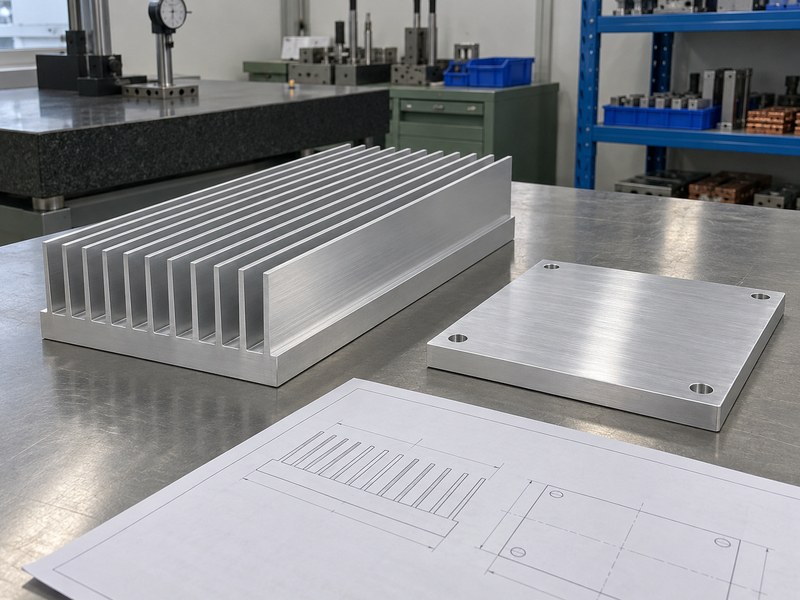
Choose a surface treated radiator aluminum heat sink finish from its exposure and interface requirements. An indoor power supply, an outdoor lighting enclosure and a washdown installation can need different protection. Decide whether corrosion, electrical bonding, appearance or handling damage drives the requirement. Ask the supplier to explain the proposed finish against those conditions instead of treating one coating as suitable for every location.
Which tradeoffs should you compare?
Anodic treatments, conversion coatings and deposited finishes have different thickness and contact properties. A thick polymer finish may protect an exposed enclosure while being unsuitable beneath a small hot device. A conductive contact requirement can also conflict with an insulating surface treatment. Keep those functions separate on the drawing so the supplier can propose selective coverage or a suitable assembly interface.
- Describe moisture and contamination exposure.
- Identify bonding and isolation requirements.
- Set appearance limits independently of thermal limits.
| Requirement | Supplier question |
|---|---|
| Corrosion protection | What exposure and acceptance test support the choice? |
| Electrical bonding | Which surfaces retain a conductive contact? |
| Thermal contact | Where must the interface remain uncoated? |
Compare finished assemblies under the conditions your equipment must meet.
3. How does finishing change the thermal path?
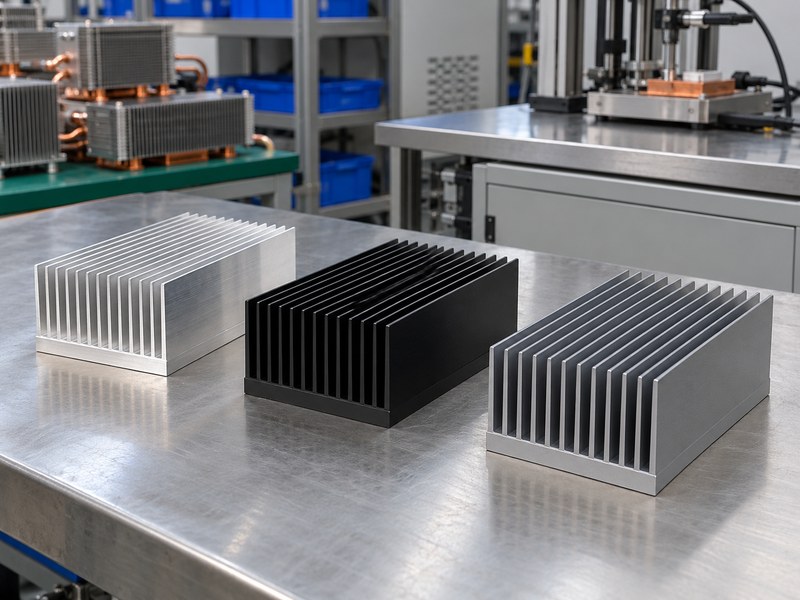
Finishing a surface treated radiator aluminum heat sink can change its surface radiation and contact behavior without changing the underlying alloy’s bulk conductivity. A coating between a device and its cooler adds a layer to the heat path. A finish on exposed fins instead interacts with the surrounding air and radiation environment. Keep those locations distinct when someone quotes a thermal benefit for a finished product.
What evidence belongs behind a performance claim?
Request a comparison with the same geometry, load, orientation and airflow. Check whether reported temperatures refer to the device, the base or the fin tip. A lower infrared-camera reading on one finish may reflect a measurement setting rather than a cooler device. The supplier should document the test conditions and measurement method so your team can reproduce the comparison on a prototype.
- Locate each temperature measurement.
- Hold airflow and mounting constant.
- Compare the complete thermal contact arrangement.
| Finish location | Thermal question |
|---|---|
| Device contact face | Does the layer add interface resistance? |
| External fins | Does the installed environment allow a useful change? |
| Mounting joint | Does contact pressure remain controlled? |
Accept a thermal claim only with enough setup detail to assess it.
4. Which areas of the part need masking?
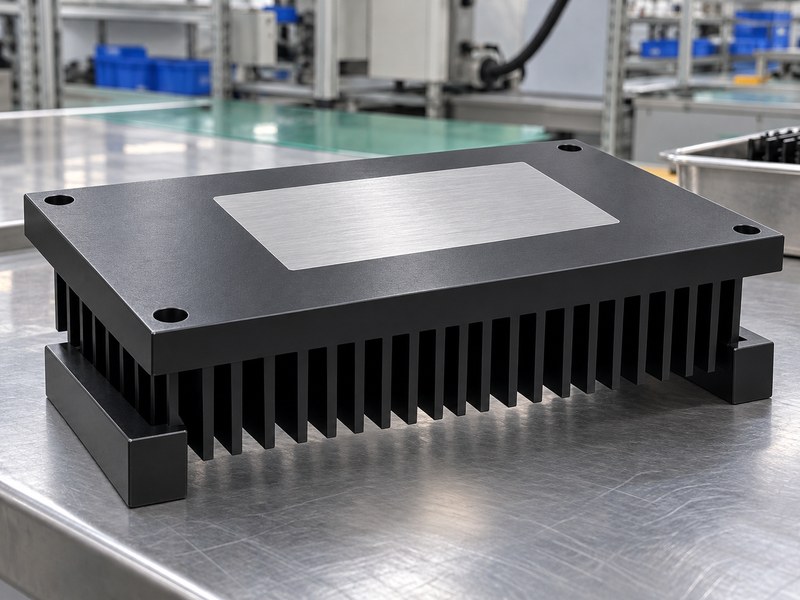
Mask a surface treated radiator aluminum heat sink wherever the selected finish would interfere with a defined contact, fit or bonding function. Device pads, grounding lands, precision bores and some threads may need different treatment from exposed fins. Specify the boundary and tolerance rather than asking for a vaguely bare area. Also identify whether post-finish machining is permitted at those locations.
How should a mask boundary be drawn?
Use datums that the finishing shop can locate on the part. Keep the boundary outside the actual device footprint where the design permits, while allowing for assembly variation. Discuss rack contact marks and masking transitions with the supplier before approving a cosmetic surface. You need an agreed location for those process features so normal production does not create repeated disputes at receiving inspection.
- Dimension the masked contact footprint.
- Identify any permissible transition band.
- Separate cosmetic surfaces from process-contact locations.
| Area | Drawing detail |
|---|---|
| Device pad | Location, size and surface requirements |
| Grounding land | Contact function and finish restriction |
| Thread or bore | Finished fit and permitted coverage |
Approve the masking plan on the prototype revision used for assembly trials.
5. Which dimensions should apply after finishing?
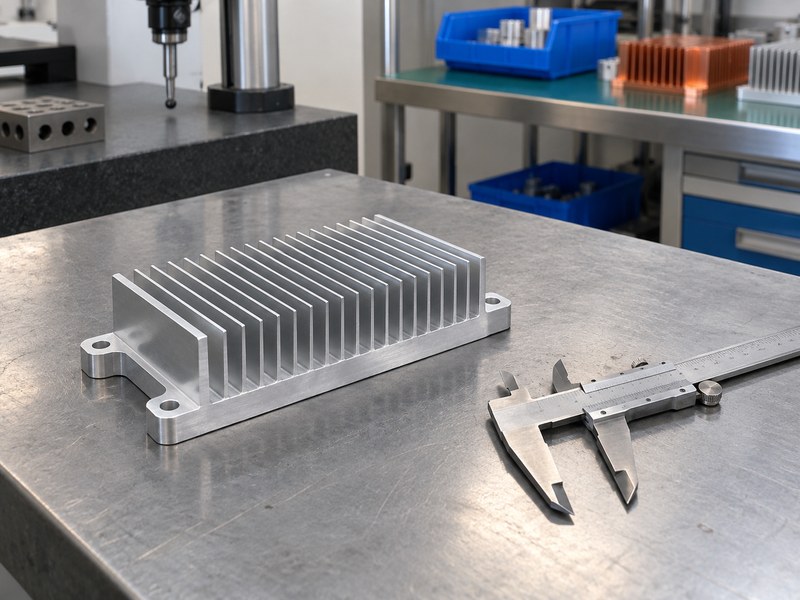
Specify final dimensions for a surface treated radiator aluminum heat sink wherever the assembly depends on the finished surface. Deposited layers can change a bore, slot or mating envelope. Anodic growth also involves the substrate, so coating thickness does not translate into outward growth by one universal rule. Ask the supplier to state the dimensional allowance appropriate to the actual process and alloy.
What changes when machining follows finishing?
Post-finish machining can restore a contact face or a fit, but it also exposes material at that location. Review the resulting corrosion and bonding requirements. For precision features, discuss CNC machined heat sinks before the production sequence is fixed. The quotation should identify which dimensions are checked before coating and which are accepted on the finished part.
- Mark finished dimensions explicitly.
- Review thread and slot allowances.
- Define the status of any exposed machined surface.
| Feature | Acceptance condition |
|---|---|
| Overall envelope | Finished coated size |
| Mating slot | Functional clearance after processing |
| Device pad | Final geometry and permitted exposed material |
A supplier cannot protect a tolerance that the drawing leaves undefined.
6. How should you compare finish samples?
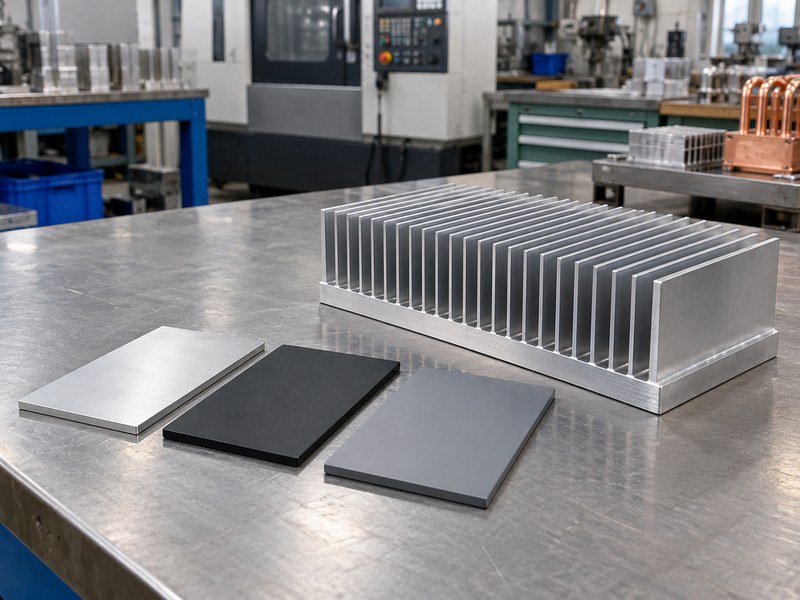
Compare surface treated radiator aluminum heat sink samples against written functional and appearance criteria. Separate shade variation from defects that affect contact, fit or protection. Lighting, texture and viewing direction can change how a metallic finish looks. Set the viewing conditions and sample references if appearance matters, while retaining separate requirements for the surfaces that govern cooling or electrical contact.
What can a witness coupon establish?
A coupon can support a process test when it represents the specified substrate and finishing conditions. It does not automatically reproduce every recess, edge or narrow channel on the actual heat sink. Agree which tests use coupons and which measurements must be taken on the part. Retain sample identity so inspection records can be tied to a batch rather than to an unidentified demonstration piece.
- Link the sample to its process record.
- Check representative recesses and edges.
- Define acceptable appearance variation before ordering.
| Sample type | Useful role |
|---|---|
| Finished heat sink | Geometry, coverage and assembly review |
| Witness coupon | Agreed process or coating test |
| Appearance reference | Controlled visual comparison |
Keep sample approval tied to the same finish revision used in production.
7. How do you specify an enclosure or liquid-cooled part?
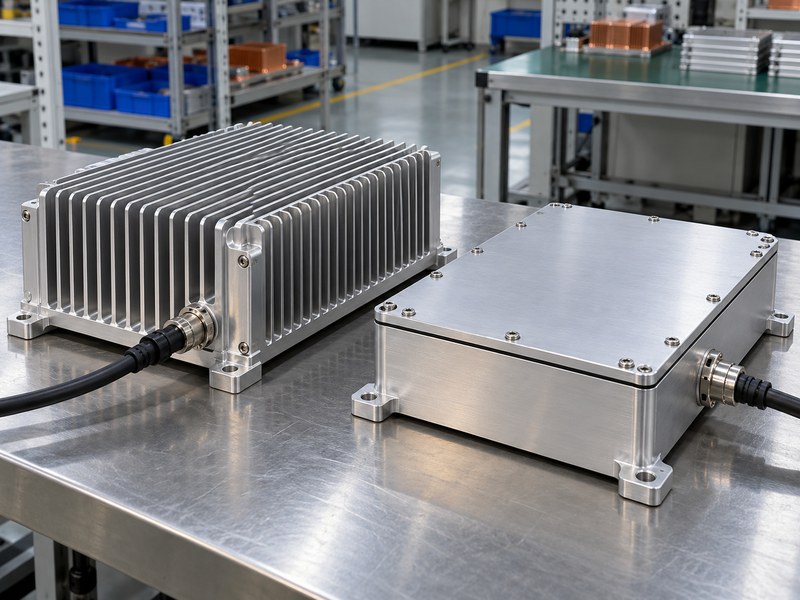
For a surface treated radiator aluminum heat sink incorporated into an enclosure, specify internal and external surfaces separately. The outside may need environmental protection while an internal thermal land needs controlled contact. A liquid-cooled part also has wetted surfaces, seals and ports that require a coolant compatibility review. An exterior finish description does not establish the condition of internal passages.
Where should the supplier’s responsibility stop?
A heat sink enclosure can combine mechanical protection and cooling, but its interfaces still need an assembly drawing. State who supplies seals, fitting hardware and thermal interface materials. If another supplier provides those items, pass along the finish and dimensional requirements they depend on. That avoids a coated land or port becoming an unexpected problem during final assembly.
- Identify external, internal and wetted areas.
- Mark seal and thermal interface lands.
- Assign responsibility for mating components.
| Surface group | Requirement to review |
|---|---|
| External enclosure | Exposure and appearance |
| Thermal land | Contact and flatness |
| Wetted passage | Fluid and material compatibility |
Treat each interface as a specified part of the supplied assembly.
8. What packaging protects the finished part?
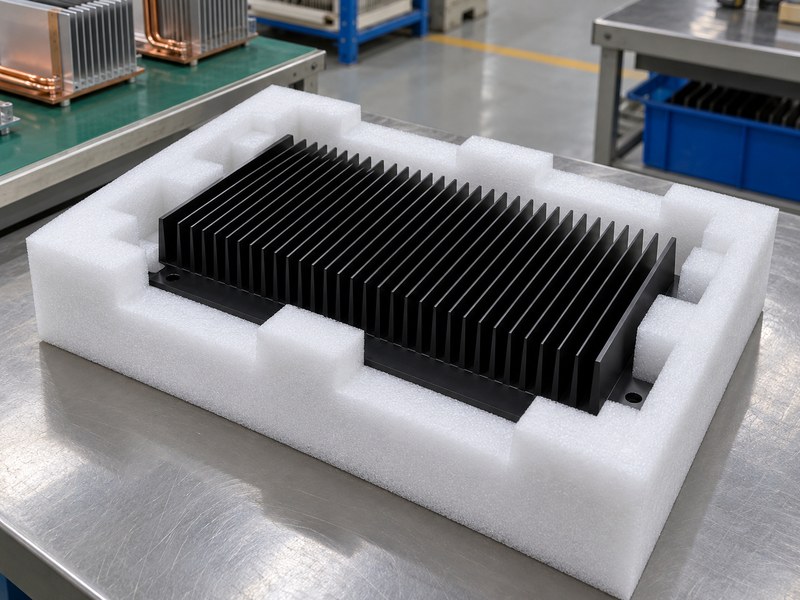
Package a surface treated radiator aluminum heat sink so handling loads do not damage thin fins or functional faces. A durable coating cannot prevent bent metal when products rub or stack poorly. Support the base, separate adjacent parts and keep abrasive packaging away from contact surfaces. Discuss the shipping orientation and unpacking method when the geometry has tall fins or an exposed precision pad.
What belongs in the packaging specification?
Identify surfaces that cannot touch the container or another part. Specify cleanliness where particles or adhesive residues could interfere with the interface material. Ask for a packaging trial if the supplier proposes a new tray or shipping arrangement. The trial should use representative parts and the intended carton quantity, because a single carefully packed sample does not show how a full production shipment behaves.
- Support the base rather than fin tips.
- Protect contact faces from residue.
- Separate parts through normal handling and transport.
| Packaging detail | Risk it addresses |
|---|---|
| Base support | Fin bending from stacked loads |
| Part separation | Scratches and impact marks |
| Clean face protection | Contaminated thermal contact |
Inspect the first shipment’s packaging as well as the components inside it.
9. What should a prototype acceptance test include?
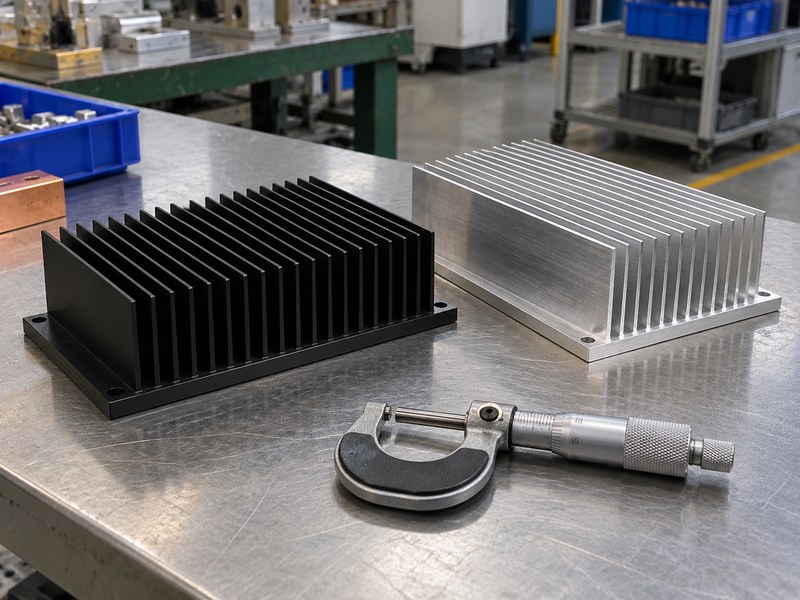
Accept a surface treated radiator aluminum heat sink prototype using dimensional, functional and thermal checks defined before delivery. Verify that the part fits and that the specified finish does not prevent electrical bonding or device contact. A coating report alone cannot establish assembly performance. Use the intended mounting hardware, interface material and operating conditions when you measure the thermal result.
How do you make the thermal comparison repeatable?
Record heat input, local inlet temperature, orientation and sensor locations. Apply package-specific thermal measurement guidance when estimating a semiconductor temperature from a measured case or board point. Keep finish identity and assembly revision in the test record. If you change the coating or masking after approval, assess whether the affected acceptance checks need to be repeated.
- Confirm fit before applying thermal load.
- Document the complete device interface.
- Retain the accepted finish and drawing revisions.
| Check | Required evidence |
|---|---|
| Dimensions | Finished-part measurements |
| Assembly | Fit and contact review |
| Thermal result | Load, conditions and measurement method |
Use the prototype record as the reference for the production configuration.
10. What belongs in your finished-part RFQ?
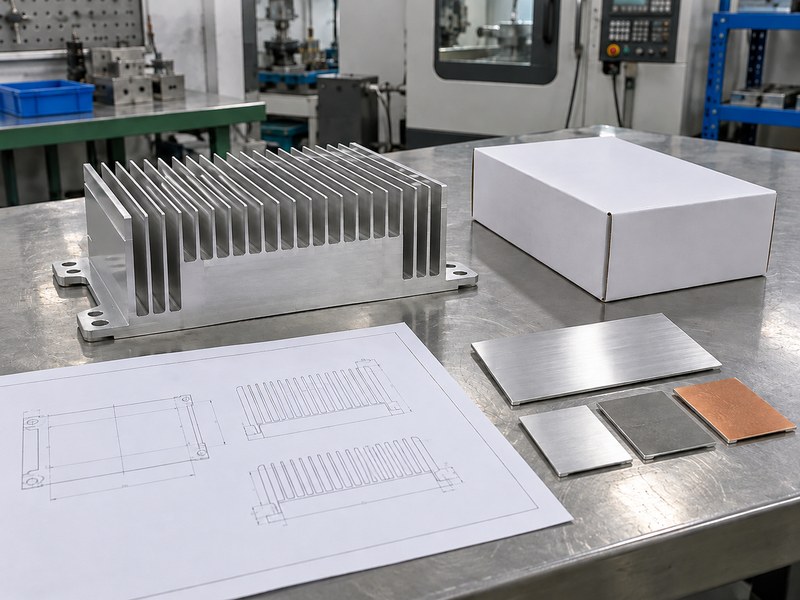
A surface treated radiator aluminum heat sink RFQ needs a drawing, process requirements, inspection plan and quantity. Include masked areas, functional surfaces and the acceptance state of each dimension. Ask suppliers to identify assumptions and exclusions in their quotations. A lower price that omits masking, inspection or packaging is a different offer from one that includes those operations.
Which items should be settled before production?
Agree how finish changes will be approved, how batches will be identified and which records accompany delivery. Discuss the availability of heat sink mounting hardware when the supplier also provides the assembly interface. Keep the prototype and production requirements aligned. If a detail remains open, assign a specific review or sample check that must settle it before the purchase order releases production.
- Supply the functional drawing and finish specification.
- Define sample and production acceptance records.
- Compare quotations with the same scope.
| RFQ attachment | Purpose |
|---|---|
| Marked drawing | Defines coverage, fits and interfaces |
| Acceptance plan | Defines inspection and test evidence |
| Delivery requirements | Defines quantity, records and packaging |
Send those requirements when you contact us so the quotation addresses the finished component your assembly needs.
Frequently asked questions
Q1: Can I specify a finish using only a color?
No. Define the process, coverage and acceptance requirements separately. Several different finishes can produce a similar appearance.
Q2: What’s the best place to leave bare aluminum?
Use the functional drawing to decide. Device contact pads, precision fits and bonding lands may need controlled exposed areas or another specified treatment.
Q3: How do I know whether coating changes the fit?
Check the finished part against its required dimensions. Ask the supplier how the selected process affects growth, recesses and mating features.
Q4: Can I approve a finish from a flat coupon?
Only for the checks that the agreed coupon represents. The actual heat sink still needs coverage, dimensional and assembly inspection.
Q5: Should the quote include packaging?
Yes. State how fins and contact surfaces must be protected so suppliers price the same delivery condition.