
Match the liquid-return structure, geometry and system architecture to your equipment before choosing a heat-pipe type. Keeping those categories separate helps you compare the types of heat pipes without confusing a flattened tube with a different operating mechanism. An OEM drawing may call for a thin copper pipe that must work above its condenser. Its outside shape alone cannot tell you whether liquid will return reliably; the wick, temperature, formed geometry, and installation conditions need review together.
1. How should you classify types of heat pipes?
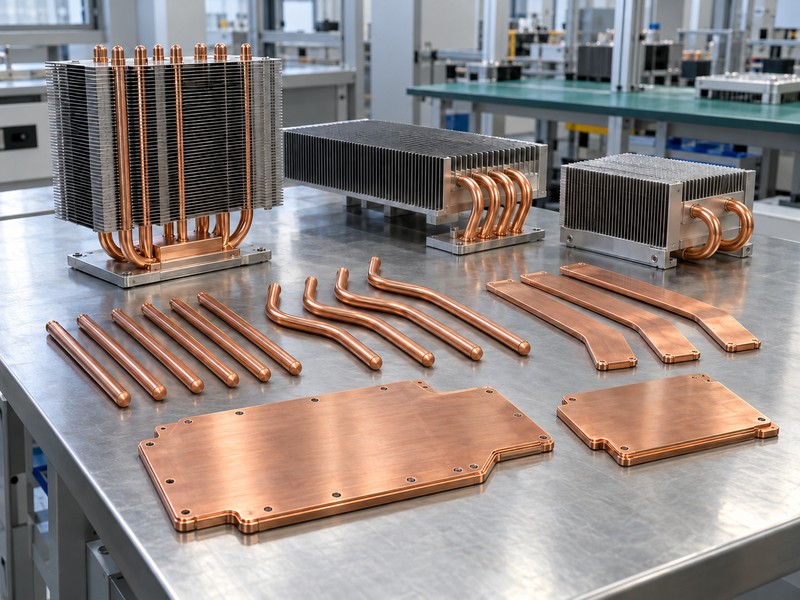
Classify types of heat pipes on separate axes: external geometry, wick construction, system architecture, and operating temperature range. A flattened copper-water pipe with a sintered wick belongs to several categories at once. A loop heat pipe describes a circulation architecture rather than a bent shape. This vocabulary lets engineering and purchasing describe the same device without turning overlapping names into competing options.
Which terms belong on the specification?
Begin with the required function and identify the liquid-return mechanism. Then add envelope, materials, fluid, contact lengths, and formed dimensions. A label such as high-performance heat pipe leaves those design choices unresolved. You can ask a supplier to recommend construction, but record the approved construction and operating conditions before using a sample result as a production reference.
- Geometry describes where the device can fit.
- Wick construction describes its capillary return path.
- Architecture describes how vapor and liquid circulate.
| Classification axis | Examples |
|---|---|
| Geometry | Round, flattened, planar |
| Wick | Sintered powder, grooves, mesh |
| Architecture | Conventional pipe, loop, pulsating device |
Use a multi-part description in your drawing so a familiar category name cannot conceal a different internal construction.
2. How do straight, bent, and flattened pipes differ?
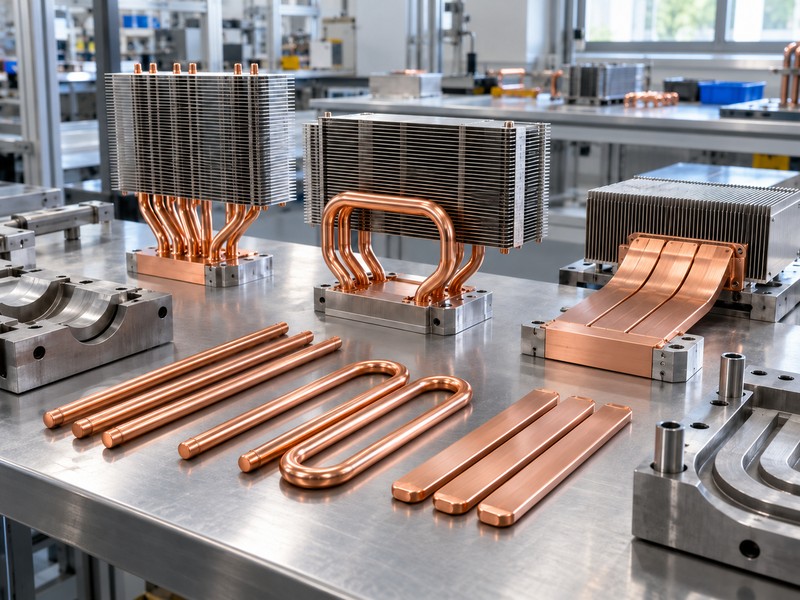
Straight, bent, and flattened types of heat pipes usually share the same conventional operating cycle but differ in packaging and flow geometry. A straight tube may suit a simple connection between two blocks. Forming can route that path around an obstruction or create a wider contact surface. Its thermal performance must be checked after forming because the wick and vapor channel can change.
What should the formed drawing control?
State the final bend geometry, flattened height, contact lengths, and allowed dimensional variation. A starting tube diameter cannot establish the capacity of a flattened finished part. Also distinguish one-time manufacturing bends from repeated movement during equipment operation. Ordinary formed copper pipes require support and should not be treated as flexible joints unless that motion has been specifically designed and qualified.
- Identify thermal contact zones and free routing zones.
- Reserve clearance for approved forming radii.
- Prevent assembly forces from bending finished pipes.
| Form | Packaging purpose | Validation focus |
|---|---|---|
| Straight | Direct route | Contact and orientation |
| Bent | Obstruction clearance | Wick and bend condition |
| Flattened | Reduced height | Vapor space and load margin |
Accept the final formed part against its own thermal test conditions, rather than transferring a rating from the straight precursor.
3. What distinguishes a sintered powder wick?
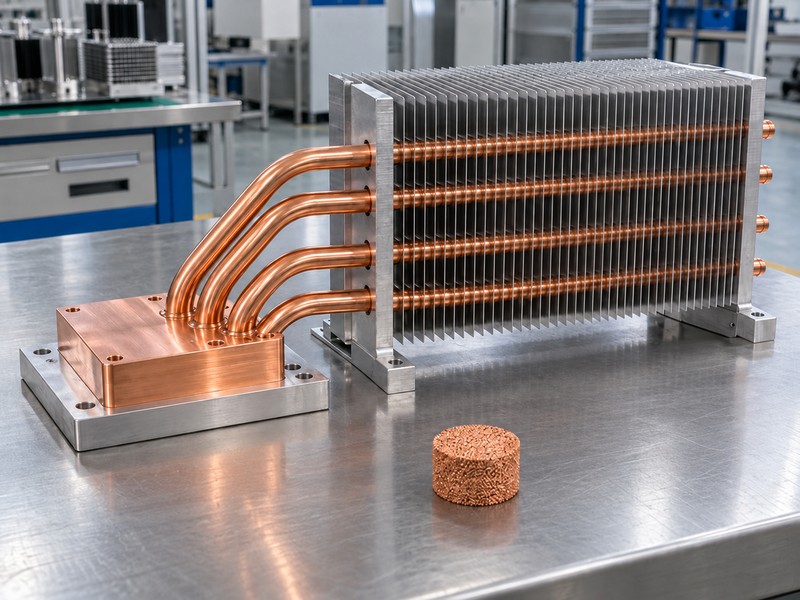
A sintered powder wick uses a bonded porous metal structure to return liquid, and these types of heat pipes can suit applications requiring substantial capillary pumping. Performance depends on pore structure, permeability, wick thickness, fluid properties, and liquid-return distance. Finer pores can increase available capillary pressure, while also increasing flow resistance. Sintered construction alone does not establish an unrestricted orientation rating.
What evidence supports an adverse orientation?
Ask for results with the evaporator above the condenser by the relevant elevation. Match operating temperature and the formed geometry as well as the applied load. The available capillary pressure must cover the complete pressure-loss budget. When comparing types of heat pipes within an assembly, check local source temperature and the final condenser connection as well as pipe wall temperatures.
- Request the permitted installation envelope.
- Identify source and condenser contact lengths.
- Review load margin after bending or flattening.
| Wick property | Competing requirement |
|---|---|
| Effective pore size | Capillary pressure |
| Permeability | Liquid flow resistance |
| Wick thickness | Liquid path and vapor-space allocation |
Choose a sintered design using operating-condition evidence that shows adequate return flow in the equipment’s least favorable position.
4. When do grooved and mesh wicks make sense?
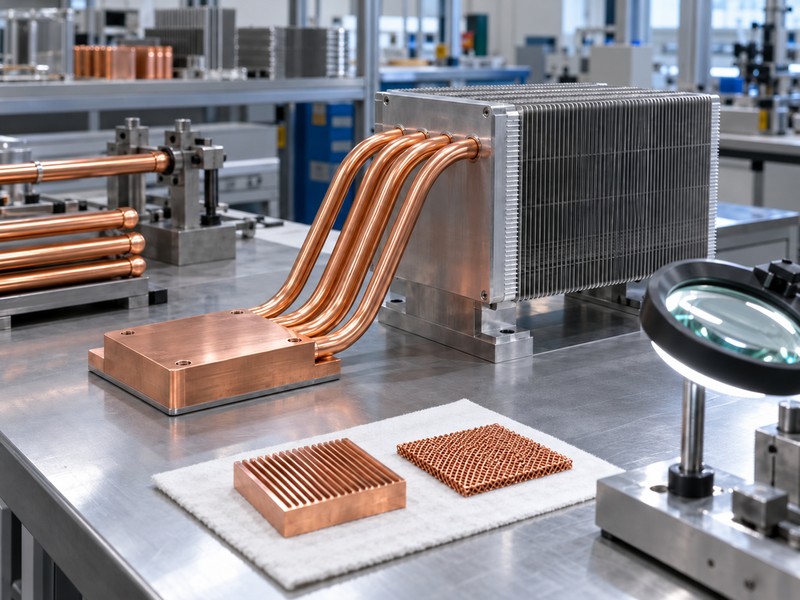
Grooved and mesh types of heat pipes offer different ways to create capillary liquid paths, with performance governed by their detailed construction. Grooves form channels along the inner wall. Mesh uses one or more layers of screen, sometimes combined with other wick structures. Neither label predicts a fixed thermal ranking across gravity directions, lengths, temperatures, and source arrangements.
Which details change the comparison?
For grooves, profile and dimensions affect both pumping and flow resistance. For mesh, wire size, layer arrangement, bonding, and contact with the wall influence liquid return and heat input. Composite wicks can combine structures to balance local evaporation and return flow. A sample cross section helps identify construction, but the thermal report must establish whether that construction fits your duty.
- Ask whether the wick continues through formed regions.
- Keep working fluid and container compatibility explicit.
- Compare qualified designs at the same operating point.
| Construction | Detail worth reviewing |
|---|---|
| Grooved | Channel geometry and gravity dependence |
| Mesh | Layering, contact, and available vapor space |
| Composite | Function and continuity of each wick region |
Request a construction-specific comparison instead of choosing from a generic claim that one wick family always transfers more heat.
5. Is a vapor chamber a separate heat pipe category?
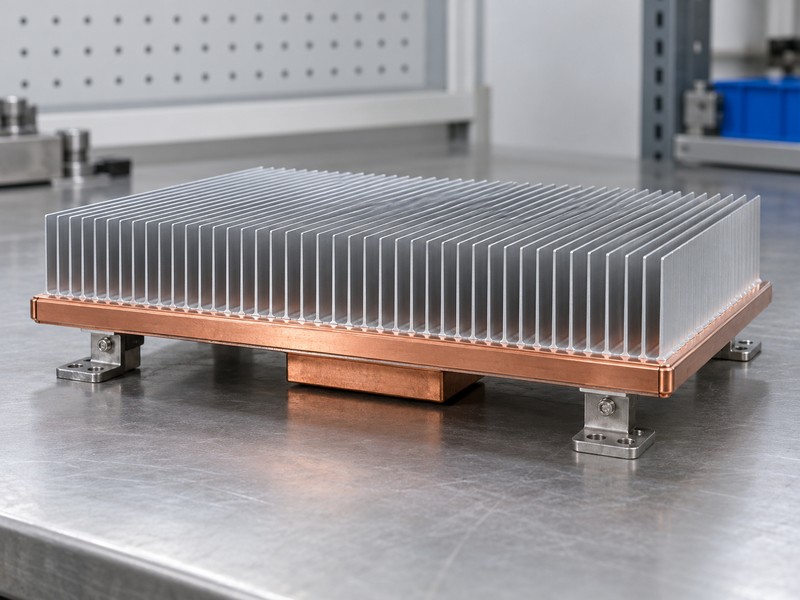
A vapor chamber is a planar two-phase heat spreader within the broader family, so types of heat pipes can include it when the taxonomy covers geometry and function. It typically spreads heat across a broad sealed cavity rather than along a narrow tubular route. A vapor chamber assembly may fit a concentrated source beneath a wide fin base when spreading resistance limits that base’s usefulness.
Where does the planar format help?
Map source locations, fin coverage, mounting holes, and support points together. A chamber can distribute heat toward several cooler regions, but those regions still need an effective heat rejection path. Its structure must also withstand the approved mounting load without damaging internal passages or the sealed boundary. Temperature uniformity across the plate is useful only when each component remains within its own limit.
- Locate the real source footprints and operating combinations.
- Design holes and sealed features before manufacture.
- Include mounting and contact-face requirements.
| Layout need | Candidate to review |
|---|---|
| Wide base spreading | Planar vapor chamber |
| Remote cooling stack | Routed conventional pipes |
| Several source temperatures | Coupling and load-sharing analysis |
Select the planar format when the heat map and available cooling surface justify its continuous spreading area.
6. How does a thermosyphon return liquid?
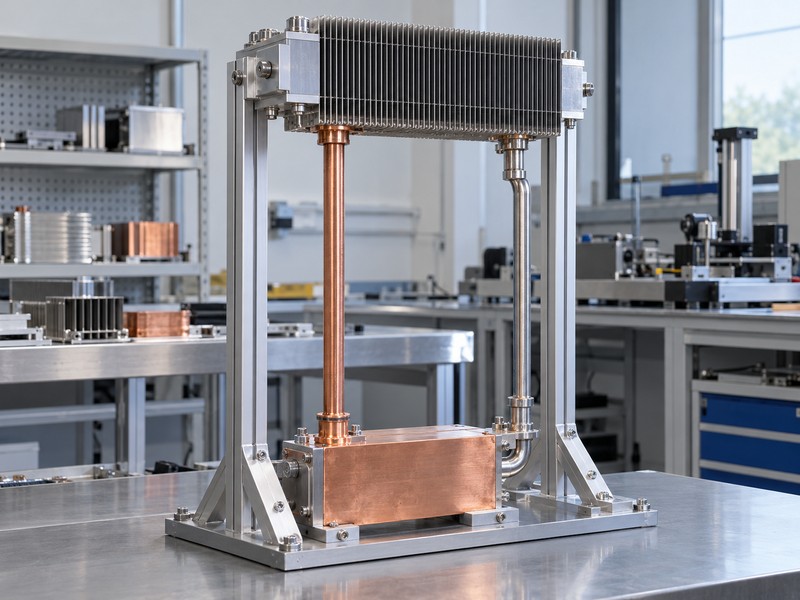
A conventional two-phase thermosyphon relies mainly on gravity for liquid return, which separates it from wicked types of heat pipes that provide capillary pumping. Its condenser normally sits above its evaporator in a suitable installation. A loop thermosyphon can use separate vapor and liquid paths while retaining gravity as the return mechanism. Separate lines alone do not make a device a capillary loop heat pipe.
When does fixed orientation become useful?
Equipment with a controlled upright installation may provide a workable gravity head and space for a remote condenser. Check the complete routing for traps, changes in elevation, and allowable tilt. The working fluid, charge, flow path, and heat rejection boundary still need a coordinated design. A gravity-driven device should not inherit the orientation claims of a wicked device described elsewhere in a catalog.
- Define the permitted evaporator-to-condenser elevation.
- Show vapor and liquid routes on the assembly model.
- Test startup and operation at allowable tilt extremes.
| Device | Main return mechanism |
|---|---|
| Conventional wicked pipe | Capillary action, with gravity effects |
| Thermosyphon | Gravity |
| Loop thermosyphon | Gravity through a separate return route |
Consider a thermosyphon when the equipment can maintain the required orientation throughout the specified operating envelope.
7. What makes a loop heat pipe different?
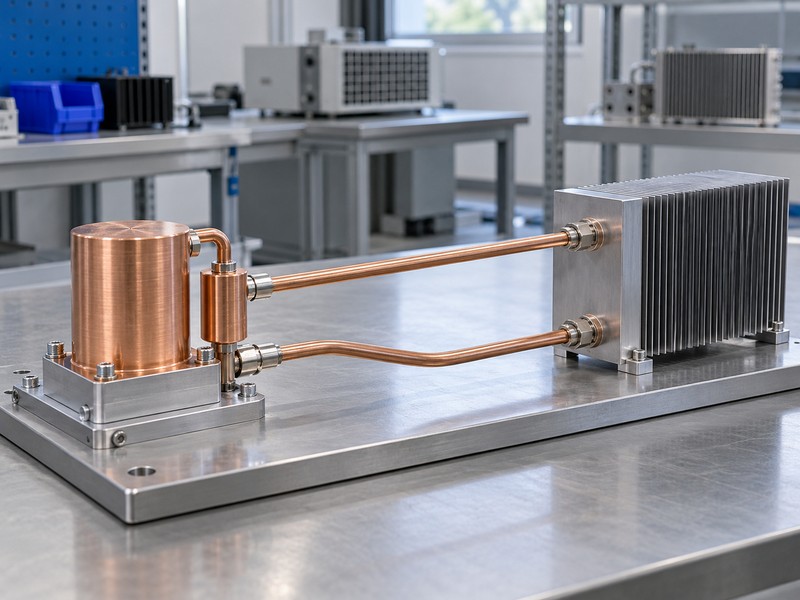
A loop heat pipe uses a capillary evaporator, compensation chamber, and separate transport lines, making it an architectural category among types of heat pipes. Its primary wick is concentrated in the evaporator rather than extending along the full liquid-return route. Vapor travels toward the condenser through one line and liquid returns through another. This arrangement can support layouts that would be difficult with a conventional pipe.
Which additional design issues come with the loop?
The evaporator, fluid inventory, compensation chamber, condenser, and transport lines interact during startup and load changes. Heat leakage into the compensation chamber and the temperature of returning liquid affect operating behavior. Longer transport distance or adverse elevation still requires a pressure-loss assessment. A bent conventional pipe with two visible legs should never be specified as a loop heat pipe solely because of its outline.
- Identify every loop component in the schematic.
- Request startup results across the operating envelope.
- Qualify orientation and transport distance together.
| Component | Function |
|---|---|
| Primary wick | Provides capillary pressure |
| Compensation chamber | Accommodates fluid inventory and thermal balance |
| Separate lines | Carry vapor and returning liquid |
Review a loop architecture when the required transport path justifies a separate system-level development and qualification effort.
8. How do pulsating heat pipes transfer heat?
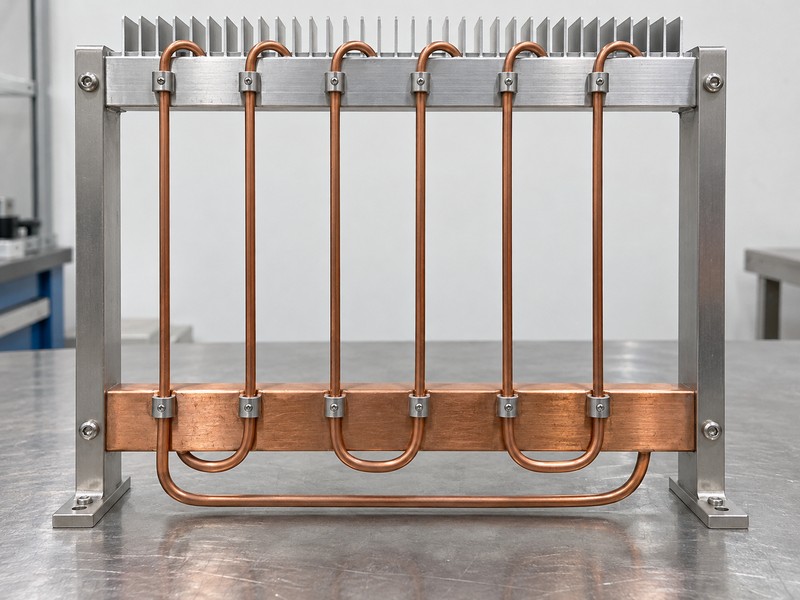
Pulsating types of heat pipes transfer heat through the motion of liquid slugs and vapor plugs in small channels, rather than through a conventional continuous wick. They are also called oscillating heat pipes. Their thermal behavior includes both sensible and latent heat transfer. A sealed serpentine appearance alone cannot establish performance because channel dimensions, fluid charge, heating pattern, and operating conditions affect the oscillation.
What should a startup test reveal?
Record whether the device starts consistently at the required initial temperature and heat input. Follow temperature histories through load changes instead of reporting only a settled average. Some equipment cannot tolerate a long warmup or large source-temperature oscillations. You need measured behavior in the actual orientation and source arrangement before deciding whether the device suits that equipment.
- Define channel layout and source coverage.
- Check startup repeatability at the minimum operating load.
- Record transient peaks and temperature variation.
| Test condition | Behavior to examine |
|---|---|
| Initial power application | Startup delay and source peak |
| Changing load | Stability and temperature response |
| Installed orientation | Repeatable transport behavior |
Choose a pulsating device only when its measured startup and transient behavior meet the application’s temperature requirements.
9. Which specialized names describe other functions?
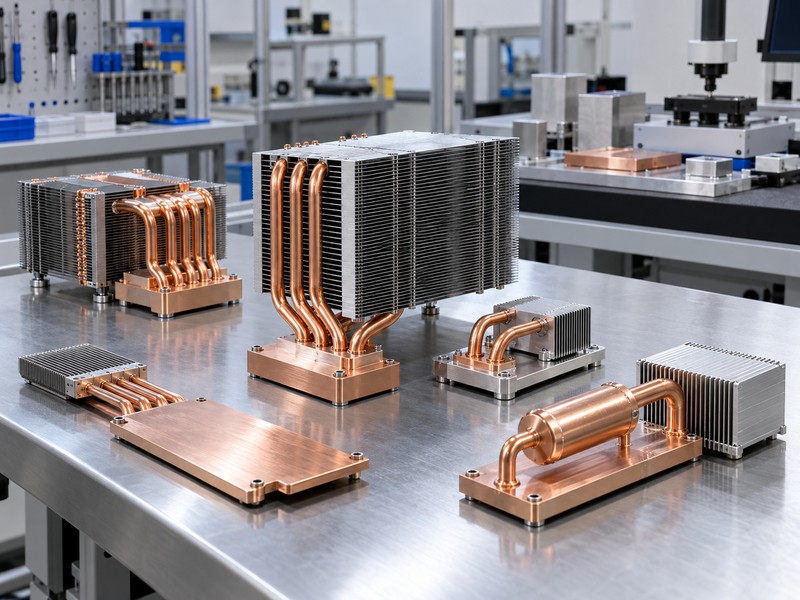
Variable-conductance, diode, cryogenic, and high-temperature types of heat pipes describe control behavior or operating conditions rather than one universal geometry. A variable-conductance design can use noncondensable gas to change the active condenser region. A diode design seeks directional heat-transfer behavior. Temperature-specific devices require fluid and container combinations selected for their operating range and lifetime conditions.
When should the specification become more detailed?
If the equipment needs temperature regulation, reverse-flow suppression, or an unusual temperature range, describe that function quantitatively before naming the device. Include startup, shutdown, storage, and fault conditions. These requirements may call for specialist development beyond an ordinary electronics cooling assembly. A hybrid liquid-cooled heat sink is another assembly architecture to evaluate when separate loads need different cooling paths.
- Define required behavior during changing boundary conditions.
- Identify compatible materials and working fluid.
- Keep specialist qualification separate from ordinary sample approval.
| Specialized name | Requirement behind the name |
|---|---|
| Variable conductance | Controlled thermal response |
| Diode | Restricted reverse heat transfer |
| Temperature-specific | Compatible operating range and materials |
Ask whether the special function is required by your equipment before accepting the additional design and verification scope.
10. How do you select and qualify the right type?
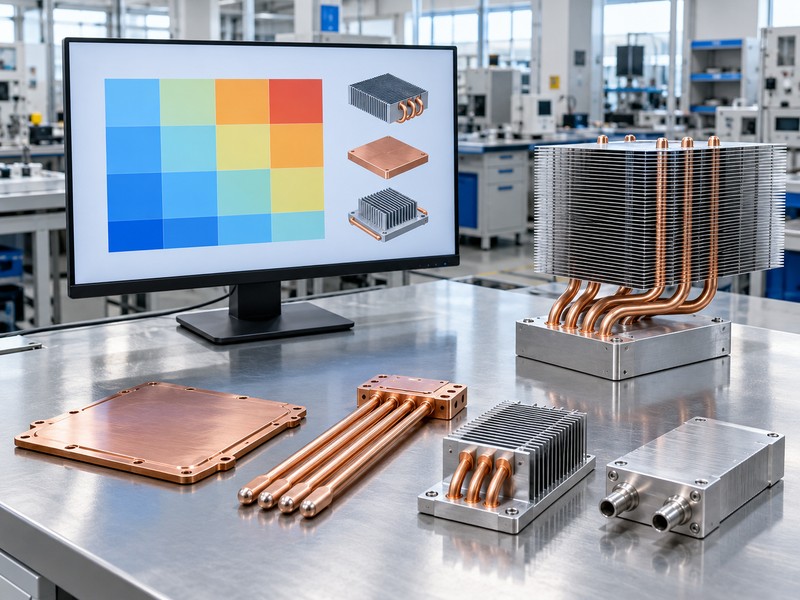
Select types of heat pipes by matching the heat path, temperature budget, packaging, and liquid-return conditions, then verify the finished assembly. Begin with the simplest candidate that can satisfy those requirements. If a compatible pumped coolant loop already exists, compare a tube-in-plate cold plate as a separate option. That component carries externally pumped coolant through an inlet and outlet and follows a different specification.
What should the acceptance package contain?
Record the approved construction, formed drawing, contact conditions, and test setup. Measure source temperature at relevant loads and orientations with defined cooling conditions. Preserve startup results where the chosen architecture depends on them. Keep production inspection and change-control requirements tied to the features that determine the validated heat path.
- Provide heat load, source area, and temperature limits.
- Include mounting, orientation, and airflow or coolant data.
- Agree on sample acceptance before production release.
| Selection input | Evidence needed |
|---|---|
| Required heat path | Source-to-condenser layout |
| Operating envelope | Relevant load and orientation results |
| Repeat supply | Controlled drawing and acceptance records |
Request a candidate design with a testable operating envelope rather than buying by a category name alone.
FAQ
Q1. Can a flattened pipe also have a sintered wick?
Yes. Flattened describes its geometry; sintered describes its internal liquid-return structure.
Q2. What is the best wick for operation against gravity?
Use a qualified design. A sintered wick may be suitable, but pore structure, length, elevation, temperature, and load determine performance.
Q3. How do I know if a loop needs a pump?
Check its operating schematic. A capillary loop heat pipe circulates fluid through its designed two-phase cycle; a pumped loop includes an external pump.
Q4. Can I bend an ordinary heat pipe repeatedly?
Only with specific qualification for that movement. A one-time formed copper pipe should not be assumed suitable for cyclic flexing.
Q5. Does passive operation remove the need for fins?
No. Heat still needs a rejection path, which may use fins, a cold plate, an enclosure, or another heat exchanger.
Send Morton your source layout, installation positions, available envelope, and cooling conditions when you request an engineering review.