
Choose a wholesale anodized heat sink factory by checking its drawing controls, finishing process and thermal evidence before comparing production prices. A black sample can look convincing while hiding an uneven contact face or a finish applied over a grounding point. Your purchase specification needs to describe those interfaces before samples become a bulk order.
1. Which wholesale anodized heat sink factory fits your order?
The right wholesale anodized heat sink factory can explain how your drawing becomes a repeatable production part. Start with the application, annual demand, release quantities and approved manufacturing route. An extrusion cut to length needs different tooling and inspection from a machined block or forged pin array. Ask which operations happen at the quoted facility and which go to a subcontractor.
What should you ask before requesting prices?
Request a process route against your actual part revision. A supplier’s broad product catalog cannot establish whether its tooling, machine access or anodizing fixtures suit your geometry. For custom profiles, compare the proposed route with the constraints of extruded heat sinks before approving a die. Define responsibility for finishing, final inspection and nonconforming material in the same quotation package.
- Name the part revision and intended cooling mode.
- Separate prototype demand from repeat order quantities.
- Ask who owns tooling and inspection records.
| Purchasing question | Evidence to request |
|---|---|
| Can this route make the part? | Drawing review with open issues |
| Who controls outsourced finishing? | Approved process and inspection plan |
| Can later batches match? | Traceability and change control |
Use written responsibilities when comparing otherwise similar quotations.
2. What material evidence should the factory provide?
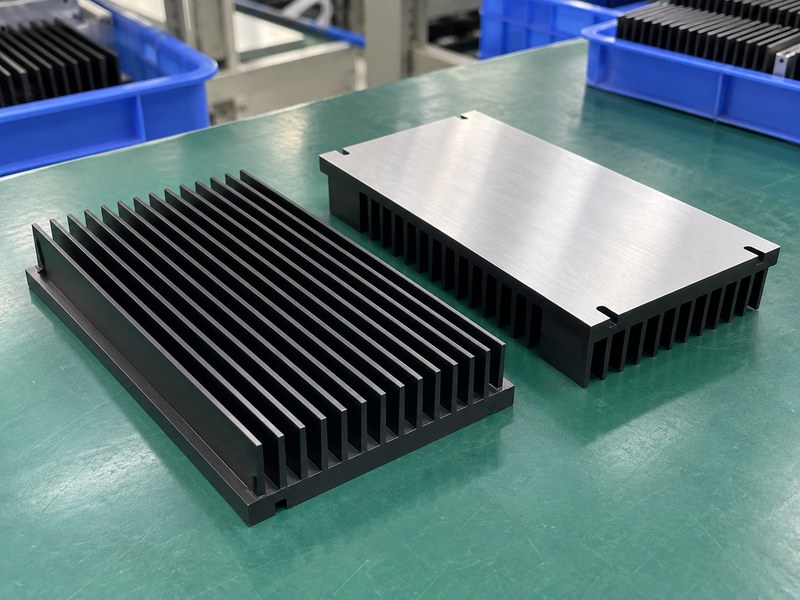
A wholesale anodized heat sink factory should identify the alloy, temper and material source used for your approved sample. Aluminum grades differ in conductivity, strength, machinability and finishing behavior. Choose material against the full assembly requirement. A soft, conductive alloy may suit a formed heat sink yet need a different thread strategy from a stronger machined alloy.
How do you keep the material choice consistent?
Tie incoming material records to production lots. Ask the supplier to flag substitutions before manufacture because an apparently interchangeable alloy can change forming behavior or anodized appearance. Treat conductivity values as material properties with stated conditions, rather than guaranteed assembly performance. A heat sink still depends on its base, interface and surrounding air, even when its alloy matches the drawing.
- Specify the alloy and temper explicitly.
- Agree which material certificates accompany shipments.
- Require approval before substituting stock.
| Record | What it establishes |
|---|---|
| Material certificate | Declared alloy and supplied condition |
| Lot identification | Connection between stock and finished parts |
| Approved sample | Agreed appearance and geometry |
Keep the material record attached to the same revision as the sample approval.
3. How should you check the manufacturing route?
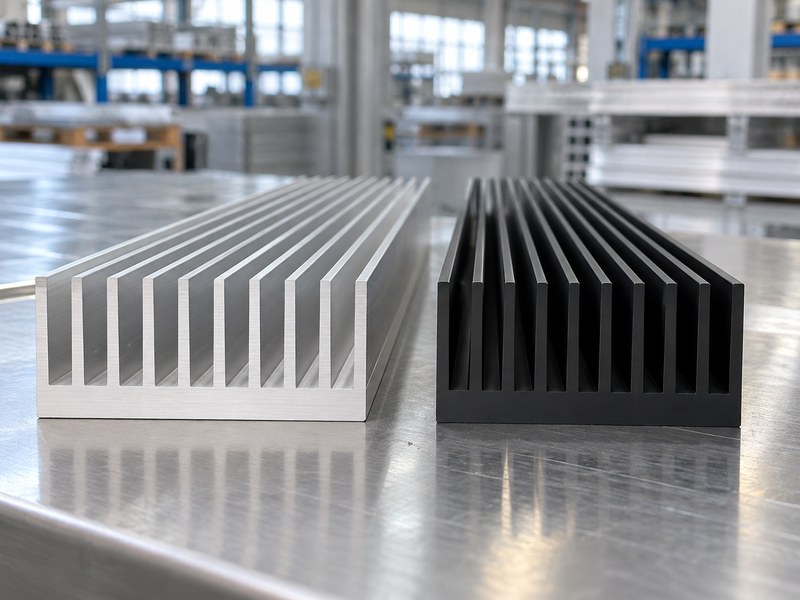
An experienced wholesale anodized heat sink factory should justify the selected route with geometry, quantity and finishing requirements. Extrusion suits a constant cross section. CNC machining supports local features but requires tool access between fins. Forging can form integral pins, subject to material flow and tooling limits. A similar silhouette does not make these processes interchangeable.
Which features deserve a drawing review?
Review fin spacing, base thickness, mounting ears and access for drills or cutters. Confirm whether quoted dimensions apply before or after finishing. If a supplier proposes CNC machined heat sinks for early samples, record any differences from the intended production route. A machined prototype can test fit while leaving production forming variation unresolved.
- Check tool access around holes and pockets.
- Identify burr control at cut edges.
- Record route changes between samples and production.
| Route | Question for the supplier |
|---|---|
| Extrusion | Can the die produce this section consistently? |
| Machining | Can cutters reach every required surface? |
| Forging | Can the material fill and release from the die? |
Approve a route against its actual process limits rather than appearance alone.
4. What belongs in the anodizing specification?
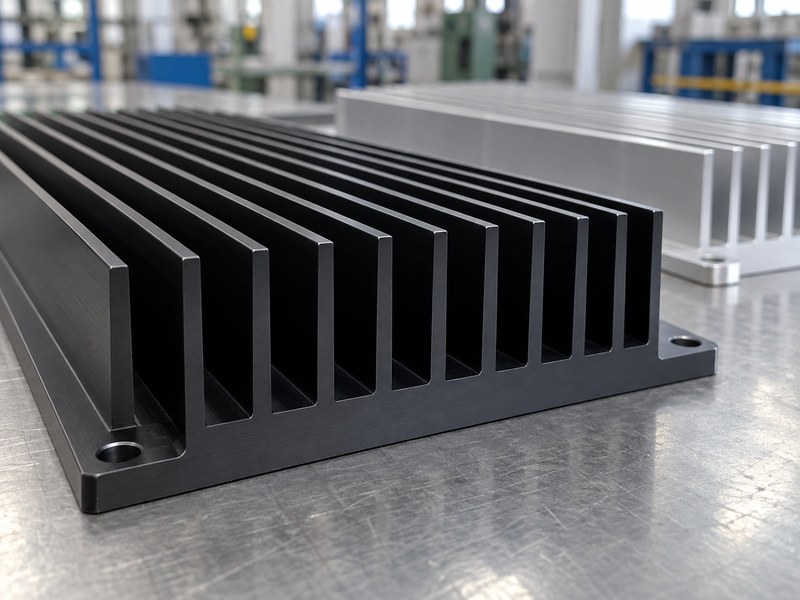
The wholesale anodized heat sink factory needs a finish specification covering the anodizing process, coating thickness range, sealing, color and masked areas. Anodizing grows an oxide layer on aluminum. It changes corrosion behavior and surface properties, while adding a layer across any coated contact interface. “Black anodized” leaves too many purchasing decisions open.
Where should the finish stop?
Mark thermal contact faces, electrical bonding points, precision fits and threads individually. Decide whether each feature stays coated, gets masked or needs a later approved machining operation. Mask boundaries and rack contact locations also need agreement where appearance or function depends on them. Ask for a finish sample under agreed viewing conditions rather than judging color from differently lit photographs.
- Mark keep-out areas directly on the drawing.
- Define inspection of coating thickness and appearance.
- Agree acceptable rack marks and masking boundaries.
| Feature | Decision required |
|---|---|
| Thermal contact face | Coated, masked or finish machined |
| Ground connection | Defined conductive contact arrangement |
| Visible surface | Color and cosmetic acceptance criteria |
A marked drawing gives the finisher a usable instruction for every functional surface.
5. How do you protect the thermal contact interface?
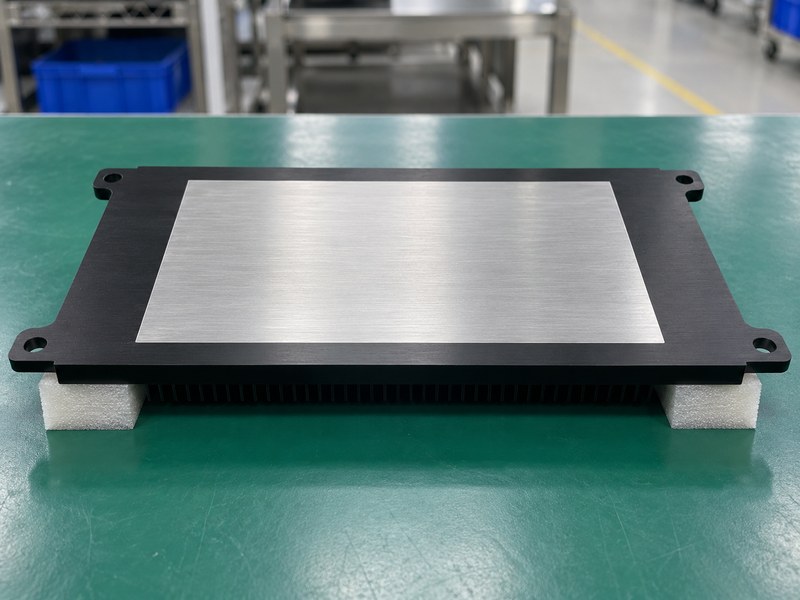
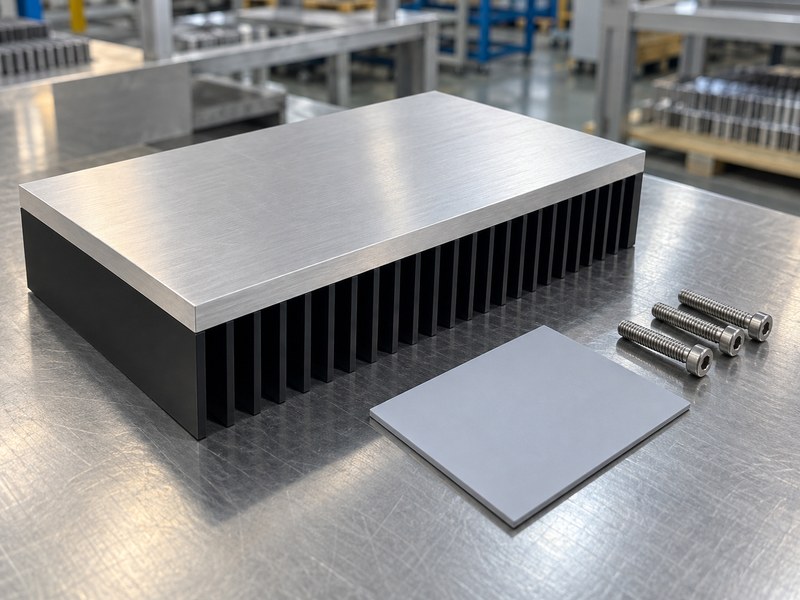
A wholesale anodized heat sink factory should control contact face geometry and the finishing sequence together. Heat passes from your component through an interface material into the base. A bowed surface, trapped debris or excessive interface thickness can raise temperature even when the fins look correct. Specify flatness and surface condition against your mounting arrangement and component requirements.
What should the assembly review include?
Review the contact area, clamp load, fastening pattern and chosen interface material as one assembly. A compressible pad and a thin grease layer need different gap and loading controls. Use the actual component guidance when selecting thermal pads and defining assembly torque. Recheck the contact face after finishing because final geometry is what your production line receives.
- Keep the base and mating surface clean.
- State the measurement condition for flatness.
- Validate clamp load without damaging the component.
| Assembly item | Inspection or validation |
|---|---|
| Contact face | Flatness and surface condition |
| Interface material | Thickness and compression suitability |
| Mounting hardware | Load distribution and assembly access |
Evaluate the assembled interface before treating a bare-part inspection as thermal approval.
6. What airflow information should your RFQ include?
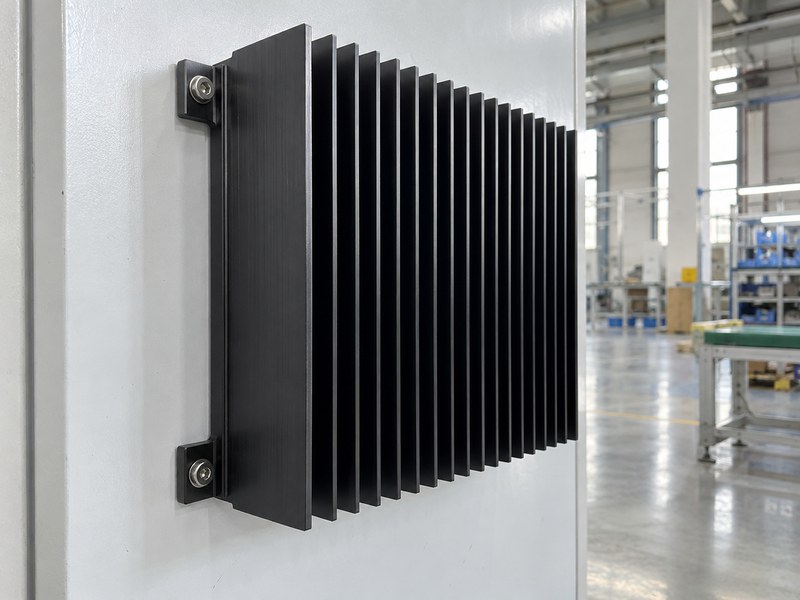
A wholesale anodized heat sink factory needs the air conditions around the installed part, including restrictions and recirculation. Fin area alone cannot predict cooling. Narrow channels can restrict flow, while a fan’s free-air rating differs from its operating point in an enclosure. Natural convection also depends on orientation and access for warm air to leave.
How can you make quoted performance comparable?
Give suppliers the same envelope, heat load, inlet temperature and cooling assumptions. For forced air, state the available fan curve or required flow condition with its pressure basis. Include nearby obstructions and the intended direction through fin channels. For passive equipment, show mounting orientation and available clearance above and below the heat sink.
- Distinguish inlet air from room temperature.
- Show vents, ducting and nearby hot components.
- State whether fan failure needs evaluation.
| Cooling mode | Information to provide |
|---|---|
| Natural convection | Orientation and surrounding clearance |
| Forced air | Fan operating conditions and flow path |
| Enclosed equipment | Vent restrictions and recirculation risks |
Comparable boundary conditions make supplier thermal claims easier to assess.
7. Which thermal evidence should you accept?
A wholesale anodized heat sink factory should supply test or simulation results with enough conditions for you to interpret them. Ask where power enters, where temperature is measured and how ambient or inlet temperature is defined. A single temperature number cannot establish thermal resistance without power and measurement locations. Simulation also needs stated material, interface and airflow assumptions.
How do you distinguish evidence from an illustration?
Ask for the setup description and raw readings behind a reported result. A temperature curve from a different footprint or airflow condition cannot validate your assembly unchanged. Compare the proposed test with your actual mounting configuration and repeat it after meaningful changes. Photographs and conceptual plots can explain a method, but they do not establish a product rating.
- Record electrical input or heat-source power.
- Identify sensor locations and stabilization criteria.
- Keep the tested drawing and finish revision.
| Evidence | Minimum supporting detail |
|---|---|
| Thermal resistance | Defined temperatures, power and conditions |
| Simulation | Geometry, assumptions and boundary conditions |
| Qualification test | Procedure, sample identity and readings |
Approve performance against your specified conditions and acceptance limit.
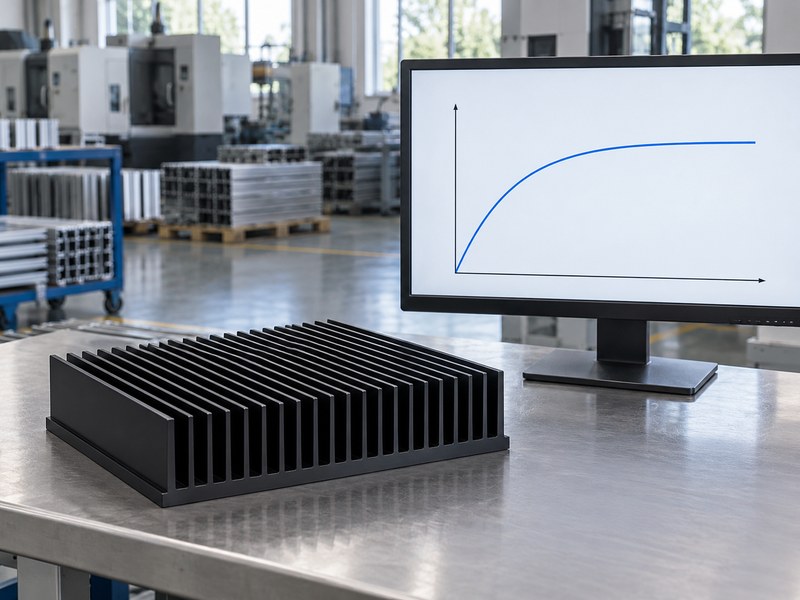
The curve illustrates a test concept and does not show measured product performance.
8. Which inspection records should accompany samples?
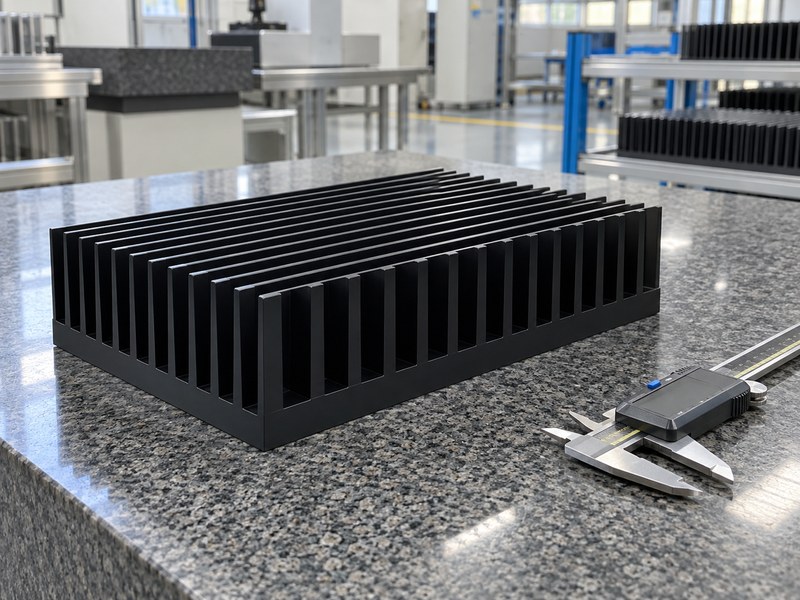
A wholesale anodized heat sink factory should inspect the features that affect fit, heat transfer and assembly. These can include overall dimensions, hole positions, thread condition, base flatness and coating thickness. Match the inspection method to the feature rather than requesting a generic certificate. Agree the sampling plan and treatment of rejected parts before placing a repeat order.
How do you make the report useful for receiving inspection?
Number critical drawing dimensions and use the same numbers in the sample report. State whether measurements occur before or after anodizing and identify the equipment or method where it affects interpretation. Give cosmetic criteria their own acceptance references. A receiving inspector should be able to distinguish a functional deviation from an acceptable finish mark without relying on an email explanation.
- Connect reported dimensions to the drawing.
- Identify sampled parts and production lots.
- Define escalation for out-of-tolerance features.
| Feature | Suitable record |
|---|---|
| Hole position | Dimensioned inspection report |
| Contact face | Agreed flatness measurement |
| Anodized finish | Thickness and cosmetic checks |
Use the approved sample report to establish your receiving inspection baseline.
9. How can you control repeat order consistency?
A wholesale anodized heat sink factory should connect each shipment to its approved drawing, material and finishing route. Repeatability depends on controlled changes as well as inspection. A new extrusion die, polishing step, anodizing subcontractor or packing method can affect the delivered part. Ask which changes require notification and which need new sample approval.
What should happen when a process changes?
Define the review before production moves. Some changes need dimensional checks; others also need a finish comparison or a thermal recheck. Keep retention samples where appearance is a purchasing requirement and agree how long production records remain available. Compare defects by lot and failure mode so a supplier can investigate a recurring cause instead of repeatedly sorting parts.
- Keep one approved revision for each order.
- Require traceability through outsourced operations.
- Record corrective action for recurring defects.
| Proposed change | Possible approval evidence |
|---|---|
| New forming tool | Dimensional requalification |
| New finishing source | Finish sample and process checks |
| New contact geometry | Assembly and thermal validation |
Set the approval requirements according to the feature the change can affect.
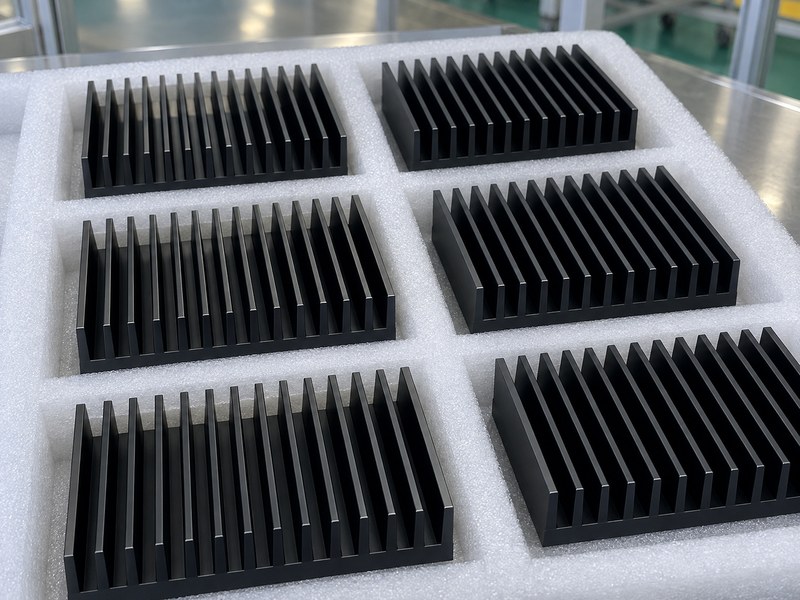
Illustrative storage arrangement; appearance does not establish dimensional or batch consistency.
10. What should you approve before a bulk shipment?
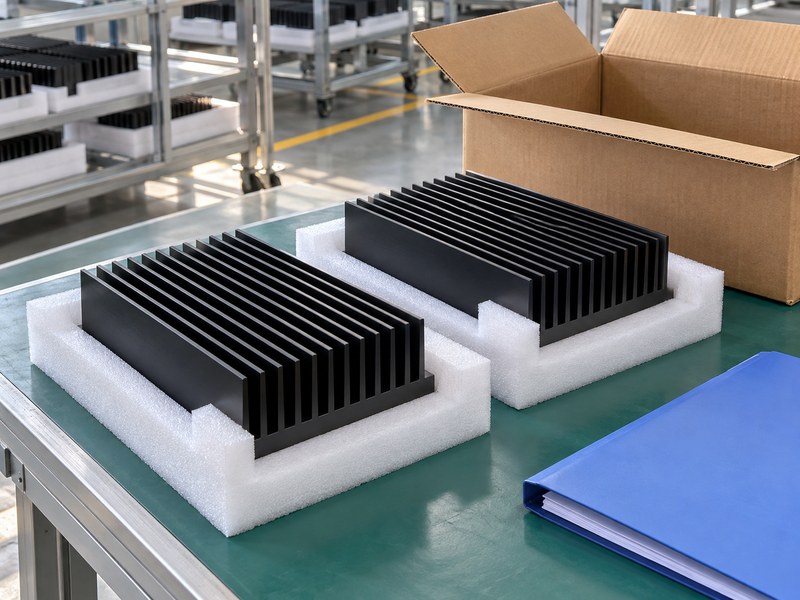
A wholesale anodized heat sink factory should release a bulk shipment against the agreed drawing, inspection plan and packaging specification. Packaging needs to protect fin geometry, contact faces and cosmetic surfaces throughout transport. Avoid loose stacking that lets fins carry the weight of other parts. Agree identification, shipment quantities and the documents your receiving team will need.
How do you turn the review into an order package?
Bring the approved sample, drawing, finish requirements and test conditions into one purchase record. State unresolved items explicitly instead of assuming the quotation includes them. Compare total delivered cost with tooling, inspection and packaging included. Send your application conditions and current drawing when you contact us so the discussion can address the route, interfaces and evidence your order requires.
- Confirm the final sample and drawing revision.
- Approve packaging with the part supported at its base.
- Define shipment acceptance and deviation handling.
| Release item | Approval record |
|---|---|
| Part and finish | Approved drawing and sample |
| Performance | Agreed validation evidence |
| Delivery condition | Packaging and receiving criteria |
Place the order against that complete package and retain it for repeat purchases.
Q1: Can I approve a factory from one black sample?
No. A sample can establish appearance and fit, but repeat production also needs a controlled drawing, material records, finishing requirements and inspection criteria. Confirm those controls before committing to a bulk order.
Q2: What’s the best anodizing thickness for a heat sink?
There is no universal thickness. Choose a process and thickness range for corrosion exposure, electrical requirements and dimensional fits. Review coated contact faces separately because the finish can add resistance across an interface.
Q3: How do I know whether the thermal claim fits my application?
Check the conditions behind it. The heat-source footprint, interface, power, inlet temperature, orientation and airflow must represent your assembly closely enough for the result to support your acceptance decision.
Q4: Can I request uncoated grounding points?
Yes. Mark the location, extent and acceptance requirements on the drawing. Anodized surfaces should not be assumed to provide the conductive bond your electrical design requires.
Q5: Should I choose the lowest unit price?
Compare the complete delivered order. Include tooling, secondary machining, finishing, validation, inspection and packaging. A lower unit quote is useful only when it covers the same approved specification.