
Choose a wire drawing aluminum heat sink supplier by checking its manufacturing route, finish control, inspection records and approval sample. A low quotation becomes expensive when the sample needs rework or the next batch changes appearance. Use these ten checks to review the manufacturing route, validate a finished sample and agree release records. For a custom project, discuss your wire drawing aluminum heat sink supplier requirements with the drawing, operating conditions and expected order quantities available.
1. What must a wire drawing aluminum heat sink supplier make?
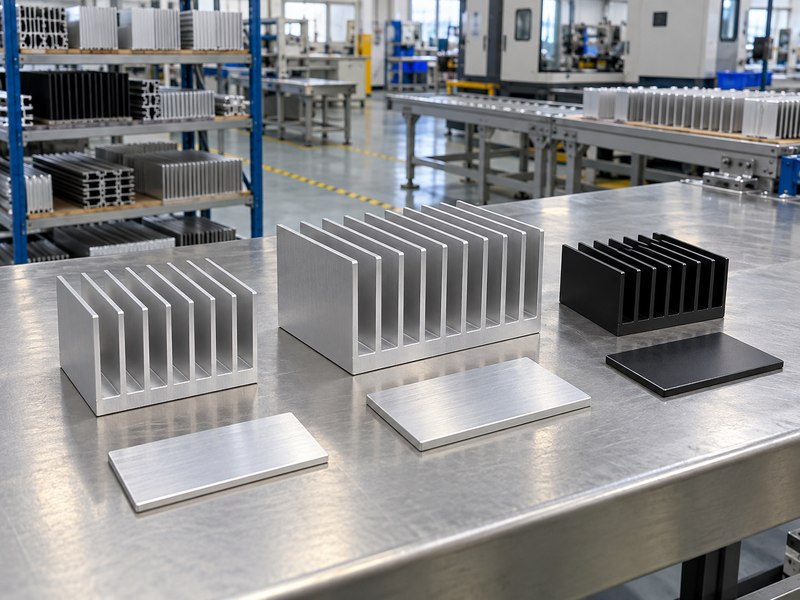
A wire drawing aluminum heat sink supplier must deliver the complete part on your drawing, including its approved surface treatment. Start by confirming that “wire drawing” means a directional brushed finish in this enquiry. Ask which company performs extrusion, machining, brushing, anodizing and final inspection. A supplier can coordinate outside processes successfully, but the quotation should identify who controls the finished result and handles nonconforming parts.
How do you verify the production route?
Request a process flow tied to the actual geometry rather than a broad equipment list. Review a representative heat sink with similar fin spacing, accessible cosmetic faces and contact lands. Ask where the part changes hands and what is inspected at each transfer. A video of unrelated wire production does not establish the ability to brush a finned housing. A convincing product photograph cannot demonstrate lot traceability, dimensional capability or control of a subcontract finishing operation.
- Confirm the intended meaning of the finish description.
- Identify each process owner and final release authority.
- Review a part with comparable geometry and finish access.
| Supplier check | Evidence to request |
|---|---|
| Process ownership | Route and responsible company for each operation |
| Comparable experience | Representative finished parts and inspection records |
| Release control | Named responsibility for final conformity |
Key takeaway: qualify the route that will produce your part, including any outside finishing steps.
2. Can a wire drawing aluminum heat sink supplier review fit?
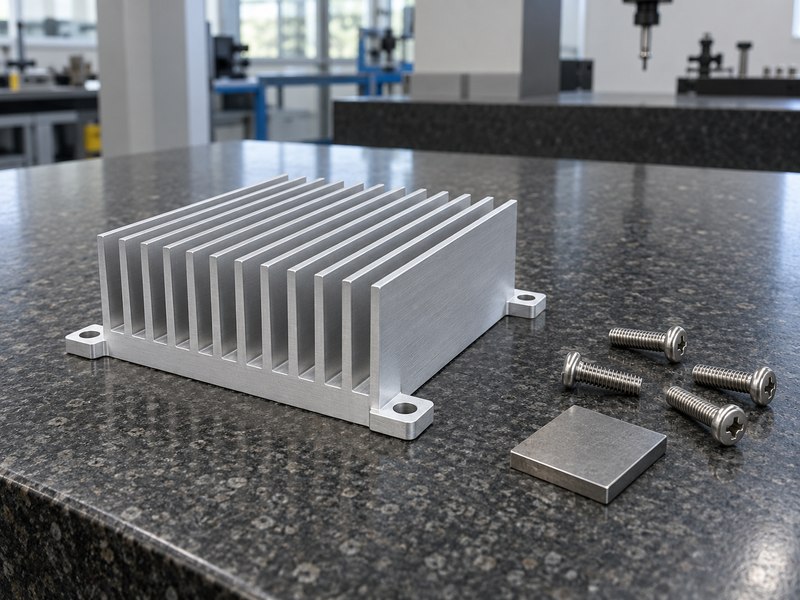
A wire drawing aluminum heat sink supplier should review the drawing for manufacturing access, mounting fit and inspection before accepting the order. Cosmetic brushing cannot correct an unsuitable fin profile or an inaccessible machined feature. Share the assembly envelope, heat-source footprint, mounting arrangement and the faces that remain visible. Identify dimensions that control fit rather than assigning tight tolerances to every surface.
What should the drawing review resolve?
Check whether the selected profile leaves enough material for final contact-face machining and whether clamps can support the part without damaging fins. Review tool access to holes and pockets, fastener clearance and the relation between contact lands and assembly datums. For CNC machined heat sinks, local steps can solve packaging problems, but they also change machining time and inspection needs. Ask the supplier to return marked questions and proposed changes before cutting the approval sample.
- Mark assembly datums and functional dimensions.
- Resolve tool and inspection access before sampling.
- Approve drawing changes through a recorded revision.
| Review area | Purchasing consequence |
|---|---|
| Contact geometry | Changes machining and assembly requirements |
| Fin access | Determines feasible brushing and cleaning |
| Mounting features | Affects tool access and fit verification |
Key takeaway: close drawing questions before sample approval, when changes are easier to control.
3. Which alloy should a wire drawing aluminum heat sink supplier use?
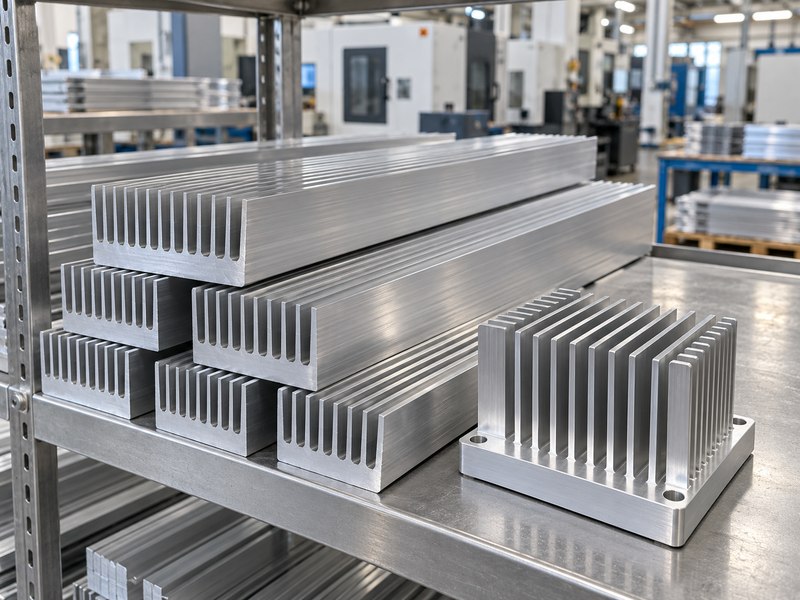
A wire drawing aluminum heat sink supplier should use the alloy, temper and stock form defined by the approved design. Material selection affects extrusion feasibility, machining behavior, appearance and the thermal model. Ask for the proposed grade and its supporting material record. A description such as “high-quality aluminum” leaves the buyer unable to check whether the delivered batch matches the accepted sample.
How much traceability do you need?
Set traceability requirements around your product and quality system. At minimum, decide how incoming stock, production lots and shipped parts will be connected. Review whether sample and production material follow the same route, particularly if prototypes are machined from plate while production uses extrusion. Treat an alloy substitution as an engineering change. For extruded heat sinks, compare the actual profile and machining allowances before accepting a supposedly equivalent stock section from another source.
- Define alloy, temper and stock form explicitly.
- Link material records to the production lot.
- Require review before a material substitution.
| Material record | Question it answers |
|---|---|
| Grade and condition | What material did the supplier purchase? |
| Lot reference | Which production parts used that stock? |
| Substitution approval | Who accepted a change from the drawing? |
Key takeaway: request traceable material information that you can connect to the delivered parts.
4. How should a wire drawing aluminum heat sink supplier match finish?
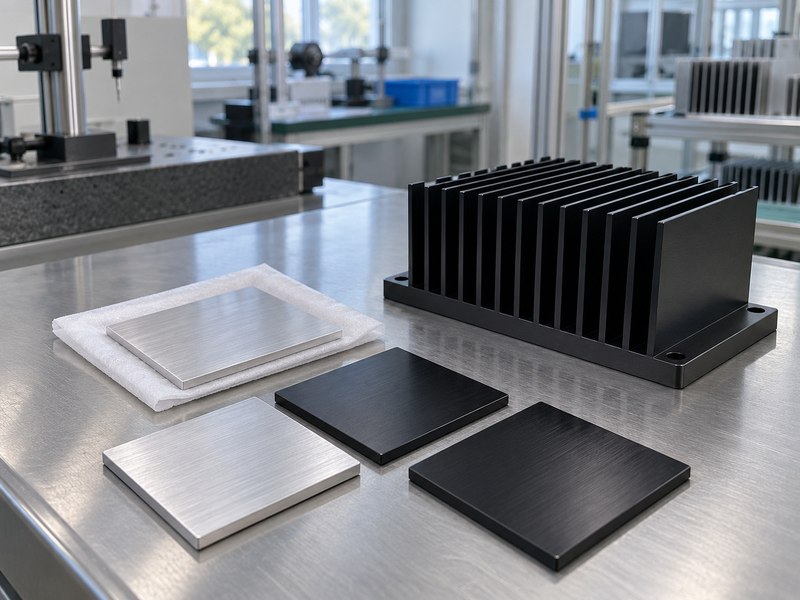
A wire drawing aluminum heat sink supplier should match a finished reference sample under agreed inspection conditions. Specify cosmetic faces, grain direction, final color and any protected functional surfaces. Include the complete treatment sequence in sample approval. The Aluminum Anodizers Council’s finish guidance identifies alloy, temper, gloss and surface structure among the factors that influence anodized appearance.
What should the appearance agreement contain?
Keep a controlled master with both parties and define a reasonable acceptable range. Photographs help explain a defect, but exposure, light angle and display settings can hide or exaggerate differences. Agree viewing conditions and the treatment of visible scratches, cross-grain marks and color variation before production. Ask how the supplier controls abrasive wear and handling between finishing and packing. When the visible part forms an enclosure, compare adjoining components together rather than accepting each cosmetic sample independently.
- Approve the part after its final coating and cleaning.
- Define cosmetic zones and viewing conditions.
- Retain the master sample under a clear identifier.
| Appearance control | Record to retain |
|---|---|
| Grain | Direction and representative texture |
| Color and gloss | Finished sample and acceptable range |
| Visual inspection | Lighting, viewing conditions and defect limits |
Key takeaway: make appearance acceptance reproducible before it becomes a shipment dispute.
5. Can a wire drawing aluminum heat sink supplier prove cooling?
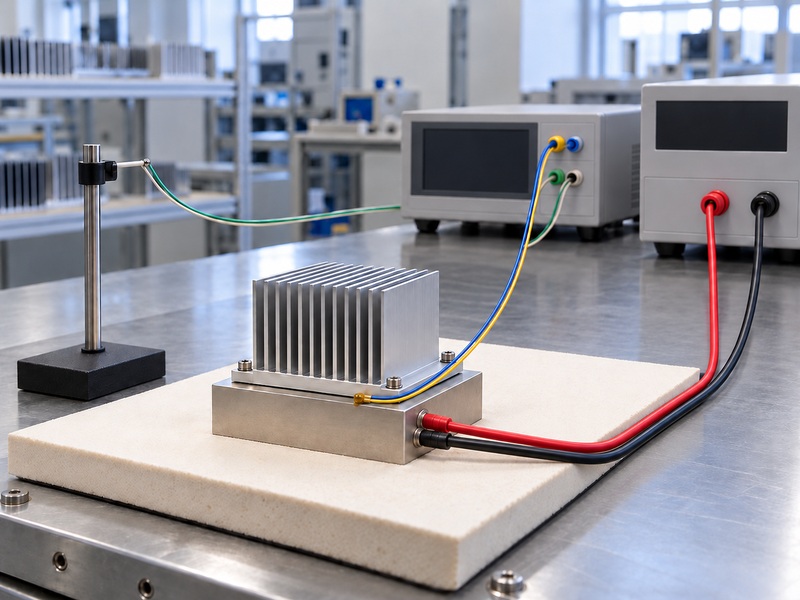
A wire drawing aluminum heat sink supplier should support any thermal claim with stated operating conditions and an appropriate validation method. Ask whether the quoted thermal resistance applies to your size, heat-source footprint, orientation and airflow. A brushed finish or a large fin count does not establish cooling capability. Require enough information to compare the supplier’s data with the installation you are designing.
Which test details make results comparable?
Request the applied power, inlet temperature, sensor locations, interface material, mounting procedure and steady-state criterion. For forced air, ask how airflow or air velocity was established in the actual test arrangement. A free-air fan rating does not describe flow through a restrictive assembly. For passive cooling, check orientation and the surrounding enclosure. If simulation guides selection, review its assumptions and confirm the finished sample against a test that represents the system’s operating limits.
- Separate calculated estimates from measured sample results.
- Identify the exact tested geometry and finish condition.
- Review mounting and airflow before comparing temperatures.
| Validation record | What to examine |
|---|---|
| Test configuration | Heat input, sensors and ambient conditions |
| Installation details | Orientation, interface and airflow restrictions |
| Result definition | Temperature locations and thermal path included |
Key takeaway: compare thermal evidence only after the test conditions and measured thermal path are clear.
6. What must a wire drawing aluminum heat sink supplier inspect?
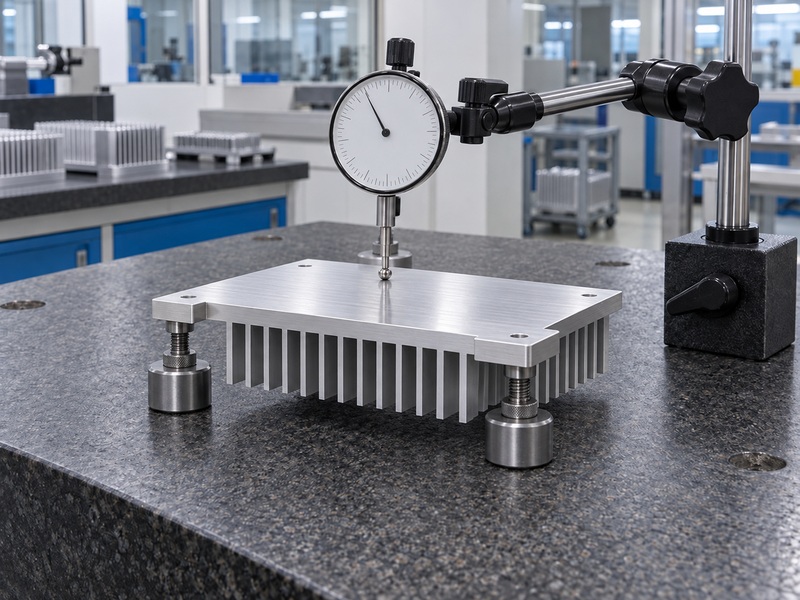
A wire drawing aluminum heat sink supplier should inspect the drawing’s functional dimensions and the agreed cosmetic criteria after finishing. Ask how base flatness, contact-face condition, fin straightness, hole positions and threads will be checked. Measurements should reference the drawing’s datums and methods. A report that lists dimensions without identifying the inspected revision gives you an incomplete release record.
How do you avoid cosmetic approval hiding a fit problem?
Keep appearance approval separate from dimensional acceptance and thermal validation. Review the finished part with the actual mounting hardware or a representative fixture. If coating or masking affects a controlled surface, check that surface after the relevant operation. Discuss interface materials using the assembled gap and compression rather than nominal part dimensions alone. Where heat sink mounting hardware controls clamping, include its installation requirements in the sample review so the inspection reflects how the part will be used.
- Identify critical characteristics on the inspection plan.
- Check treated parts against the approved revision.
- Require records for the agreed sample and lot checks.
| Characteristic | Suitable inspection discussion |
|---|---|
| Base flatness | Datum, support and measurement method |
| Mounting geometry | Position, thread condition and assembly fit |
| Cosmetic surface | Comparison with the controlled final master |
Key takeaway: require evidence for each functional characteristic alongside the appearance approval.
7. What should a wire drawing aluminum heat sink supplier quote?
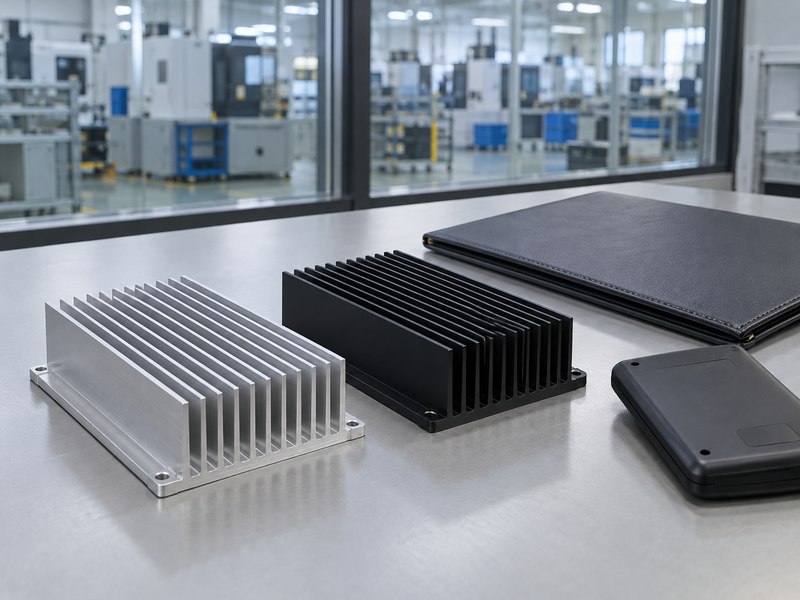
A wire drawing aluminum heat sink supplier should quote the same material, geometry, finish, inspection and delivery scope that you intend to buy. Request separate tooling or setup charges and quantity-based part pricing. Clarify whether machining, brushing, anodizing, masking and protective packaging are included. Compare offers only after the technical scope and commercial delivery basis have been aligned.
Where can an inexpensive offer change the scope?
Check whether an existing extrusion profile changes contact thickness, fin area or mounting space. Ask whether the quoted sample receives the production finish and whether the inspection report covers finished dimensions. Identify charges for revised tooling, additional masking or custom packaging before placing the order. A useful comparison also includes lead time assumptions, order quantity, transport responsibility and the treatment of rejected parts. Avoid adding unsupported lifetime savings or cooling benefits to justify a price difference.
- Compare identical drawing and finish revisions.
- Separate one-time costs from repeat unit costs.
- List exclusions and buyer responsibilities explicitly.
| Cost element | Clarification needed |
|---|---|
| Tooling and fixtures | Ownership, revision and repeat-use terms |
| Finished part | Included processes and inspection scope |
| Delivery | Packaging, freight basis and agreed schedule |
Key takeaway: compare total defined supply scope before deciding which unit price is attractive.
8. How should a wire drawing aluminum heat sink supplier sample?
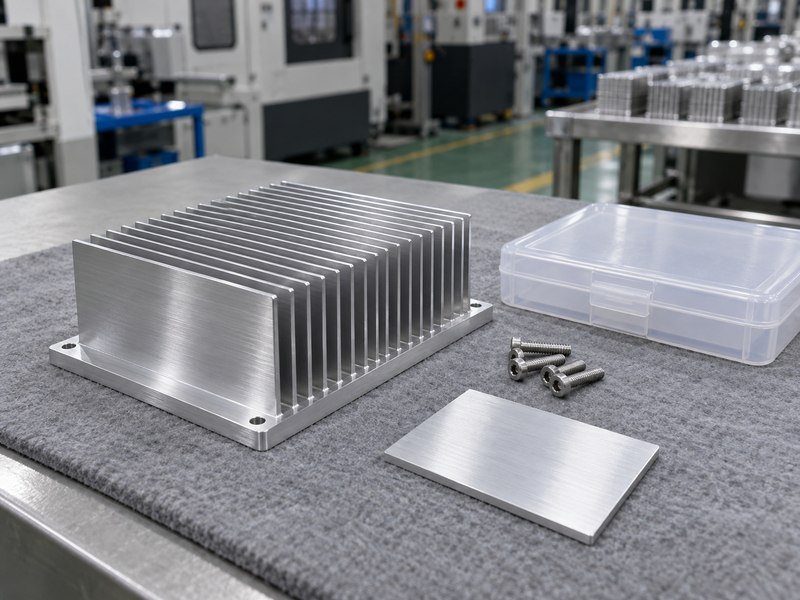
A wire drawing aluminum heat sink supplier should provide an approval sample that represents the intended production route. Review its finished dimensions, cosmetic appearance, assembly fit and relevant thermal behavior together. Record any prototype-only process differences. Approving a hand-finished sample without understanding how production will be controlled leaves a gap between sample quality and repeat supply.
What should you approve before the production order?
Use a short release checklist linked to the drawing revision. Include the finished master, inspection results, test configuration when required and packaging sample. If a prototype uses a different material route, identify which findings remain valid and which must be repeated on production-intent parts. For visible heat sink enclosures, assemble mating covers and adjacent cosmetic components during approval. Confirm how an engineering change will be communicated before the supplier revises a fixture or treatment process.
- List sample deviations and their acceptance status.
- Retain a finished master with both parties.
- Repeat affected checks after a design or process change.
| Approval item | Release decision |
|---|---|
| Drawing conformity | Accept, revise or request corrective work |
| Finished appearance | Accept against the agreed master |
| Assembly and testing | Confirm fit and application-specific evidence |
Key takeaway: approve a documented production-intent configuration rather than a visually attractive sample alone.
9. How will a wire drawing aluminum heat sink supplier pack parts?
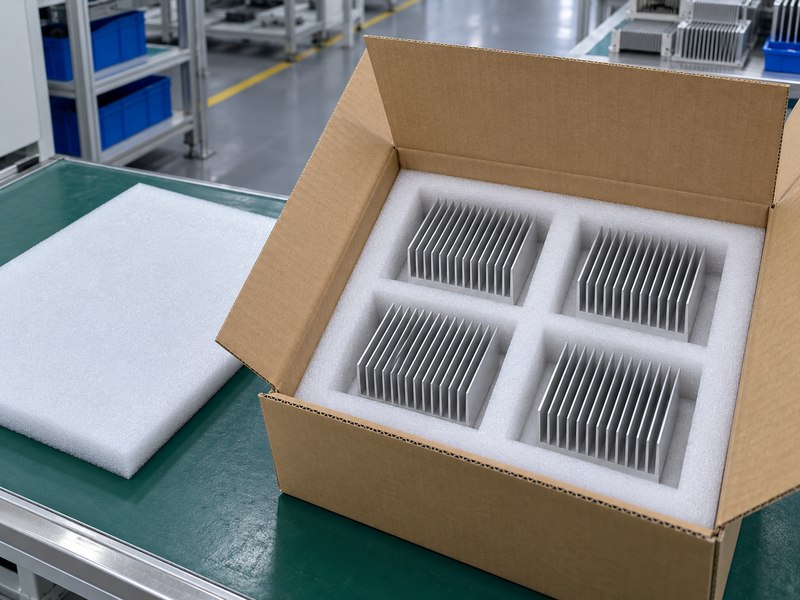
A wire drawing aluminum heat sink supplier should protect fins, cosmetic faces and contact lands through handling and shipment. Specify whether parts need individual separation, protective film, dedicated pockets or other agreed packaging. Review how the package prevents metal-to-metal rubbing and loads on unsupported fins. Any film or protective material contacting a functional surface should suit its cleanliness requirements.
How do you control damage after final inspection?
Ask to see the packing method used after release inspection, including how operators separate accepted parts from parts awaiting rework. Confirm carton quantities, part identification and lot references. Agree what receiving evidence is needed if damage is found and how the supplier will investigate packaging failure. For repeat orders, make the approved packing arrangement part of the supply definition. Changing a separator or stacking method can damage a previously reliable part even when the machining and finish remain unchanged.
- Support the base without loading delicate fins.
- Separate visible surfaces during transport.
- Preserve identification from production lot to carton.
| Packaging feature | Risk it addresses |
|---|---|
| Individual separation | Cosmetic rubbing and contact damage |
| Structural support | Fin bending and part movement |
| Lot identification | Receiving checks and issue traceability |
Key takeaway: approve packaging alongside the part so accepted surfaces survive delivery.
10. When is a wire drawing aluminum heat sink supplier ready?
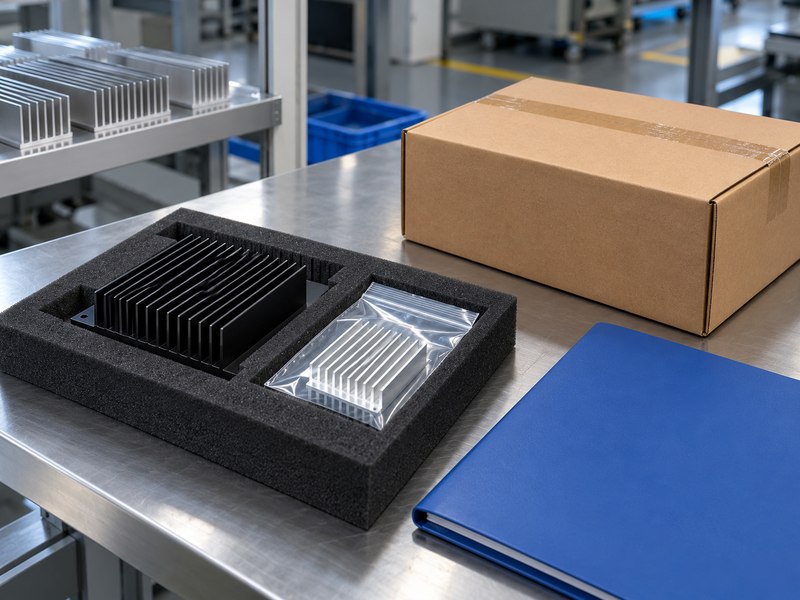
A wire drawing aluminum heat sink supplier is ready for production when the technical definition, finished sample and release evidence agree. Confirm the drawing revision, alloy, finish master, inspection plan, packaging and quantity before authorizing manufacture. Name the contacts responsible for engineering questions and quality issues. A short, closed list of requirements gives both parties a better starting point than a long email chain with unresolved alternatives.
What should repeat purchasing retain?
Keep the approved records in a location your engineering and purchasing teams can both use. Ask for review before material substitutions, fixture changes, finishing changes or transfers to another production source. Agree how a nonconforming batch will be contained and what evidence supports release after corrective work. If you are preparing a new requirement, contact us with the drawing, heat load, cosmetic reference and production forecast so morton can review the manufacturing and thermal constraints together.
- Close deviations before releasing the production order.
- Keep sample and document revisions synchronized.
- Review changes before they reach the next shipment.
| Release condition | Confirmed record |
|---|---|
| Defined product | Approved drawing, alloy and finish |
| Demonstrated conformity | Sample, inspection and required validation |
| Repeat control | Packaging, traceability and change agreement |
Key takeaway: release the order when your evidence describes the same finished part the supplier plans to manufacture.
Frequently asked questions
Q1: Can I use a supplier that outsources anodizing?
Yes, if it controls the outside process and accepts responsibility for the finished part. Review the treatment route, inspection records and change process.
Q2: What is the best sample for approving grain?
Use a finished production-intent part where practical. A flat coupon helps compare texture but may not reveal access and handling problems on fins or corners.
Q3: How do I compare thermal claims from two suppliers?
Align the test conditions and thermal path definition. Different airflow, mounting interfaces or heat-source footprints can make headline thermal resistance figures misleading.
Q4: Should I accept a different aluminum grade?
Only after engineering review. Recheck the thermal model, manufacturing route, dimensional requirements and final appearance before approving the substitution.
Q5: Can I reorder using only the old purchase number?
Use the purchase reference together with controlled product records. Confirm that the drawing, finish master, packaging and approved process changes remain current.